
Odontotarsus
Odontotarsus
Description
How to identify
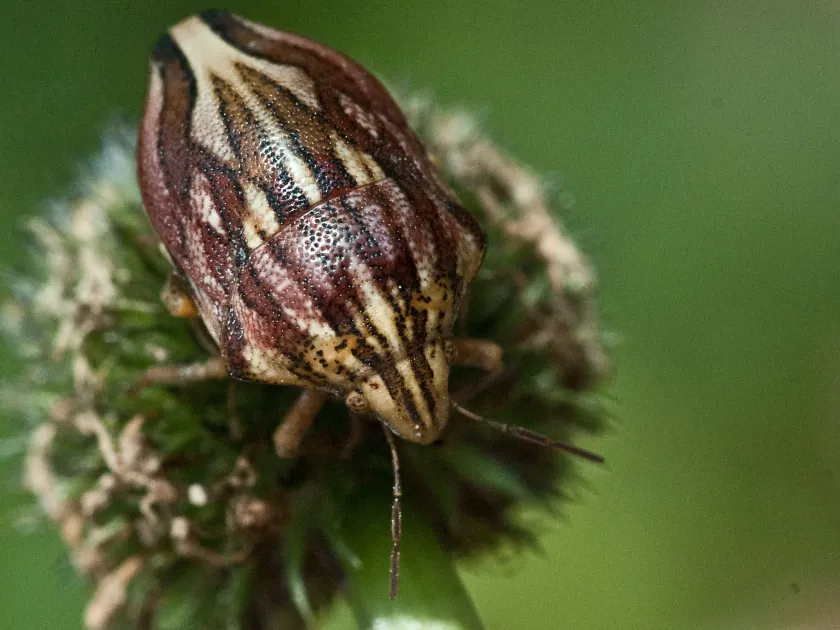
Odontotarsus is a genus of insects in the family Scutelleridae, commonly known as jewel bugs or shield-backed bugs. They are distinguished by their highly convex, oval-shaped bodies, usually ranging from 8 to 11 mm in length.
The scutellum, a hardened plate on the back, is exceptionally developed in this genus, covering the entire abdomen and folded wings. This gives them a robust, armor-like appearance that helps distinguish them from other bug species.
A key taxonomic feature of the Odontotarsus genus is the presence of distinct tooth-like projections on the lateral edges of the pronotum, which justifies their common name in many languages.
Their coloration is typically a mix of yellowish-grey to brown, often featuring darker longitudinal stripes that provide camouflage against the dry stems and leaves of their host plants.
The life cycle follows a hemimetabolous pattern, progressing through egg, five nymphal stages, and the adult (imago) stage. Nymphs resemble miniature versions of adults but lack fully developed wings and reproductive organs.
What it damages
These shield bugs are primarily phytophagous, feeding on the sap of various Poaceae species. They are known pests of major cereal crops, including wheat, barley, rye, and occasionally oats.
Both adults and nymphs use their piercing-sucking mouthparts to penetrate the vascular tissues of stems and developing ears of corn, diverting nutrients away from the grain formation process.
As a result of their feeding activity, the plants exhibit stunted growth and yellowing of the leaves. In severe cases of infestation, the ears may become empty or produce shriveled, low-quality grains.
Beyond direct damage, the puncture wounds created by the insects facilitate the entry of secondary pathogens, such as fungi or bacteria, which can cause local tissue necrosis.
Agricultural fields adjacent to wild grasses or forest edges are particularly susceptible, as these insects often migrate from wild reservoirs to commercial crops during the spring.
When it appears
The insects overwinter as adults in protected environments such as leaf litter, soil crevices, or dense vegetation in hedgerows and forest belts. They enter diapause during the late autumn months.
Emergence from hibernation occurs in early spring, typically triggered by rising soil and air temperatures. They initially feed on wild grasses before moving onto newly emerging cereal crops.
The reproductive season takes place throughout late spring and summer. Eggs are laid in clusters, often on the underside of leaves or along the stalks of host plants, to protect them from environmental fluctuations.
Development from egg to adult is temperature-dependent and usually takes several weeks. By late summer, the new generation of adults begins searching for suitable overwintering sites.
In warmer climatic regions, the life cycle is strictly synchronized with the vegetative cycle of cereal crops, ensuring that the most intensive feeding stages coincide with the plant's peak growth phases.
Signs of infestation
The most direct sign of an Odontotarsus infestation is the presence of adult bugs or nymphs on the plants. They are most active and visible during the warmer parts of the day.
White or pale-yellow puncture marks on the leaves and stems are early indicators of feeding activity. As the damage progresses, these spots may spread and cause the leaf tissue to wither.
If the ears are attacked, one might observe premature whitening or drying of the kernels, often referred to as "white heads," which clearly stand out against healthy green crops.
Careful examination of the underside of leaves will reveal clusters of barrel-shaped eggs, which indicate a population increase and the potential for a subsequent nymph infestation.
Using a sweep net is the standard field method for assessing the pest population. A consistent catch of multiple individuals per square meter often indicates the need for monitoring and control.
Control measures
Effective control begins with proper agronomic practices, such as deep autumn plowing of stubble fields, which destroys the overwintering sites of the bugs and reduces initial spring populations.
Sanitation of field borders, roadsides, and the removal of tall weeds near crop areas is critical to eliminating early-season food sources for the bugs.
Chemical control using systemic insecticides is advised only when pest densities exceed the economic threshold, ensuring the cost of treatment is justified by the expected reduction in yield loss.
It is recommended to integrate biological control measures, such as preserving populations of parasitoid wasps (e.g., Telenomus species) that naturally predate on the eggs of these shield bugs.
Monitoring should be conducted regularly during the key growth stages of the cereal crop, particularly when the plants are entering the booting and heading stages, to allow for timely intervention.
Taxonomy
- Latin name
- Odontotarsus
- Order
- Hemiptera (bugs, aphids, leafhoppers)
- Family
- Pentatomidae
- EPPO code
- ODTRSP
Discussion
No discussions yet — be the first.