
Sand bug
Odontoscelis dorsalis
Description
How to identify
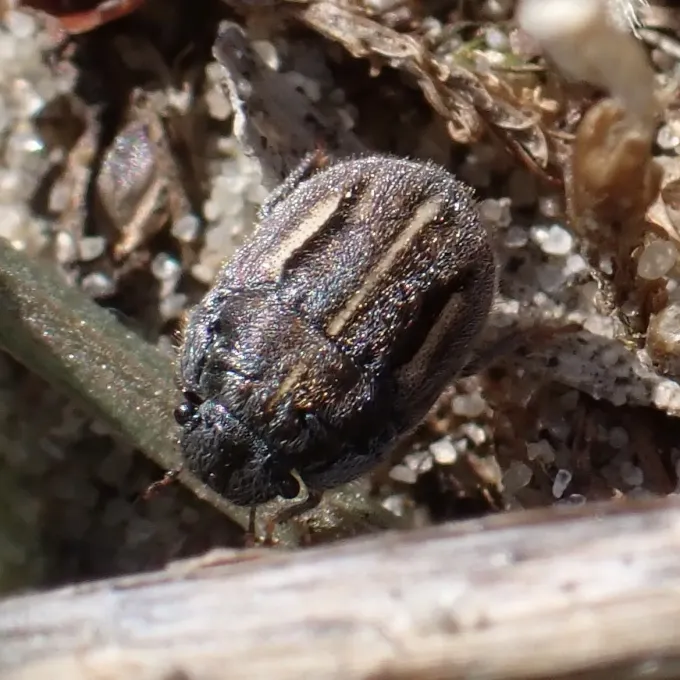
The sand bug Odontoscelis dorsalis is a member of the shield bug family (Scutelleridae) in the order Hemiptera. These insects are characterized by a highly convex, oval-shaped body, typically measuring between 6 to 9 mm in length, which allows them to easily move through soil and vegetation.
The body is covered with dense hairs that provide a greyish-brown color, acting as a camouflage in sandy soils and open fields. The scutellum is large and covers the entire abdomen and folded wings, a hallmark feature of this specific family of shield bugs.
Larvae look like miniature, wingless versions of the adults. They progress through five instars, gradually increasing in size and developing the distinct coloration and structure that define the species throughout their maturation process.
They prefer warm, dry habitats and are often found in steppes, sandy fields, and agricultural areas. Their physical structure is perfectly adapted for surviving in environments with loose substrate where they can hide during unfavorable weather conditions.
Like many other bugs, the sand bug possesses specialized glands that release a strong, unpleasant odor when the insect feels threatened. This chemical defense mechanism is a key factor in their survival against many common agricultural predators.
What it damages
Sand bugs are considered pests because both adults and larvae feed by sucking sap from the vegetative parts of cereal crops such as wheat, barley, and rye. This feeding behavior drains the plant of essential nutrients and disrupts its growth.
Significant damage occurs during the seedling stage. Heavy infestations can lead to stunted growth, yellowing of leaves, and, in severe cases, the death of young plants, which results in visible thinning of the crop stand across the field.
The punctures made by the bugs during feeding often create necrotic spots on the stems and leaves. These lesions can act as entry points for various fungal and bacterial infections, compounding the damage caused by the physical feeding itself.
In regions experiencing drought, the harm caused by sand bugs is amplified. Plants are already stressed due to water scarcity, and the additional fluid loss from insect feeding significantly reduces the crop's ability to recover and maintain physiological functions.
During the grain-filling stage, heavy populations can affect the overall yield and quality of the harvest. If left uncontrolled, these pests can be responsible for significant economic losses in cereal-producing regions globally.
When it appears
The sand bug overwinters as an adult, finding shelter under plant debris, in the upper layers of the soil, or near the margins of fields. Activity resumes in early spring once soil and ambient temperatures reach a threshold suitable for their biological processes.
The reproductive cycle begins in late spring. Females lay their eggs in clusters on the lower sides of leaves or near the base of host plants. The incubation period typically lasts about two weeks, depending on local weather conditions.
Larvae emerge and start feeding almost immediately. The development from the first instar to the final larval stage takes several weeks, during which the insects are most active and require a constant food supply of host plant sap.
New adults of the next generation usually appear by mid-summer. After a period of supplementary feeding, these bugs prepare for the upcoming winter, often migrating to more protected areas near their breeding sites to begin the process of diapause.
Their population dynamics are heavily influenced by temperature and moisture. Warm, dry springs usually lead to faster development cycles and higher survival rates for the offspring, while excessive rain can negatively impact their initial stages of growth.
Control measures
Effective management of the sand bug requires an integrated approach. Crop rotation is one of the most important cultural practices, as it interrupts the bug's life cycle and prevents the buildup of large populations in the same field year after year.
Tilling and plowing fields in the autumn or early spring can destroy overwintering sites, significantly reducing the starting population for the next season. Managing weeds along field borders is also crucial to limit the alternate hosts available to the insects.
Chemical control is employed when pest density exceeds economic injury levels. Insecticides belonging to the pyrethroid or organophosphate groups are generally effective when applied at the right time, specifically during the early larval development stages.
Scouting and monitoring fields on a regular basis are essential for timely detection. Using standardized sampling methods, such as sweep nets or visual inspections of stems, allows growers to identify hotspots and treat only the affected areas rather than entire fields.
Maintaining high plant vigor through proper fertilization and irrigation helps crops withstand feeding damage. A healthy, well-fertilized plant can recover more quickly from sap loss and maintain its productive potential despite the presence of pests.
Taxonomy
- Latin name
- Odontoscelis dorsalis
- Order
- Hemiptera (bugs, aphids, leafhoppers)
- Family
- Scutelleridae
- EPPO code
- ODSCDO
Discussion
No discussions yet — be the first.