
Odontofroggatia galili
Odontofroggatia galili
Description
How to identify
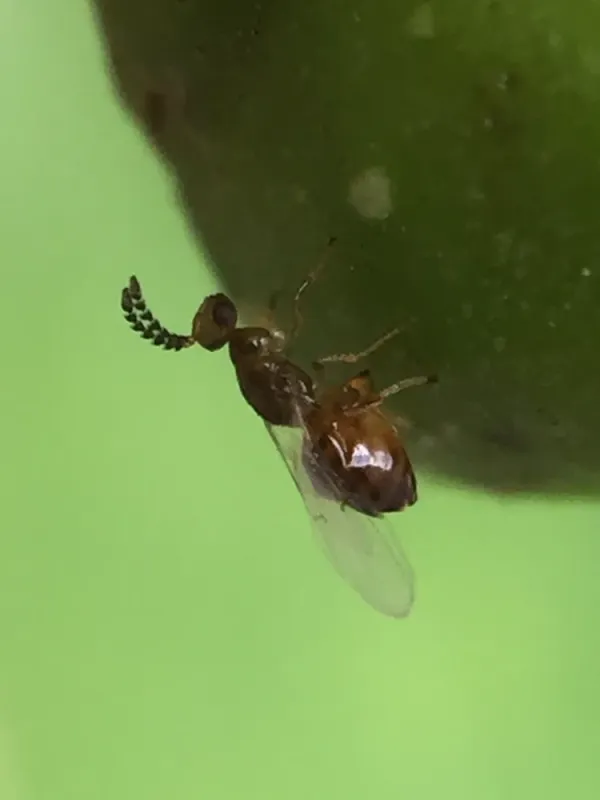
Odontofroggatia galili is a micro-hymenopteran insect belonging to the family Pteromalidae. This species is highly specialized, acting as a gall-forming wasp that targets specific Ficus species.
Adult insects are tiny and possess a specialized morphology designed for navigating the complex reproductive structures of Ficus trees, where they lay their eggs within the developing syconia.
The life cycle of this wasp is strictly synchronized with the flowering and fruit-setting phases of the host plant, ensuring that larvae have a consistent food supply throughout their development.
Due to its small size and internal life cycle, Odontofroggatia galili is often overlooked until significant infestation levels are reached within a Ficus collection or nursery.
Accurate identification usually requires expert entomological examination or DNA analysis, as its presence is often confused with other sycophilous wasp species associated with figs.
What it damages
The damage caused by Odontofroggatia galili primarily affects the reproductive health of Ficus trees. Larvae develop internally within the figs, consuming the tissue that would otherwise form seeds.
This feeding activity causes significant deformation of the syconia, leading to irregular shapes and inhibited growth of the fruit, which significantly diminishes the ornamental value of the plant.
Infested figs often undergo premature abscission, falling from the tree before reaching maturity. This results in the loss of potential seeds and can disrupt the plant's natural reproductive cycle.
Secondary infections are a major concern, as the wounds created by the wasps and the exit holes allow fungal pathogens and bacteria to enter the fruit tissue, causing rot.
In large-scale nursery production, this pest can lead to substantial economic losses by ruining fruit-bearing ornamental specimens and complicating the propagation of healthy stock.
Signs of infestation
Visible signs of infestation include the presence of abnormal swellings or stunted growth in developing figs. These fruits may appear discolored or uneven compared to healthy ones.
Small circular exit holes on the surface of mature or fallen figs serve as a clear indicator that the adult wasps have completed their development and emerged from the fruit.
A high rate of premature fruit drop, especially during the peak growing season, is a classic warning sign that suggests the presence of an active gall-wasp population.
Inspecting the interior of fallen figs often reveals hollowed-out chambers filled with larval debris, confirming that the fruit was used as a host for the development of the larvae.
Stunted development of the host plant’s reproductive structures, combined with a general lack of vigor in the canopy, often accompanies severe and persistent infestations.
Control measures
The most effective management strategy is rigorous sanitation, which involves the frequent collection and destruction of all fallen and visibly infested figs to break the pest's life cycle.
Systemic insecticides may be utilized in industrial settings; however, their efficacy is limited due to the larvae being protected inside the dense tissue of the developing fruit.
Pruning infested branches can help reduce the overall population pressure, especially when combined with careful disposal of the plant material to prevent the adult wasps from dispersing.
Strict phytosanitary protocols for nurseries, including the quarantine of newly acquired Ficus specimens, are essential to prevent the introduction and spread of this pest into new areas.
Biological control methods, such as the introduction of natural predators or parasitic wasps, represent a promising research area for sustainable and chemical-free population management.
Taxonomy
- Latin name
- Odontofroggatia galili
- Order
- Hymenoptera
- Family
- Agaonidae
- EPPO code
- ODOFGA
Discussion
No discussions yet — be the first.