
Blastophaga
Blastophaga
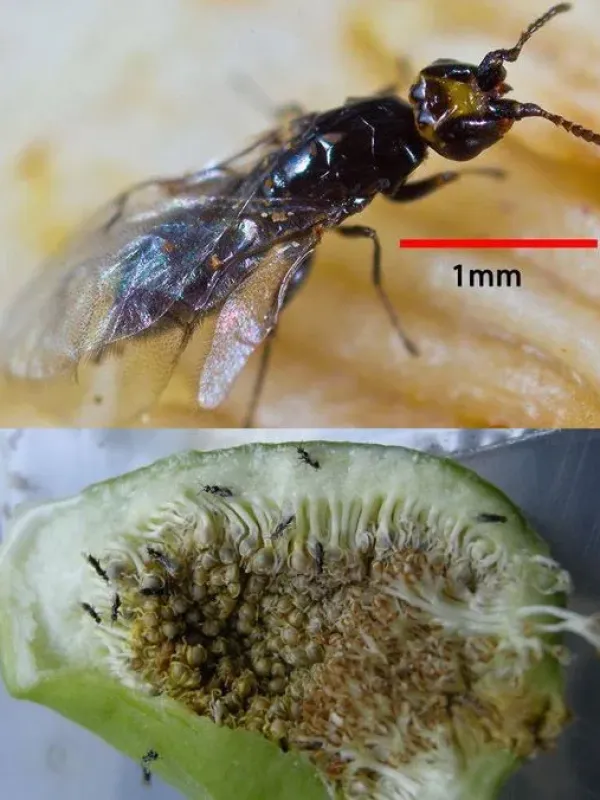
Description
How to identify
The Blastophaga (Blastophaga psenes) is a specialized species of wasp within the family Agaonidae, essential for the lifecycle of the common fig.
Females are small, dark, winged insects approximately 2 mm long, evolved specifically to navigate into the fig's inflorescences, known as syconia.
The males are wingless, blind, and spend their entire short lives within the syconium, mating with females and helping them exit before dying.
Taxonomically, they are categorized as chalcid wasps, showing extreme specialization in their interaction with the host plant Ficus carica.
They are characterized by unique morphological adaptations, including a head shape designed to squeeze through the small ostiole of the fig.
What it damages
Blastophaga is rarely classified as a pest, as it is an obligate mutualist required for the successful fruit set of non-parthenocarpic fig varieties.
However, excessive colonization can occur in specific management scenarios, leading to potential contamination or physical damage to the fruit interior.
Economic damage is typically negligible unless the insects interfere with the cosmetic quality of the fruit harvested for fresh market consumption.
In some agricultural contexts, an overabundance of wasps can lead to fruit drop or internal molding if the wasps carry opportunistic pathogens.
Farmers must balance the need for pollination with the risk of fruit quality degradation caused by dense wasp populations.
When it appears
The activity of the Blastophaga is strictly governed by the developmental stages of the caprifig and the cultivated fig trees.
The emergence of the adult wasps occurs during the spring and summer, coinciding with the receptive period of the fig syconia.
Multiple generations can occur throughout the growing season, provided the climatic conditions remain warm and favorable for development.
Diapause may occur during winter months or periods of low temperature, where the wasps remain in the larval stage inside the syconia.
Farmers monitor the timing of wasp emergence to ensure effective pollination of the orchards during the blooming phase.
Signs of infestation
Small exit holes on the surface of the syconia are the primary indicator that the wasp life cycle has been completed successfully.
Internal examination of the syconium will reveal gall-like structures where the wasp larvae develop and pupate.
The presence of fine dust-like pollen on the emerging females is a key indicator of their readiness to pollinate other receptive flowers.
Early fruit drop or deformation can occasionally indicate an imbalance in the relationship between the wasp and the host tree.
Observing the flight activity around the trees during the warm hours of the day is a standard method for monitoring population density.
Control measures
Control measures are rarely required, as the Blastophaga is considered a beneficial insect necessary for fruit production in many regions.
When necessary, physical barriers such as fine-mesh bags are used to prevent fruit from being colonized by wasps in research or specific culinary applications.
Chemical control is strongly discouraged, as the use of insecticides destroys the natural pollinator population and results in zero fruit set.
- Manual removal of colonized caprifigs.
- Planting of self-fertile (parthenocarpic) varieties if wasp control is required.
- Strategic orchard planning to manage the distance between caprifigs and edible fig trees.
Sustainable agricultural management focuses on maintaining a healthy equilibrium rather than eradicating the wasp population.
Taxonomy
- Latin name
- Blastophaga
- Order
- Hymenoptera
- Family
- Agaonidae
- EPPO code
- BLAGSP
Discussion
No discussions yet — be the first.