
Josephiella
Josephiella
Description
How to identify
Josephiella is a genus of tiny wasps belonging to the family Agaonidae. The most common species, Josephiella microcarpae, is primarily known for causing gall formations on specific species of Ficus trees.
These insects are extremely small, often measuring only a few millimeters in length. Their presence is usually detected by the damage they inflict on plants rather than by spotting the adult insects themselves.
As members of the superfamily Chalcidoidea, these wasps have evolved a specialized relationship with their host plants. Their life cycle is intrinsically linked to the physiological processes of the Ficus tree, which they use as both a food source and a nursery.
Taxonomically, they are categorized as parasitic wasps, although their role as gall-formers makes them a significant pest in nurseries and urban landscaping settings.
Identification is usually confirmed through the presence of characteristic leaf galls. Entomologists may examine the morphological features of the emerging adults to confirm the specific species involved in the infestation.
What it damages
The primary host for Josephiella is the Ficus microcarpa, often referred to as the Chinese Banyan. This species is widely used for indoor decoration and outdoor landscaping in warmer climates.
The damage is caused by the larvae, which induce the plant to form galls. Inside these galls, the larvae feed on plant tissues, effectively diverting the tree's energy reserves away from normal growth and leaf development.
A severe infestation results in significant cosmetic damage. The leaves become distorted, bumpy, and unsightly, which reduces the market value and ornamental quality of the trees in nurseries.
The continuous development of galls causes premature leaf senescence and abscission. In heavy cases, a tree can lose a substantial portion of its canopy, leading to general decline and stunted growth.
Weakened trees are often prone to secondary attacks by other pests and pathogenic fungi, creating a cycle of degradation that can be difficult to manage without intervention.
Signs of infestation
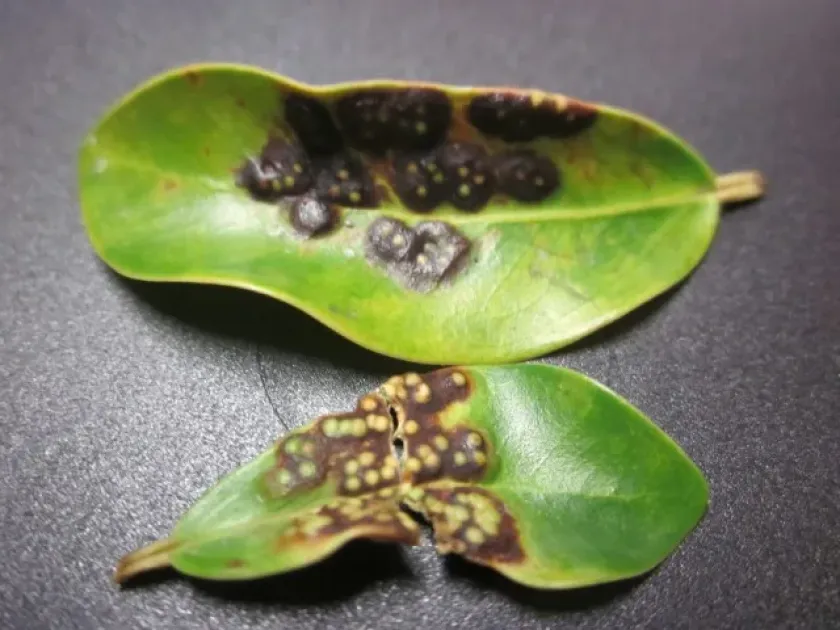
The most prominent sign of a Josephiella infestation is the presence of numerous small, raised green galls on the surface of the leaves. These galls can cover the entire leaf blade and leaf stalk.
Leaves affected by the pest often display chlorosis, appearing pale or yellowish around the gall sites. The overall shape of the leaf may become twisted or curled due to the irregular development caused by the galls.
During the late stages of the infestation, the galls may turn brown as the plant tissue dies or after the adult wasps have emerged from the chamber, leaving behind small exit holes.
Affected leaves tend to fall off the tree earlier than healthy ones. Observing a sudden increase in leaf litter, especially leaves with bumpy textures, is a clear indicator that a control program is needed.
- Small, round, or elongated green galls on leaves.
- Irregular leaf shape and distortion.
- Premature leaf drop and canopy thinning.
- Visible exit holes after adult wasp emergence.
Control measures
Managing Josephiella effectively requires a proactive approach. Systemic insecticides are the preferred method of control, as they are absorbed by the plant and target the larvae hidden within the leaf galls.
Physical removal is a crucial component of management. Pruning and destroying all heavily infested leaves and branches helps limit the population spread and prevents the next generation of wasps from emerging.
Implementing strict quarantine protocols is essential for nurseries. All incoming Ficus stock should be thoroughly inspected for symptoms and isolated to prevent the introduction of the pest into the main collection.
Cultural practices should focus on maintaining plant vigor through proper irrigation and fertilization. A healthy plant has better resilience, although chemical intervention is usually still required to eradicate the pests.
Biological control research is ongoing, aiming to identify natural predators that can penetrate the galls. Meanwhile, regular monitoring and integrated pest management (IPM) remain the most effective strategies for long-term control.
Taxonomy
- Latin name
- Josephiella
- Order
- Hymenoptera
- Family
- Agaonidae
- EPPO code
- JOSESP
Discussion
No discussions yet — be the first.