
Ficus gall wasp
Josephiella microcarpae
Description
How to identify
The Ficus gall wasp (Josephiella microcarpae) is a small hymenopteran insect belonging to the family Agaonidae. It is a highly specialized parasite that exclusively targets Ficus microcarpa.
The adult insect is minute and rarely observed by growers. Its life strategy is centered around inducing gall formation within the leaf tissue, which provides a protected environment for its offspring.
Unlike other species of wasps that pollinate figs, this specific wasp acts as a parasite that exploits the structural resources of the host plant.
The presence of this insect is often discovered only after the characteristic symptoms on the leaves appear, as the wasp itself is elusive.
It is classified as a significant pest for ornamental Ficus production and nursery management, causing widespread aesthetic damage.
What it damages
The Ficus gall wasp infests Ficus microcarpa, including popular cultivars like 'Ginseng' and 'Nitida'. No other host plant species are known to be affected by this specific wasp.
The larvae develop inside the plant's leaf parenchyma, causing the host to produce abnormal growths known as galls. This redirects the plant's nutrients to the pest.
Severe infestations lead to massive leaf deformation, reduced photosynthesis, and premature senescence of the foliage.
The plant loses its vigor and overall health, becoming susceptible to secondary stressors like drought or nutrient deficiency.
If left untreated, the accumulation of galls results in significant thinning of the canopy and may lead to the total decline of the plant specimen.
Signs of infestation
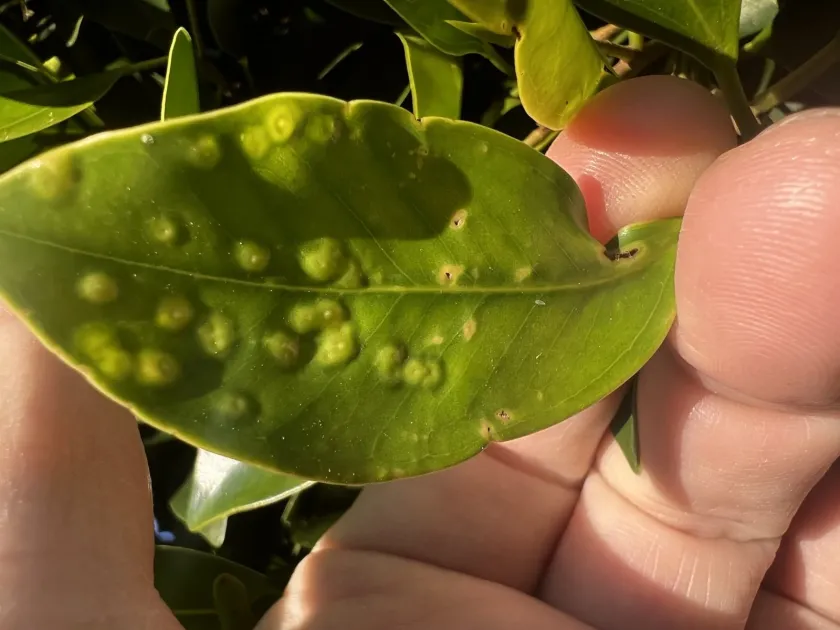
The hallmark sign of infestation is the appearance of numerous small, raised bumps or galls on the surface of the Ficus leaves.
These galls can be light green, yellow, or brown, and they significantly distort the smooth texture of the leaf blade.
As the larvae mature, the galls may become more prominent, and tiny emergence holes might be visible under close inspection with a magnifying lens.
Infested leaves often display stunted growth, curling, and early chlorosis, making the plant look sickly and dishevelled.
New growth is usually the most heavily infested, as the wasps preferentially target soft, young leaf tissues for oviposition.
Control measures
Controlling Josephiella microcarpae is challenging because the larvae are protected by the gall tissue, making topical contact insecticides largely ineffective.
Systemic insecticides are the preferred method of control. These substances are absorbed by the plant's vascular system, ensuring that larvae feeding inside the galls are targeted.
Cultural practices such as the immediate removal and destruction of all galled leaves are essential to lower the pest population and prevent spread.
Application of insecticides should be repeated according to the life cycle of the wasp to catch emerging adults before they lay new eggs.
- Isolate the infested plant immediately to prevent cross-contamination.
- Use systemic insecticides (neonicotinoids) as a drench or spray.
- Prune and discard all affected foliage regularly.
- Monitor all Ficus microcarpa plants in the vicinity for signs of infestation.
Taxonomy
- Latin name
- Josephiella microcarpae
- Order
- Hymenoptera
- Family
- Agaonidae
- EPPO code
- JOSEMI
Discussion
No discussions yet — be the first.