
Ocnerostoma
Ocnerostoma
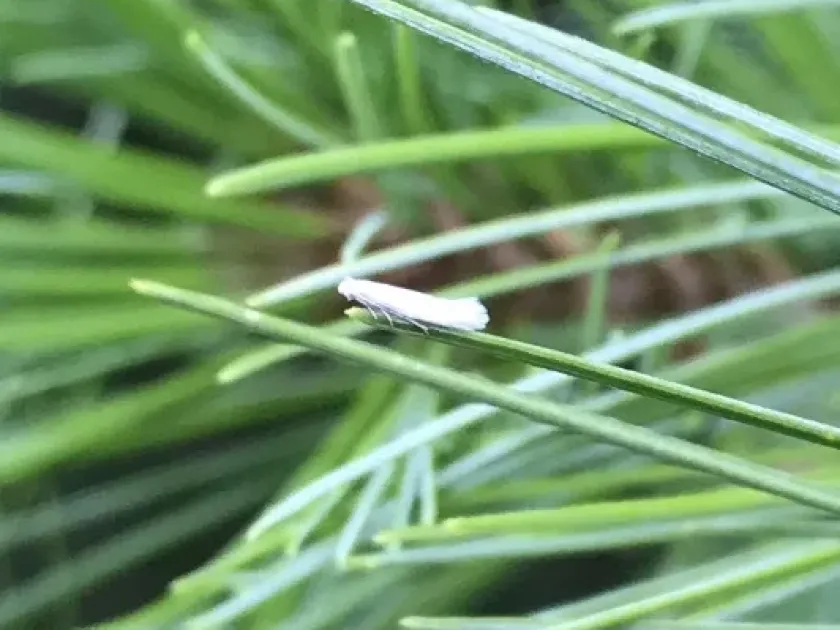
Description
How to identify
Ocnerostoma is a genus of small moths belonging to the family Yponomeutidae, commonly known as the ermine moth family.
Adult moths are characterized by narrow, silver-grey or whitish wings that fold tightly against the body, creating a very streamlined appearance when at rest.
The larvae, or caterpillars, are small and yellowish-green, which provides excellent camouflage while they reside inside the pine needles.
The head of the larva is distinct and well-adapted for boring into the dense internal tissues of coniferous leaves.
As members of the Yponomeutidae, these insects exhibit a specialized life cycle that is strictly tied to specific host plants within the Pinaceae family.
What it damages
The primary hosts for Ocnerostoma species are various types of pines, including the Scots pine and other ornamental conifers used in landscaping.
The damage is caused entirely by the larvae, which bore into the needles and consume the internal parenchyma, leaving the epidermis intact.
This feeding behavior turns the needles yellow or brown and leads to premature needle drop, significantly thinning the foliage of the tree.
Severe infestations can result in stunted growth and a general decline in the health and vigor of the infested pine trees.
While often unnoticed at first, chronic damage over several years can make trees more susceptible to other secondary pests and environmental stressors.
When it appears
The flight period of adult moths typically occurs in the late spring or summer, depending on local weather conditions and the specific species.
Females lay eggs directly on the pine needles or near the buds, where the newly hatched larvae immediately begin mining the needle tissue.
Development of the larvae continues throughout the growing season, and they often pupate in summer or autumn within a delicate silken cocoon.
Overwintering often occurs as a larva or pupa, nestled within the bark crevices or sheltered areas on the tree, waiting for the return of warmer weather.
The renewal of larval activity in early spring is closely synchronized with the emergence of new growth on the host pine tree.
Signs of infestation
The first signs of an infestation are usually discolored, yellowish tips of needles that seem to dry out without showing obvious external damage.
Closer inspection reveals tiny entry holes on the needles, often near the base, through which the larvae have gained access to the interior.
The presence of fine, granular frass inside the needles and the hollowness of the needles themselves are definitive indicators of Ocnerostoma activity.
Increased needle fall beneath the tree, especially during seasons when it is not expected, often indicates a significant moth population in the crown.
- Needle yellowing or browning.
- Hollowed-out interior of the needle.
- Small entrance holes on the needle surface.
- Premature needle shedding.
Control measures
Effective management of Ocnerostoma requires the use of systemic insecticides that can reach the larvae hidden inside the needles.
Timing is critical: applications should be made when the larvae are most active or just beginning to mine to ensure optimal product uptake.
Sanitation practices, such as removing and burning heavily infested branches during the dormant season, can reduce the overwintering population.
Biological control through the preservation of natural predators and parasitoids is an essential component of integrated pest management for conifers.
Regular monitoring of tree health using pheromone traps can help detect the presence of moths early and facilitate timely intervention before damage escalates.
Taxonomy
- Latin name
- Ocnerostoma
- Order
- Lepidoptera (butterflies)
- Family
- Yponomeutidae
- EPPO code
- OCNESP
Discussion
No discussions yet — be the first.