
Ochrilidia gracilis
Ochrilidia gracilis
Description
How to identify
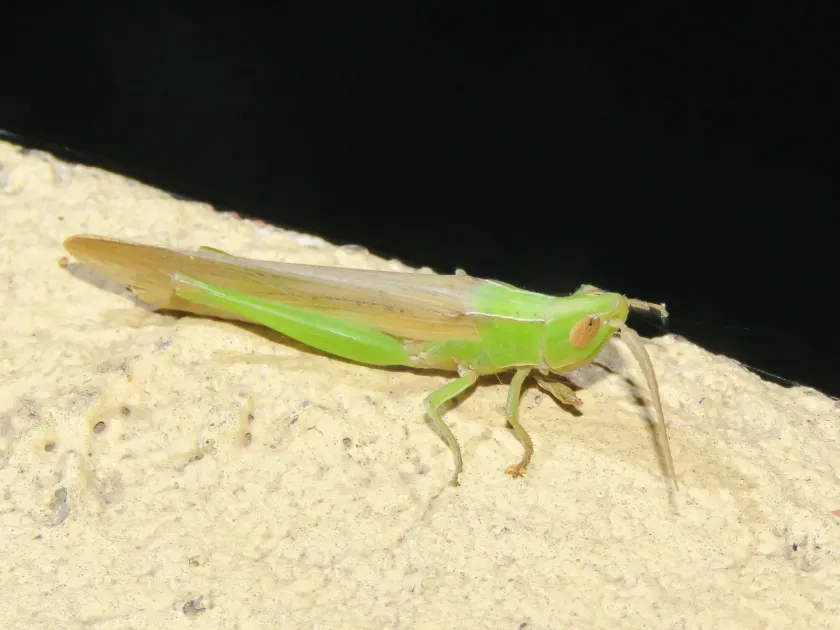
Ochrilidia gracilis is a species of slant-faced grasshopper belonging to the Acrididae family within the order Orthoptera, known for its slender and elongated body structure.
The insect possesses a remarkably camouflaged appearance, with a body color palette ranging from pale yellow to light brown, mimicking the texture of dry stalks.
Its elongated head and narrow wings are distinctive morphological traits that help the grasshopper blend seamlessly into the dense vegetation of its habitat.
As a highly adapted species, it prefers open grasslands and cereal fields where it can efficiently hide from predators while maintaining access to food sources.
Sexual dimorphism is evident, with females being notably larger than males, which is a common characteristic among many species within this diverse insect family.
What it damages
Ochrilidia gracilis acts as an herbivore, feeding primarily on the green foliage and stems of various cereal crops, including wheat and barley.
The feeding process involves chewing the edges and surfaces of leaves, which leads to a reduction in the plant's overall photosynthetic capacity and vigor.
In addition to cultivated grains, this species often feeds on various wild grasses, making agricultural borders and surrounding meadows potential breeding grounds.
Heavy infestations can lead to significant biomass loss, especially in young plants, which may result in stunted growth and reduced harvest yields.
The injury caused by this grasshopper creates entry points for various bacterial and fungal pathogens, potentially complicating the crop's health status.
When it appears
The development of Ochrilidia gracilis is highly synchronized with the warm season, as it requires adequate heat to complete its life cycle.
Eggs overwinter in the soil, protected from winter frosts, and hatching typically occurs in late spring when temperatures are consistently warm.
Nymphal development proceeds through several instars, with the individuals becoming increasingly active and damaging as they approach the adult stage.
The period of maximum activity and adult presence is observed during the mid-to-late summer months, coinciding with the peak vegetative growth of many crops.
Reproductive success is often bolstered by prolonged periods of dry and hot weather, which favor the survival of offspring and larval growth.
Signs of infestation
The most visible signs of an infestation include irregularly chewed leaf edges and stripped foliage, which can leave plants looking ragged.
Active specimens can be detected by observing the field during the day, as they are capable of jumping away when disturbed by movement or sound.
Small fecal pellets left on the leaves or the ground beneath the plants serve as clear evidence of the presence of an active grasshopper population.
Yellowing or necrosis of leaf tissues often appears shortly after feeding begins, indicating that the plant is undergoing stress due to tissue loss.
In cases of severe outbreaks, farmers may notice entire areas of the field where the grass density is noticeably thinner compared to healthy parts.
Control measures
Controlling Ochrilidia gracilis involves an integrated strategy that focuses on both preventive agricultural practices and targeted chemical interventions.
Deep plowing of the soil is an effective technique to disrupt the overwintering egg pods, significantly reducing the population of nymphs in the following spring.
Maintaining clean field borders by removing weeds eliminates alternative host plants and reduces the availability of sheltered breeding sites for the grasshoppers.
Insecticide applications should be reserved for periods when the pest population exceeds economic injury levels, ensuring minimal impact on non-target species.
Regular scouting of crops throughout the growing season allows for early detection of hotspots, enabling localized control instead of wide-area spraying.
Taxonomy
- Latin name
- Ochrilidia gracilis
- Order
- Orthoptera (locusts)
- Family
- Acrididae
- EPPO code
- OCRIGR
Discussion
No discussions yet — be the first.