
California pine scale
Nuculaspis californica
Description
How to identify
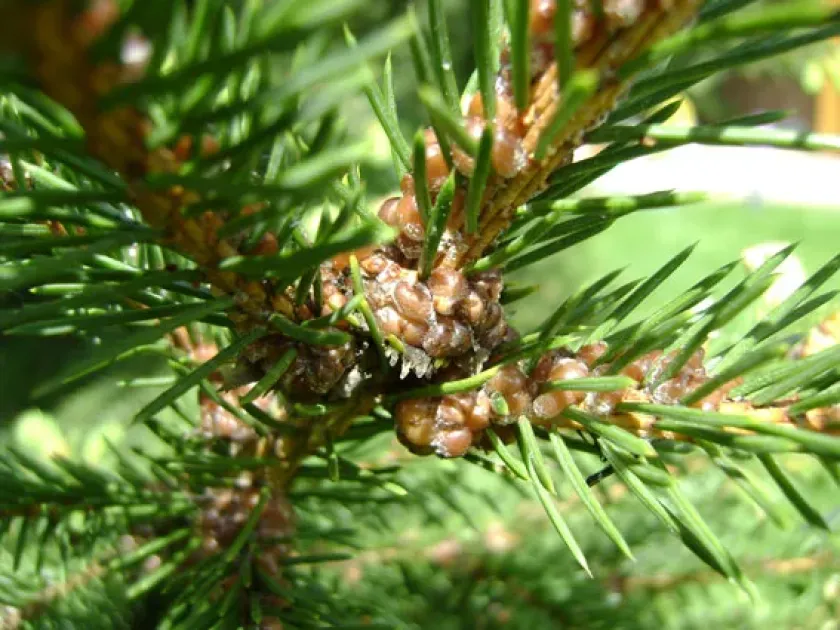
The California pine scale (Nuculaspis californica) is a small insect belonging to the order Hemiptera and the family Diaspididae. Adult females are protected by a dense, oval-shaped armor known as a scale, which ranges from brown to gray, often blending with the color of the tree's bark.
Males of this species are significantly smaller than females, possess wings, and are capable of flight, though their lifespan is very short. Females, by contrast, are sedentary and remain fixed to a single spot on the needles or twigs throughout their adult life.
Visually, an infested plant appears as if its needles are covered in tiny, dark, rigid scales. This protective covering serves as a shield, making the insect resilient to environmental stress and certain chemical applications.
The insect's life cycle is closely linked to climatic conditions. Fertilized females overwinter on the needles, and as temperatures rise, they begin laying eggs directly beneath their protective scale.
After hatching, the young larvae, known as "crawlers," move actively across the tree canopy. Once they find a suitable feeding site, they settle, lose their mobility, and begin secreting their own protective wax armor.
What it damages
The primary hosts of this pest are species within the Pinus genus (pines). However, it can also infest spruces and other introduced coniferous species in landscape plantings.
The pests typically congregate on the needles and young, tender shoots. If populations become high, they can cover the entire needle surface, which interferes with the tree's ability to perform photosynthesis efficiently.
By feeding on the sap of the host plant, the scale insect causes generalized weakening of the tree. This often results in stunted growth, distorted shoots, and a significant loss of ornamental value.
Mass infestations often lead to premature yellowing and dropping of the needles. In severe cases, the tree becomes exhausted, which may result in the death of individual branches or even the entire specimen.
The puncture wounds created by the feeding insects can serve as entry points for various fungal pathogens. Furthermore, stressed trees are highly susceptible to secondary attacks from bark beetles and borers.
Signs of infestation
The first sign of an infestation is the presence of tiny, firmly attached dark spots on the needles. These spots are difficult to remove without damaging the leaf surface, indicating the presence of scales.
A common symptom is a general dulling of the tree's crown color. The needles lose their natural waxy sheen and begin to yellow, a condition that usually starts in the lower or middle portions of the crown.
Upon closer inspection, the branches may feel rough or gritty to the touch due to the high density of scales covering the surface. This crust-like layer is not easily dislodged by rain or wind.
If a tree shows lack of vigor and the annual shoot growth is significantly reduced, it is a strong indicator that an inspection for scales is required using a magnifying lens.
Persistent needle drop, where the shed needles appear dry and brittle, suggests that the scale colony has been feeding on the tree's resources for an extended period, severely impacting its health.
Control measures
Controlling the California pine scale requires the use of systemic insecticides. These products are absorbed into the plant's vascular system, making the sap toxic to the feeding insects hidden beneath their scales.
Timing is critical: applications should be aimed at the "crawler" stage, when the young insects have not yet developed their protective armor and are most vulnerable to chemical exposure.
It is recommended to implement a program of 2–3 applications, spaced 10–14 days apart. This strategy ensures control over emerging generations that may hatch after the initial treatment.
Sanitary pruning of heavily infested branches is an essential cultural practice. Removed plant material must be destroyed, preferably by burning or deep burial, to prevent re-infestation.
Maintaining optimal tree vigor through regular watering and appropriate fertilization strengthens the tree’s natural defenses, making it less attractive to pest colonization.
Taxonomy
- Latin name
- Nuculaspis californica
- Order
- Hemiptera (bugs, aphids, leafhoppers)
- Family
- Diaspididae
- EPPO code
- NUCUCA
Discussion
No discussions yet — be the first.