
Red shiner
Notropis lutrensis
Description
How to identify
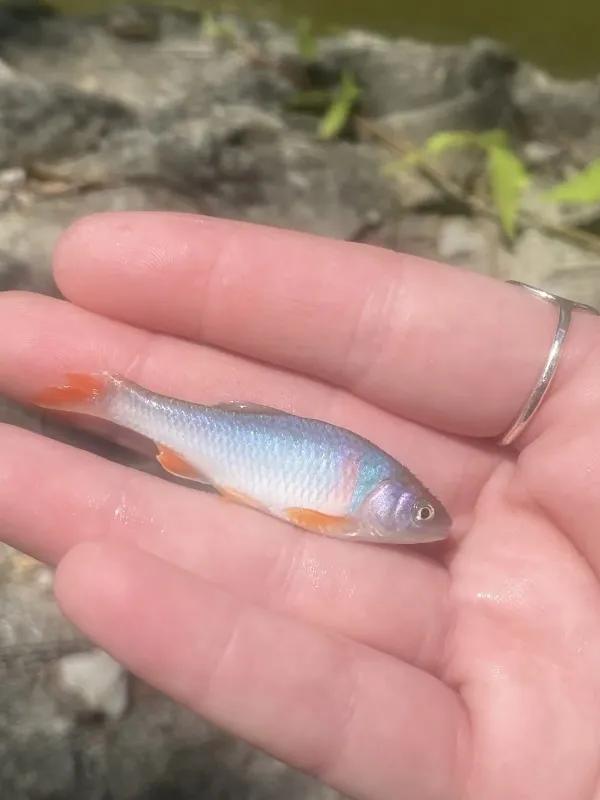
The red shiner (Notropis lutrensis) is a small freshwater fish belonging to the family Cyprinidae, native to North America but invasive globally.
This species is characterized by a deep, compressed body, generally reaching 5 to 9 cm in length, with distinctive bright red or orange fins.
The coloration of the males becomes particularly intense during the spawning season, exhibiting a vivid blue sheen on their silvery sides.
It is an extremely hardy fish, capable of thriving in turbid waters with low dissolved oxygen levels and significant temperature fluctuations.
Its high reproductive rate and adaptability make it a successful invasive species in irrigation networks and artificial water bodies.
What it damages
In agricultural settings, particularly in rice cultivation, the red shiner is known to cause damage by consuming young plant seedlings in flooded paddies.
By feeding on tender sprouts, the fish can lead to sparse crop stands, negatively impacting the final harvest yield and requiring replanting.
Within aquaculture facilities, it acts as a competitor to commercially valuable fish species, depleting zooplankton populations and preying on fish eggs.
The presence of dense populations of this species can lead to the degradation of the irrigation water quality, affecting the overall agricultural efficiency.
Furthermore, their presence in irrigation canals can cause mechanical interference, such as clogging water intake filters and screens with debris.
When it appears
The red shiner's activity and damage potential are highest during the spring and summer months when water temperatures rise above 20 degrees Celsius.
This coincides with the flooded stage of rice cultivation, providing the fish with ample access to spawning grounds and food sources in the paddies.
Multiple generations can be produced within a single growing season, making consistent monitoring essential throughout the warmer months.
As water temperatures drop in autumn, the fish become less active, settling into the bottom sediments of irrigation canals to overwinter.
The lifecycle is tightly linked to the hydrological management of irrigation systems, making water flow regulation a key factor in their seasonal appearance.
Signs of infestation
Visible signs of infestation include the presence of schools of small fish in irrigation channels and the shallow edges of flooded fields.
Damaged rice seedlings, characterized by partially consumed leaves and stems floating on the water surface, serve as a clear indicator of feeding activity.
In aquaculture, a sudden decline in the growth rates of primary fish stocks and a reduction in natural food availability indicate a potential red shiner presence.
Frequent splashing at the surface during morning and evening hours indicates high activity and population density within the irrigation system.
Uneven crop development in flooded areas, which cannot be attributed to soil or water quality issues, often signals fish-related mechanical damage.
Control measures
Effective management requires the installation of fine-mesh screens on water intake pipes to prevent the migration of the fish into irrigation systems.
Routine drainage and maintenance of irrigation canals during the off-season help eliminate overwintering populations and destroy their habitats.
Biological control, such as stocking predatory fish species that feed on shiners, can help regulate their population density naturally.
Strict controls on the movement of water and fish stock between different basins are necessary to prevent the further spread of the invasive species.
- Fine-mesh intake screening
- Off-season drainage of irrigation canals
- Introduction of natural predators
- Regulated inter-basin water transfer
Taxonomy
- Latin name
- Notropis lutrensis
- Family
- Cyprinidae
- EPPO code
- NOTRLU
Discussion
No discussions yet — be the first.