
Norellia spinipes
Norellia spinipes
Description
How to identify
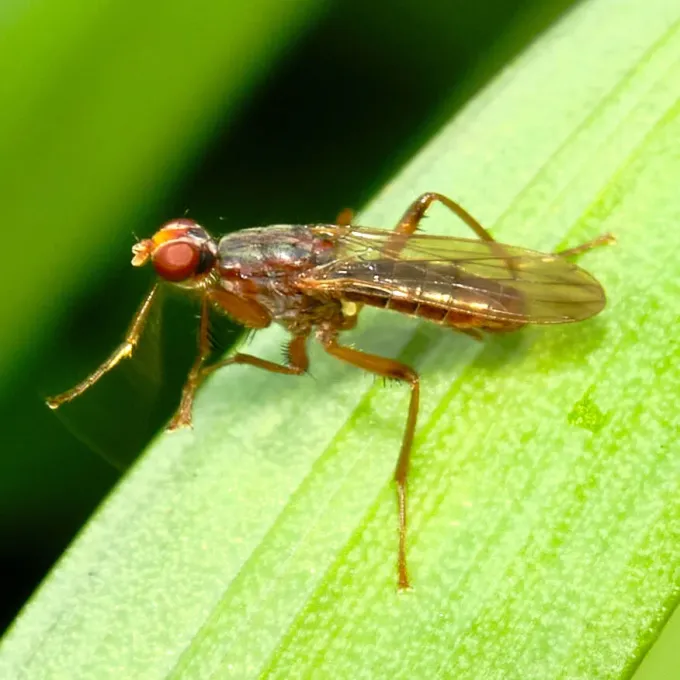
Norellia spinipes is a species of fly belonging to the Scathophagidae family. These insects are commonly identified by their distinct yellowish-brown body coloration.
The name spinipes refers to the presence of sharp spines on the front legs of the insect, which serves as a key identification feature for entomologists.
Adult flies are highly mobile and are typically found near host plants during the growing season, where they mate and deposit eggs.
As members of the order Diptera, they share general characteristics with other flies but are specifically noted for their phytophagous larvae.
Understanding their morphology is essential for accurate identification in the field, as they can sometimes be confused with other related species.
What it damages
The primary damage is caused by larvae that bore into the stems and leaves of host plants, disrupting the internal structure and transport of nutrients.
Norellia spinipes primarily infests bulbous plants, with a strong preference for Narcissus and other members of the Amaryllidaceae family.
The larvae create tunnels within the tissue, which weakens the plant's structure and makes it susceptible to secondary bacterial and fungal infections.
Severe infestations can lead to stunted growth, reduced flower production, and in some cases, the total collapse of the shoot system.
For ornamental growers, the aesthetic damage caused by this pest can result in significant economic losses and a decline in crop quality.
When it appears
The life cycle of the pest is synchronized with the growing season of its host plants, typically starting in late spring as temperatures rise.
Adults become active as soon as the weather warms, seeking suitable plants to lay their eggs on the stems or leaf axils.
The developmental rate of the larvae is relatively fast, enabling the population to build up significantly if environmental conditions remain favorable.
Multiple generations may occur throughout the season, leading to a continuous risk of infestation until the plants reach maturity or senescence.
The insect typically overwinters in the soil as a pupa, protected from harsh winter temperatures, and emerges as an adult the following spring.
Signs of infestation
The most common sign of infestation is the yellowing and wilting of the tips of the leaves as the plant struggles to transport water.
Examine stems for tiny entry holes where larvae have burrowed into the tissue, often accompanied by small amounts of frass near the opening.
Plants may show reduced height or distorted growth patterns, signaling that the structural integrity of the stem has been compromised.
In advanced cases, the internal stem tissue may rot due to the combined effect of larval feeding and opportunistic pathogen colonization.
- Wilting of central shoots.
- Yellowing of leaf tips.
- Presence of internal tunnels in stems.
Control measures
Effective management begins with strict crop rotation, which breaks the pest life cycle by removing the availability of suitable hosts.
Sanitation is critical; removing and destroying infested plant material and post-harvest residues helps reduce the population for the next season.
Systemic insecticides may be applied during the peak egg-laying period to prevent larvae from successfully boring into the plant stems.
Maintaining high plant vigor through proper fertilization and irrigation helps plants better tolerate larval feeding and recover faster.
Monitoring adult populations using sticky traps can provide early warning, allowing for targeted control measures before widespread infestation occurs.
Taxonomy
- Latin name
- Norellia spinipes
- Order
- Diptera (flies)
- Family
- Scathophagidae
- EPPO code
- NORLSN
Discussion
No discussions yet — be the first.