
Nomadacris fascifera
Nomadacris fascifera
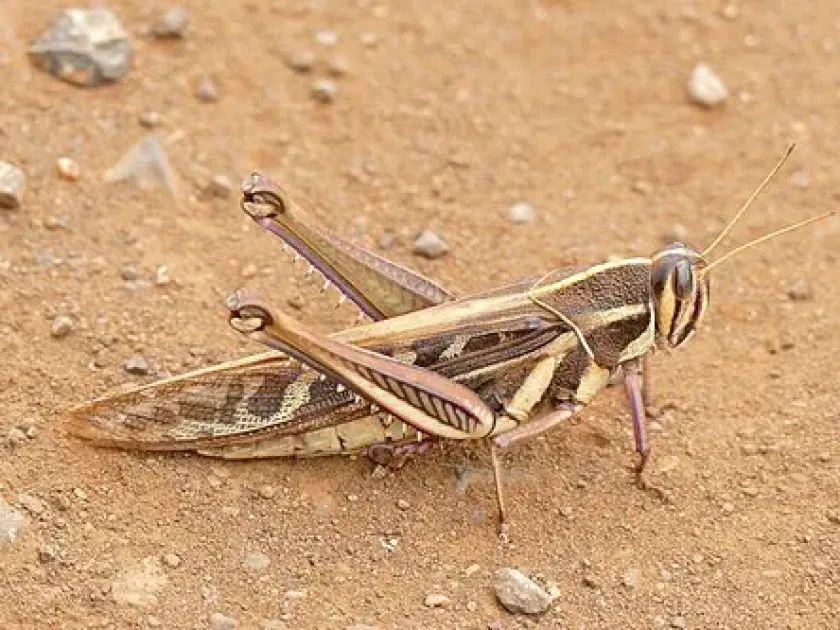
Description
How to identify
Nomadacris fascifera is a significant insect species within the family Acrididae (short-horned grasshoppers). Known for its robust morphology, this species is capable of rapid population growth and exhibits characteristics of locust behavior under specific environmental pressures.
Adult insects typically reach lengths between 6 to 8 centimeters. Their coloration ranges from tan to olive-brown, which provides excellent camouflage within dry grasses and agricultural landscapes, making them difficult to detect until the population density becomes high.
The nymphal stages resemble miniature adults, though they lack fully developed wings. They grow through a series of molts, progressively increasing in size and intensity of feeding behavior, which is critical for agronomists to recognize during field inspections.
Field identification requires examining the morphological traits of the pronotum and the specific patterns on the wings. Entomological tools such as sweep nets are essential for gathering samples to confirm the presence of this species during the early season.
Understanding their social phase is crucial, as their behavior shifts from solitary individuals to dense, migrating swarms. Identifying the early signs of this phase change is a key responsibility for pest management programs in infested areas.
What it damages
As a highly polyphagous insect, this species poses a threat to a vast range of crops. It feeds aggressively on cereal grains, including wheat, barley, and sorghum, which are often the primary targets for large-scale infestations.
Beyond staples, the pest frequently attacks maize, sugar cane, and various forage grasses. In extreme scenarios, when primary food sources are depleted, they may consume vegetables and even the foliage of young orchard trees.
The primary damage is caused by the intense defoliation of the plants. By stripping leaves, the insect drastically reduces the plant's photosynthetic capacity, leading to stunted growth, reduced grain fill, and substantial yield loss.
Feeding injuries also create entry points for secondary infections, such as bacterial or fungal pathogens. This weakens the plant structure further and can lead to increased disease prevalence within the entire field crop.
The level of destruction depends heavily on the swarm size. When acting as a collective force, these locusts can denude entire fields within days, representing a severe risk to food security and the economic viability of farming operations.
When it appears
The life cycle of this species is highly dependent on climate, particularly temperature and soil moisture levels. The emergence of the new generation generally aligns with the onset of the growing season, providing ample food for the developing nymphs.
Nymphal emergence typically occurs when soil temperatures reach optimal levels, usually following early seasonal rains. This is the period of maximum vulnerability for the insect, making it the ideal window for agricultural interventions.
Adult flight activity peaks mid-summer, when the insects are fully winged and capable of long-distance migration. During this phase, they become highly mobile, allowing them to search for new feeding grounds and expand the infested area.
The number of generations per year is dictated by local weather patterns. Warm, humid summers significantly improve survival rates, potentially leading to rapid population explosions that require urgent and coordinated management efforts.
The season concludes with the deposition of eggs into the soil, where they enter diapause. This overwintering strategy ensures the persistence of the species through cold or dry months, allowing for a resurgence when conditions improve.
Signs of infestation
One of the earliest signs of an infestation is the presence of exuviae (cast-off skins) on plants or the soil surface. Finding these molts indicates that a new generation of nymphs is active and growing within the field.
Visible defoliation is a prominent symptom, characterized by ragged leaf edges. As the nymphs feed, they move from the margins toward the center of the leaves, eventually leaving only the midribs intact in cases of severe infestation.
A high density of adults is easily observed during field surveys, as they jump and take flight in large numbers when disturbed. The movement and noise associated with their activity are distinct indicators of an established population.
Large quantities of insect frass (droppings) accumulate beneath the canopy. This accumulation serves as a clear indicator of the intensity of the feeding occurring overhead and suggests the need for immediate action.
The sudden appearance of localized areas of destroyed vegetation across a field is a classic sign of swarm movement. Monitoring these spots allows farmers to track the progression of the infestation and target control measures effectively.
Control measures
Effective control begins with preventative measures, such as deep plowing of fallow land and breeding grounds. This mechanical disruption destroys egg pods deposited in the soil, significantly reducing the success of the next generation.
Chemical control is most effective when applied during the early nymphal stages. Targeted applications of contact or systemic insecticides can prevent the population from reaching the highly mobile adult phase, which is much harder to control.
Biological control methods, including the use of entomopathogenic fungi, offer a sustainable alternative. These agents specifically target the locust population while preserving the natural balance of beneficial insects within the local ecosystem.
Ongoing monitoring of field margins, pastures, and nearby wasteland is essential for early detection. By eliminating small, localized clusters, farmers can prevent them from merging into uncontrollable, large-scale swarms.
Integrated Pest Management (IPM) strategies, which combine cultural, biological, and chemical methods, are the most reliable way to manage Nomadacris fascifera. Coordination between regional agricultural departments is vital for success.
Taxonomy
- Latin name
- Nomadacris fascifera
- Order
- Orthoptera (locusts)
- Family
- Acrididae
- EPPO code
- NOMAFA
Discussion
No discussions yet — be the first.