
Golden spider beetle
Niptus hololeucus
Description
How to identify
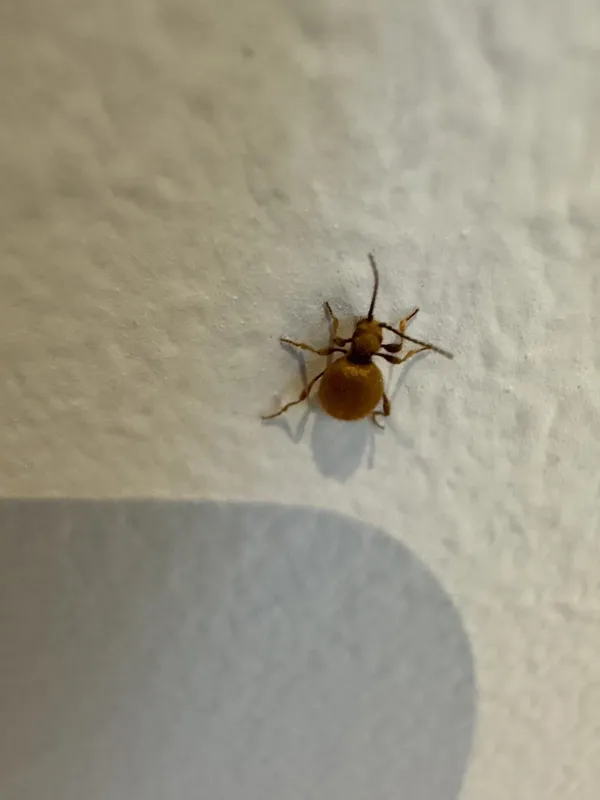
The Golden spider beetle (Niptus hololeucus) belongs to the order Coleoptera and the family Ptinidae. Adult specimens typically measure between 3 and 4.5 mm in length.
The beetle has an oval, convex body covered in dense golden-yellow hairs, which completely obscure its chitinous shell, giving the insect a fluffy, rounded appearance.
The head is retracted into the pronotum, and it features long, filiform antennae composed of 11 segments. The wings are vestigial, meaning the beetle cannot fly and moves only by crawling.
Larvae are whitish, C-shaped, and covered in sparse light hairs, possessing a distinctive brown head. They live and feed hidden deep within the substrate.
The name Niptus refers to the insect's defensive behavior of "playing dead" by retracting its antennae and legs underneath its body when threatened.
What it damages
This species is a notorious pest of storehouses and warehouses, causing significant damage to a wide array of plant and animal-based products.
The primary damage is caused by larvae that bore through grain, cereals, flour, and dried fruits, leaving behind fecal matter and fine webbing.
The Golden spider beetle is polyphagous and frequently infests stored spices, medicinal herb seeds, tobacco, and dry pet foods.
In residential settings, these beetles can damage wool fabrics, furs, feathers, and leather goods, making them a threat to both food supplies and household textiles.
On an industrial scale, the pest can multiply rapidly in neglected or stagnant stock, turning high-quality goods into waste within a short timeframe.
When it appears
The development of the Golden spider beetle occurs primarily within heated warehouses, where temperatures are maintained above 15°C throughout the year.
In temperate climates, the beetle may produce one or two generations per year, but under stable indoor conditions, reproduction remains continuous.
Optimal conditions for the beetle include high humidity and the presence of accumulated organic dust or debris, which larvae prefer for feeding and development.
Adults are primarily nocturnal or active at twilight, as they exhibit strong negative phototaxis, meaning they actively avoid bright light sources.
The developmental cycle from egg to imago is highly dependent on ambient temperature and the nutritional quality of the substrate colonized by the larvae.
Signs of infestation
The most prominent sign of an infestation is the visual detection of the beetles themselves, which often congregate in dark corners, floor crevices, or near storage containers.
When inspecting grain or flour, one might notice clumps of material bound together by the fine, silk-like webbing produced by larvae during the pupation process.
Small exit holes may be visible on the surface of packaging or stored goods, created by young beetles emerging after completing their development.
A characteristic sign of presence is the accumulation of fine, dust-like fecal pellets or particulate debris at the bottom of storage bins or containers.
Infested products often develop a musty, unpleasant odor and lose their market value, rendering them unsuitable for human consumption or retail sale.
Control measures
The primary method of control is the strict implementation of warehouse sanitation practices, including regular cleaning to remove dust and stagnant product debris.
Thorough disinfestation of empty warehouse spaces using approved contact insecticides or fumigation treatments is highly recommended to eliminate hidden colonies.
Effective moisture management is a key preventive measure; maintaining a dry microclimate significantly slows down the reproductive rate of the pest population.
If a batch of grain or food product is found to be infested, it must be subjected to extreme temperature treatment (freezing or heating) or complete disposal.
The use of modern traps with pheromone or food attractants can assist in the early detection of breeding sites and monitoring population trends.
Taxonomy
- Latin name
- Niptus hololeucus
- Order
- Coleoptera (beetles)
- Family
- Ptinidae
- EPPO code
- NIPTHO
Discussion
No discussions yet — be the first.