
Spider beetle
Niptus
Description
How to identify
Spider beetles belong to the family Ptinidae (order Coleoptera). The most common species that act as pests in stored products is the golden spider beetle, scientifically known as Niptus hololeucus.
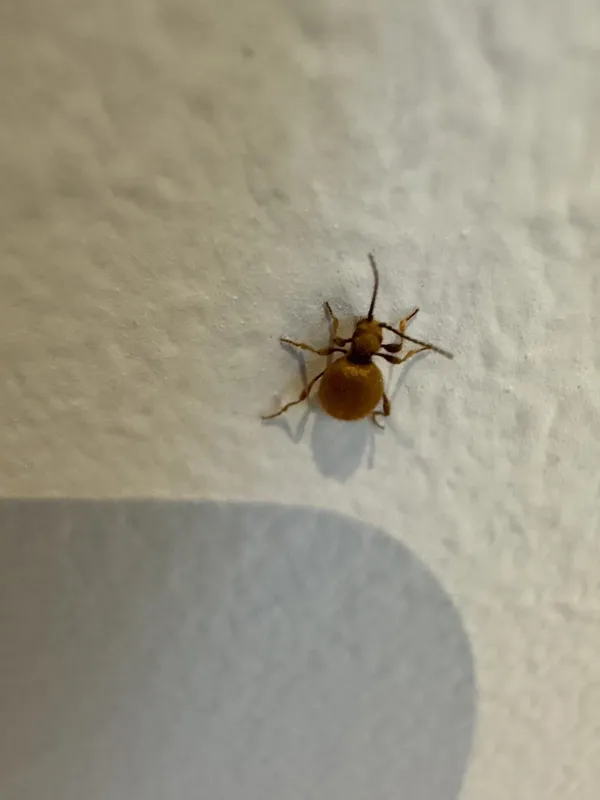
Adult insects have a distinct, rounded body shape that is densely covered with fine hairs, giving them an appearance similar to a small spider.
They earned their common name due to their defensive behavior: when disturbed, they retract their antennae and legs and remain motionless, pretending to be dead.
The larvae are small, white, and curved with a well-developed head capsule, preferring to live deep within the food source to remain concealed.
Adults are typically 3 to 4.5 millimeters in length, and their coloration ranges from reddish-brown to golden-yellow depending on the hair density.
What it damages
Spider beetles are well-known stored-product pests that attack a wide variety of materials, including grains, flour, cereals, dried fruits, and spices.
They possess strong mandibles capable of boring through various types of packaging, such as thick paper bags and plastic, allowing them to infiltrate sealed products.
Beyond plant-based products, these pests can also damage animal-based items like wool, fur, feathers, and preserved biological specimens in museums or collections.
The larvae cause the most significant damage by burrowing into the grains, leaving them hollowed out and unsuitable for human or animal consumption.
Infested areas often suffer from heavy contamination with larval excrement, silk webbing, and dead insect remains, leading to total product loss.
When it appears
Because spider beetles primarily infest indoor environments, they can reproduce throughout the year in heated warehouses where environmental conditions are stable.
The females lay their eggs directly onto or within the food source, ensuring that the larvae have immediate access to nutrients once they hatch.
The duration of the life cycle is highly dependent on temperature and humidity levels, generally ranging from several months to a full year.
These insects tend to congregate in dark, undisturbed areas where debris, dust, and food residues accumulate over time.
Optimal conditions for their development are moderate temperatures (18–25°C) and higher humidity levels within the storage facility.
Signs of infestation
One of the primary indicators of a spider beetle infestation is the presence of fine silk webbing produced by the larvae, which may bind particles of food together.
Visual inspection often reveals the presence of small, dark granular frass (excrement) and partially consumed grain kernels scattered on the warehouse floor.
Adult beetles are frequently spotted at night or in dimly lit corners, as they are primarily active during the twilight hours or in dark environments.
A musty odor usually accompanies a severe infestation, caused by the buildup of waste products and potential secondary mold growth.
- Visible holes in food packaging and containers.
- Presence of larvae inside infested bulk materials.
- Sightings of adult beetles on walls or floor surfaces.
Control measures
Effective sanitation is the most critical step in controlling spider beetles; this includes removing food spills, dust, and debris from all nooks and crevices.
Before moving new crops into storage, empty rooms should be treated with appropriate insecticides or cleaned thoroughly to eliminate lingering populations.
Monitoring moisture content in stored grains is essential, as dry, well-ventilated grain is less susceptible to rapid pest colonization.
In cases of severe infestation, fumigation of the storage facility is the most effective way to eliminate all life stages, including those hidden deep within the product.
Utilizing high-quality sealed containers and maintaining consistent temperature control can significantly reduce the risk of future infestations.
Taxonomy
- Latin name
- Niptus
- Order
- Coleoptera (beetles)
- Family
- Ptinidae
- EPPO code
- NIPTSP
Discussion
No discussions yet — be the first.