
Green grass bug
Nezara graminea
Description
How to identify
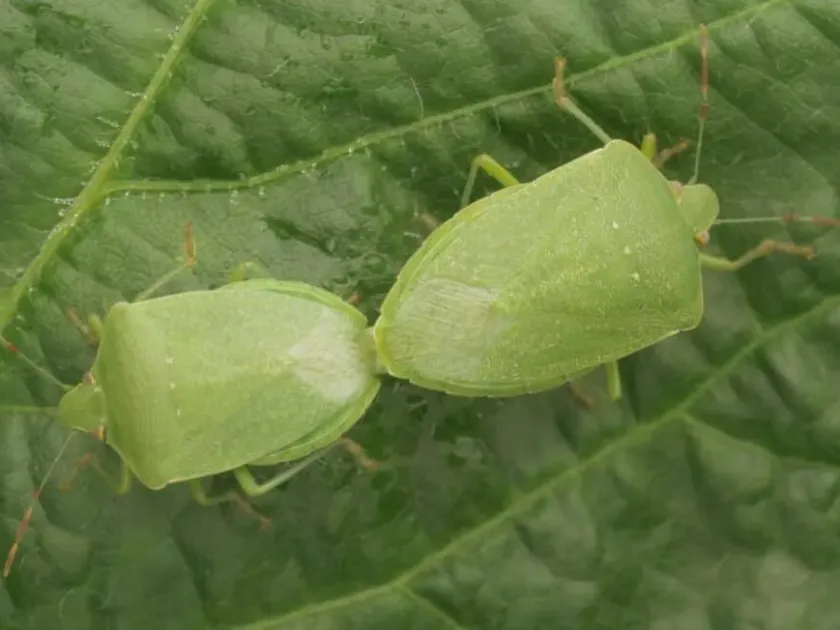
The green grass bug (Nezara graminea) belongs to the Pentatomidae family, commonly known as shield bugs. Adults feature a distinct shield-shaped body, typically measuring 10–15 mm in length and displaying a vivid green coloration.
Unlike some larger related species, this bug is characterized by its slightly smaller frame and the specific structure of its scutellum. The body surface is smooth and chitinized, often showing fine punctation upon close inspection.
The antennae are five-segmented, a key morphological feature for distinguishing this species from other green-colored shield bugs that may occupy the same habitat.
Its mouthparts are specialized for piercing and sucking, allowing it to penetrate the epidermal layers of various plant species to access internal nutrient fluids.
Nymphs of this species undergo several developmental stages, often exhibiting vibrant patterns and colors that differ from the uniform green of the adults, providing camouflage within the vegetation.
What it damages
This pest is highly polyphagous, meaning it feeds on a wide array of host plants including grasses, vegetables, and leguminous crops like soybeans and beans.
The primary damage is caused by the extraction of sap from tender parts of the plant, such as growing shoots, flower buds, and developing pods, leading to metabolic disruption.
Infested plants often show signs of stunted growth, and in many cases, flowers and immature fruits fall off prematurely, significantly reducing the potential yield.
Feeding by the bugs on the fruit surface results in necrotic spots, deformities, and irregular textures, making the produce unsuitable for market sale.
In grain crops, the bug's activity can lead to shriveled seeds and reduced germination rates, as the pest drains essential nutrients from the developing embryo inside the seed.
When it appears
The lifecycle typically begins in spring when adults emerge from overwintering sites, such as leaf litter, bark crevices, or dense weed patches, once temperatures rise above 12°C.
Mating and oviposition occur throughout late spring and early summer. The female lays egg masses in organized rows, usually on the underside of leaves to protect them from sunlight and predators.
Depending on the climatic zone, the bug can produce one to two generations per season. The peak population density often aligns with the maturation stage of summer crops.
As the season progresses, nymphs mature into adults through several molting stages, with peak feeding activity occurring during the warmest months of the year.
With the arrival of autumn and cooler temperatures, the bugs begin to migrate toward sheltered areas to initiate diapause, ensuring survival through the winter months.
Signs of infestation
The most visible sign of infestation is the presence of chlorotic spots on leaves. These develop when the bug injects digestive enzymes into the tissue while feeding.
Fruit and pod surface damage is easily identified by small sunken dots or wart-like growths that form at the site of the bug's probe.
The presence of egg clusters on the undersides of leaves is a definitive sign of an active infestation, providing early warning for potential nymph populations.
A foul, pungent odor is released by the bugs when they are disturbed or crushed, which is a classic defensive mechanism of the Pentatomidae family.
If a crop canopy is disturbed, adults may be seen flying away or dropping to the ground, where their green coloration makes them difficult to spot against the foliage.
Control measures
Cultural control is highly effective; maintaining clean fields by removing weeds and crop debris eliminates the habitat where adults overwinter and breed.
Biological control agents, such as egg parasitoids, can significantly limit population growth and are recommended for integrated pest management programs.
Chemical intervention should only be considered when the pest population exceeds the economic threshold, using targeted insecticides approved for specific vegetable or crop types.
Monitoring using pheromone traps or light traps can help determine the exact timing for applications, ensuring that chemicals are used efficiently and safely.
- Practice crop rotation to disrupt the pest's reproductive cycle.
- Ensure field borders are kept free of tall weeds to prevent bug migration.
- Use selective pesticides to minimize the impact on beneficial insects.
Taxonomy
- Latin name
- Nezara graminea
- Order
- Hemiptera (bugs, aphids, leafhoppers)
- Family
- Pentatomidae
- EPPO code
- NEZAGA
Discussion
No discussions yet — be the first.