
Asian green stink bug
Nezara antennata
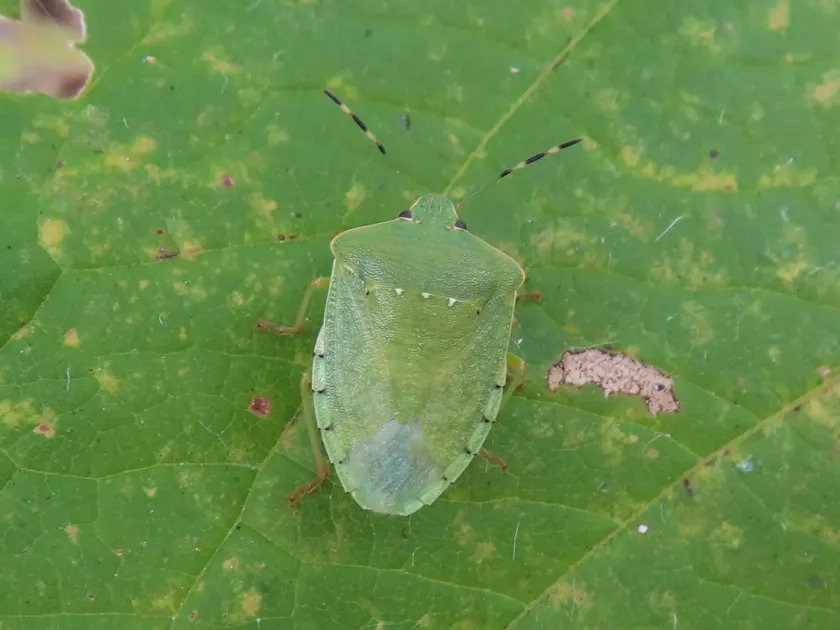
Description
How to identify
The Asian green stink bug (Nezara antennata) is a member of the Pentatomidae family, commonly known as shield bugs. These insects are easily recognized by their shield-shaped body, which is typically 10 to 15 mm long and bright green in color.
Unlike the common southern green stink bug (Nezara viridula), the Asian green stink bug has specific morphological traits, including distinct antenna structure and color patterns on the scutellum. During winter, adults may turn brownish to blend in with dormant vegetation.
The life cycle includes five nymphal stages. As they develop, their coloration changes from a variegated appearance in early stages to a uniform green color that provides excellent camouflage among plant foliage.
Females lay eggs in neat clusters, usually on the underside of leaves. These eggs are barrel-shaped and arranged in rows, which is a key characteristic for identifying their presence in agricultural fields.
Like other pentatomids, they possess specialized glands that emit a pungent, unpleasant odor when disturbed. This chemical defense mechanism protects them from many predators and is a hallmark of the species.
What it damages
This species is a highly polyphagous pest, feeding on a wide variety of crops including legumes like soybeans and beans. It is also known to cause severe damage to fruit and vegetable crops.
Crops frequently attacked include tomatoes, peppers, eggplants, and various fruits. The bugs use their piercing-sucking mouthparts to feed on plant sap, particularly targeting the developing seeds and fruits.
The primary damage caused by these insects involves tissue necrosis and deformation of the harvested product. Fruits often become bumpy and develop necrotic spots, rendering them unsuitable for market sale.
Beyond physical damage, the insects inject saliva containing enzymes that can cause localized rot and invite secondary fungal or bacterial infections. This significantly reduces both the quality and shelf life of the crops.
High infestations can lead to significant yield losses in commercial farming. Because they are highly mobile, they can quickly infest entire fields, making early detection critical for effective crop protection.
When it appears
The seasonal activity of the Asian green stink bug typically begins in spring when temperatures consistently reach above 15°C. Overwintered adults emerge from protected areas to find host plants.
After a short feeding period, females begin laying eggs. Depending on the climate, the insect can complete multiple generations in a single growing season, leading to population explosions in mid-summer.
Peak feeding activity usually occurs from late summer to early autumn. This is when nymphs and adults aggregate on fruit-bearing plants to consume high-energy plant sap for their development and preparation for hibernation.
As daylight hours decrease and temperatures drop, adults seek shelter in forest margins, dry foliage, or around farm buildings. They are hardy insects capable of surviving harsh winter conditions in their dormant state.
Weather conditions heavily influence their population dynamics. Hot and dry summers generally favor faster egg development and higher nymph survival rates compared to cool and wet seasons.
Signs of infestation
The most common sign of an infestation is the visual observation of adults and nymphs on the plant stems and underside of leaves. They often drop to the ground when the plant is disturbed.
Feeding marks appear as tiny, pale, or translucent spots on leaves. If the infestation is severe, these spots will eventually yellow, become necrotic, and cause leaf curling or premature drop.
Fruits, such as tomatoes, show telltale bumpy textures and distorted growth. If you cut into a damaged fruit, the internal tissue is often discolored and spongy due to the insect's salivary enzymes.
On legumes, look for shriveled pods or flat seeds. The bug pierces the pod to reach the developing seeds, and successful feeding leaves behind dark spots that are visible even on the pod surface.
Finding egg masses on the underside of leaves is the most reliable sign that a new generation is about to hatch. Monitoring these clusters allows farmers to target control efforts before the nymphs spread.
Control measures
Integrated pest management starts with good field sanitation. Removing crop debris and destroying weeds around the perimeter of the field significantly reduces the places where bugs can hide during winter.
Biological control methods are increasingly used, focusing on the protection and release of egg parasitoids like Trissolcus species. These small wasps are highly effective at destroying stink bug egg masses.
Chemical control should be employed strategically. If population thresholds are exceeded, use broad-spectrum or systemic insecticides that are labeled for use on the specific vegetable or legume crops being treated.
Applications should be timed for the early morning or late evening when the insects are less mobile and more active on the plant surface. This ensures better contact with the chemicals and reduces the impact on non-target species.
Regular field scouting is essential to determine the best timing for interventions. Rotating insecticide modes of action is also vital to prevent the development of resistant populations of this persistent pest.
Taxonomy
- Latin name
- Nezara antennata
- Order
- Hemiptera (bugs, aphids, leafhoppers)
- Family
- Pentatomidae
- EPPO code
- NEZAAN
Discussion
No discussions yet — be the first.