
Southern green stink bug
Nezara
Description
How to identify
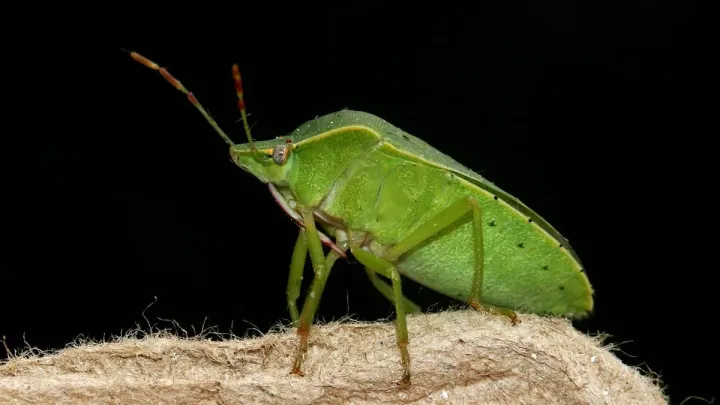
The Southern green stink bug (Nezara viridula) belongs to the family Pentatomidae, order Hemiptera. It is a shield-shaped insect typically recognized by its uniform bright green color, although some variations exist during different life stages or seasons.
Adult bugs typically measure between 12 and 15 mm in length. The insect has a distinct triangular scutellum. Nymphs, or immature stages, undergo several molts, significantly changing their appearance from orange or black to green as they mature through five distinct instars.
What it damages
This species is a notorious polyphagous pest with a vast host range. It inflicts severe damage on legumes, particularly soybeans, where it feeds on developing pods, causing shriveled or aborted seeds and reducing overall yield quality.
Beyond legumes, the bug frequently attacks vegetable crops such as tomatoes, peppers, and eggplants. Fruit trees and various grain crops are also susceptible to its feeding habits, which leads to fruit deformation, bitterness, and increased vulnerability to secondary infections.
When it appears
The bug's seasonal activity is primarily driven by temperature, with peak populations occurring during warm and humid weather conditions. Adults hibernate in protected areas such as dense vegetation, leaf litter, or bark during the colder winter months.
The life cycle is rapid, allowing for multiple generations per year in temperate and tropical climates. Migrations into crop fields usually occur when the primary host plants reach the fruiting stage, providing an abundant food source for nymphs and adults alike.
Signs of infestation
Typical signs of infestation include chlorotic spots on leaves and small sunken necrotic spots on fruit. Feeding punctures often result in distorted fruit growth and "pitted" skin, rendering agricultural produce unmarketable.
Farmers can detect their presence by the distinctive foul-smelling secretion released when the bugs are disturbed. Visual scouting of the undersides of leaves and the examination of developing pods often reveal clusters of eggs or nymphs in various stages of development.
Control measures
Integrated Pest Management (IPM) is crucial for controlling Nezara populations. Mechanical control includes removing alternative weed hosts and maintaining clean borders around fields. Crop rotation helps to disrupt the life cycle of the pest.
Chemical control involves the application of appropriate insecticides during the nymphal stages, which are more susceptible than adults. Biological control using egg parasitoids like Trissolcus basalis has proven to be a highly effective and sustainable method for managing infestation levels.
Taxonomy
- Latin name
- Nezara
- Order
- Hemiptera (bugs, aphids, leafhoppers)
- Family
- Pentatomidae
- EPPO code
- NEZASP
Discussion
No discussions yet — be the first.