
Neoseiulus
Neoseiulus
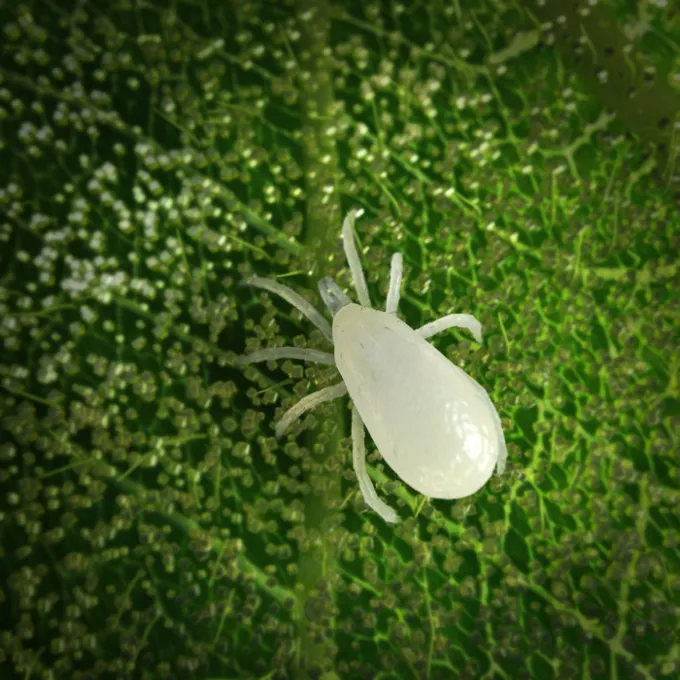
Description
How to identify
Neoseiulus is a genus of predatory mites belonging to the family Phytoseiidae, widely recognized for its role in integrated pest management (IPM).
These mites are microscopic, agile predators that exhibit rapid movement across the surface of leaves to locate their prey efficiently.
Their body morphology varies depending on the specific species, but they generally appear as translucent to light tan organisms under magnification.
The life cycle involves egg, larva, two nymphal stages, and adult, with the entire cycle being highly dependent on ambient temperature and humidity.
Unlike herbivorous mites, Neoseiulus are specialized hunters equipped to pierce and consume eggs, larvae, and adults of various plant-feeding species.
What it damages
Neoseiulus species do not cause damage to crops; they are strictly carnivorous and do not consume plant sap or tissue throughout their life cycle.
These mites are beneficial agents that target spider mites, thrips, and other small pests that plague ornamental plants and agricultural vegetables.
Any necrosis, stippling, or leaf chlorosis observed on crops should be attributed to the prey pests rather than the predatory mites themselves.
Integrating these mites into growing systems reduces reliance on chemical pesticides, ensuring the production of safe and healthy food products.
Their presence is a positive indicator of a managed, biologically active ecosystem that is working to suppress pest population outbreaks.
When it appears
The activity of Neoseiulus is primarily regulated by environmental factors, with optimal conditions typically ranging between 20 and 30 degrees Celsius.
In greenhouse settings, these predators can be managed year-round to ensure continuous protection of the crop throughout the entire growing season.
Springtime applications are crucial for establishing a baseline population of predators before the primary pest species begin their rapid reproductive cycle.
During summer, when temperatures are elevated, maintaining proper humidity levels is essential to support the predatory mite's survival and effectiveness.
As fall approaches and conditions shift, the population density of Neoseiulus may naturally fluctuate in response to the decreasing availability of prey.
Signs of infestation
Detection of Neoseiulus requires a hand lens or field microscope to inspect the underside of leaves, particularly near the leaf veins where they forage.
An effective presence is indicated by a noticeable decrease in the population of mobile pest stages and a reduction in new webbing formation.
The mites are often found roaming actively, searching for prey, while their eggs can be identified as transparent, oval shapes laid on the underside of leaves.
If the predator population successfully dominates the pest population, the damage to the foliage will stabilize and eventually cease to expand.
- Reduced visible activity of spider mites.
- Presence of fast-moving, predatory mites on leaf surfaces.
- Decrease in the progression of leaf discoloration and scarring.
Control measures
The primary control strategy for maintaining Neoseiulus is to avoid broad-spectrum insecticides that are lethal to beneficial mites and predatory species.
Humidity management is vital; maintaining at least 60 percent relative humidity provides the environment necessary for the mites to thrive and reproduce.
If chemical interventions for other diseases become necessary, always choose selective products known to be compatible with phytoseiid mite populations.
Regular scouting using sticky traps and leaf inspections allows growers to track the predator-to-prey ratio and adjust release rates accordingly.
Successful biological control relies on the timely introduction of Neoseiulus before pest populations reach an irreversible economic threshold.
Taxonomy
- Latin name
- Neoseiulus
- Order
- Mites
- Family
- Phytoseiidae
- EPPO code
- NEOUSP
Discussion
No discussions yet — be the first.