
Pine sawfly
Neodiprion taedae
Description
How to identify
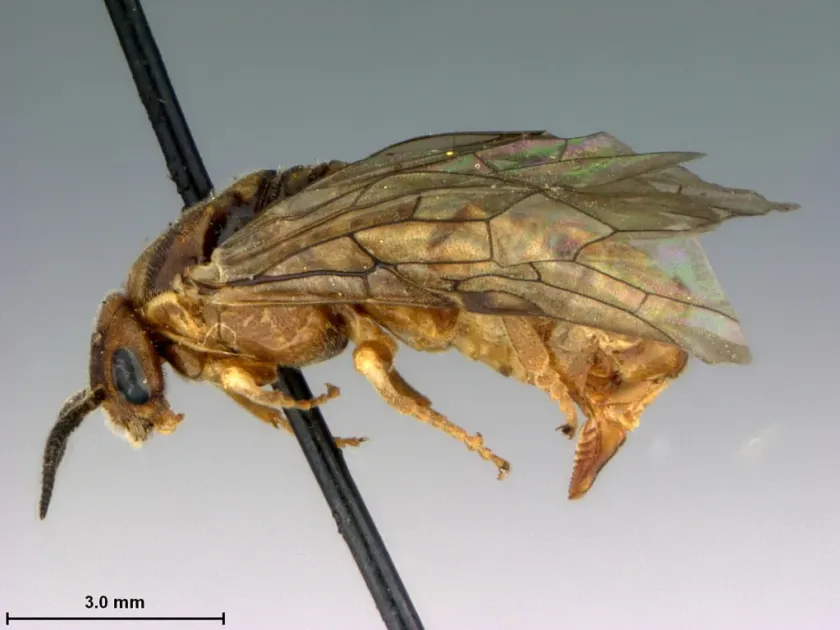
The pine sawfly belongs to the order Hymenoptera, specifically the family Diprionidae. The adults are small wasp-like insects, and females possess a specialized saw-like ovipositor used to deposit eggs into pine needles.
The larvae, often called false caterpillars, feature a greenish-yellow body with dark longitudinal stripes. They have a distinct brown head and 22 legs, which differentiates them from butterfly larvae that possess fewer prolegs.
Female sawflies insert their eggs directly into the needles by making precise slits. This process creates distinct scarring patterns on the needles, providing a safe environment for the developing embryos.
The life cycle encompasses four main stages: egg, larva, prepupa, and pupa, followed by the adult stage. Pupation usually occurs in tough, paper-like cocoons found in leaf litter or on the tree bark.
The development of the population is highly sensitive to environmental factors, particularly temperature and humidity, which often trigger mass outbreaks during warm, dry cycles.
What it damages
The primary hosts of this pest are various pine species. Both young seedlings in nurseries and mature trees in forestry plantations are subject to significant feeding pressure from the larvae.
Larvae primarily consume older needles, which significantly reduces the tree's photosynthetic capacity. In instances of high population density, they will also consume the current year's needles.
Defoliated trees lose their vigor and become highly susceptible to environmental stress and secondary attacks from wood-boring insects, such as bark beetles, which can kill a weakened tree.
Economic impact is most severe in nurseries, where complete defoliation can kill young trees entirely. In forests, repeated outbreaks lead to stunted growth and reduced timber quality over many years.
The loss of foliage alters the forest canopy structure and creates fire hazards due to the accumulation of damaged, drying needles and fecal matter on the forest floor.
Signs of infestation
The earliest sign of an infestation is the presence of yellow, serrated scars on the needles, which indicate where the adult female has deposited her eggs earlier in the season.
The most visible symptom is the presence of larval colonies feeding in groups on branches. When disturbed, these larvae typically arch their bodies upward in a synchronized defensive motion.
Needle bases will often turn brown, leading to premature wilting and needle drop. Under infested trees, one can observe significant amounts of frass, which looks like small, dark, granular pellets.
Observers will notice patches of branches where all needles have been stripped, leaving only bare twigs. This creates a ragged, thin appearance to the canopy, particularly in the lower sections.
During the adult flight period, large numbers of winged insects can be seen buzzing around pine crowns, which serves as a warning of impending egg-laying activity for the next generation.
Control measures
Biological control is highly effective; encouraging bird populations and preserving natural predators such as predatory wasps can significantly reduce sawfly numbers in healthy forest ecosystems.
For ornamental or nursery settings, chemical control using contact insecticides should be applied shortly after egg hatch, when larvae are young and most vulnerable to exposure.
Good forest management practices, such as maintaining healthy stand density and removing severely infested or dead timber, help prevent the environmental stress that invites major outbreaks.
Mechanical control, such as pruning heavily infested branches or shaking larvae onto a catch-cloth for manual destruction, is feasible for smaller trees and limited residential areas.
Pheromone traps are essential tools for monitoring adult activity. By tracking the flight period, arborists can time pesticide applications precisely, ensuring maximum efficacy while minimizing chemical usage.
Taxonomy
- Latin name
- Neodiprion taedae
- Order
- Hymenoptera
- Family
- Diprionidae
- EPPO code
- NEODTL
Discussion
No discussions yet — be the first.