
Neodiprion nanulus
Neodiprion nanulus
Description
How to identify
Neodiprion nanulus, commonly known as a type of pine sawfly, is a hymenopteran insect belonging to the Diprionidae family. These insects are significant defoliators of pine trees across various regions.
Adult sawflies are small, with females being typically larger than males. They possess two pairs of wings and are usually active during the late summer or autumn months.
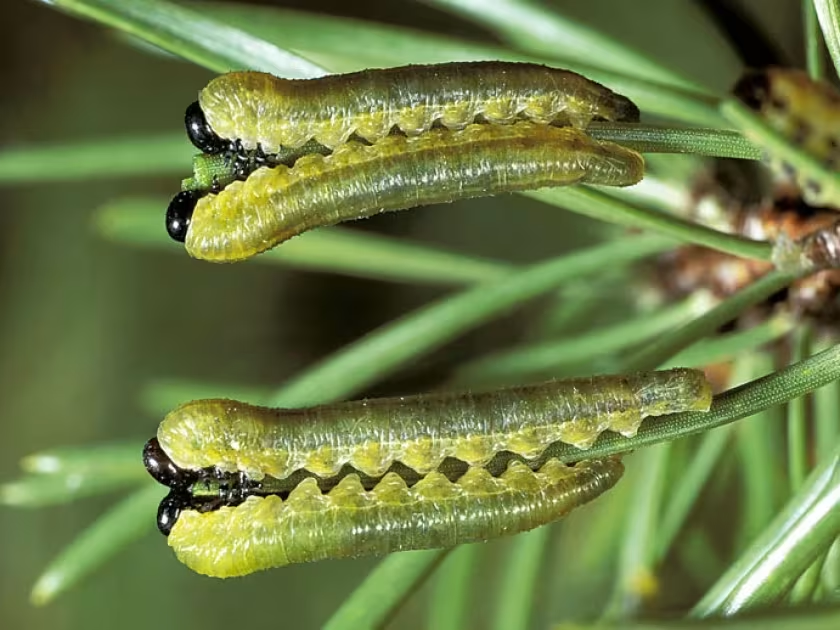
The larvae, which are the damaging stage, look like caterpillars but can be distinguished by the number of prolegs. They are often green or yellowish with distinct longitudinal stripes.
Eggs are deposited inside the needles of host pine trees. This specific placement protects the eggs from harsh environmental conditions and many predators throughout the winter.
Pupation occurs within tough, oval-shaped cocoons. These cocoons can be found attached to the needles, twigs, or within the litter layer beneath the infested tree.
What it damages
The primary hosts for Neodiprion nanulus are various species of pine (Pinus). They pose a serious threat to both young plantations and mature forest stands.
Larvae feed gregariously on pine needles. By consuming the needles, they reduce the photosynthetic capacity of the tree, leading to significant stress and overall decline.
Severe infestations can result in total defoliation of the tree. This makes the tree susceptible to secondary attacks from bark beetles and other opportunistic pathogens.
In nurseries, even a moderate population of sawflies can cause economic losses by ruining the aesthetics and health of the seedlings before they reach the market.
Repeated defoliation over several consecutive years can lead to the death of the tree, particularly when combined with environmental stressors like drought.
When it appears
The life cycle of Neodiprion nanulus is univoltine in most areas, meaning there is one generation per year. Adults emerge to mate and lay eggs in late summer or early fall.
The insect overwinters in the egg stage embedded within the pine needles. This strategy allows the species to survive even extremely cold winter temperatures.
Larval hatching typically takes place in the spring, often synchronized with the new needle growth or the warming of temperatures in May and June.
Larval development progresses through several instars. The feeding stage is concentrated in the spring and early summer months, lasting several weeks.
Once the larvae reach maturity, they construct cocoons. The timing of this transition is crucial for timing any biological or chemical interventions.
Signs of infestation
The most noticeable sign of an infestation is the presence of frass (larval droppings). These look like small dark pellets scattered on the foliage or the ground.
Feeding damage is characterized by needles being stripped from the twig. Larvae often leave the needle tips or bases behind, giving the branch a ragged, brownish appearance.
Clusters of larvae on branches are a clear indication of a sawfly colony. When disturbed, these larvae often rear their heads and tails in a characteristic defensive posture.
Needles containing eggs may show slight discolorations or swelling in rows, though these are sometimes difficult to detect without close inspection of the foliage.
The visual impact of an infested tree includes sparse, yellowing, or thinning foliage, which becomes increasingly severe as the larval population grows.
Control measures
Mechanical control involves pruning and destroying infested branches or manually removing larvae in small home gardens where populations are manageable.
Biological control agents, such as specific nucleopolyhedroviruses (NPVs) or predatory insects, can be highly effective in reducing populations without chemical residues.
Chemical insecticides are used in commercial forestry or high-value plantings when monitoring thresholds are exceeded, targeting the younger larval instars.
- Use of pheromone traps for population monitoring
- Promoting natural predator habitats like birds and parasitic wasps
- Maintaining tree health through proper irrigation and soil care
Effective management requires regular scouting during the spring season to identify colonies early and prevent widespread defoliation of the pine canopy.
Taxonomy
- Latin name
- Neodiprion nanulus
- Order
- Hymenoptera
- Family
- Diprionidae
- EPPO code
- NEODNN
Discussion
No discussions yet — be the first.