
European pine sawfly
Neodiprion
Description
How to identify
The European pine sawfly (Neodiprion sertifer) belongs to the order Hymenoptera and the family Diprionidae. Adults are small insects with a wingspan of about 15–20 mm, showing distinct sexual dimorphism in color and antennae.
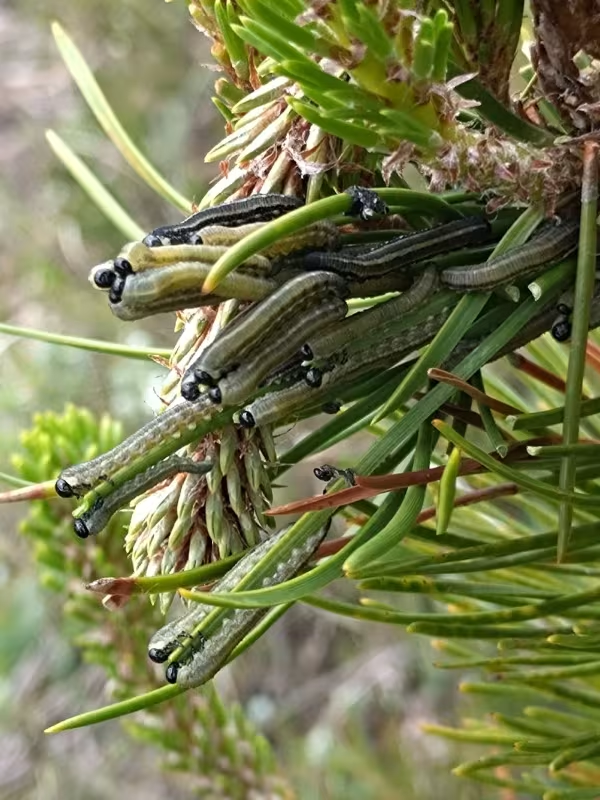
The larvae are known as false caterpillars. They have a shiny black head and a greyish-green body with a distinct pale dorsal stripe, often seen feeding in synchronized groups on pine needles.
This species overwinters as eggs embedded within the needles of the previous year. Females use their saw-like ovipositor to cut into the tissue, protecting the eggs during winter.
The life cycle typically includes one generation per year. Larvae emerge in the spring, which aligns with the growth of new pine shoots, providing optimal nutrition for rapid development.
Pupation occurs in tough, brown, silken cocoons. Depending on the environment, these cocoons are found either in the soil or among the needles of the host tree.
What it damages
The primary host trees include various species of the Pinus genus, specifically Pinus sylvestris (Scots pine). It can occasionally impact other conifer species in forest plantations.
Signs of infestation
In spring, the first signs are small, light-colored slit marks on the needles where eggs were laid. These marks later turn brown and are easily detectable.
Early-stage larvae feed on the edges of the needles, leaving a characteristic serrated look. As they mature, they consume entire needles, leaving only the central vascular strand.
Groups of larvae feeding together cause severe defoliation of older needles. The tree canopy often appears thin, reddish, or scorched due to the loss of photosynthetic tissue.
A significant accumulation of frass (larval excrement) beneath the canopy is a clear indicator of a high infestation density in the upper branches.
Repeated defoliation for several consecutive years significantly weakens the tree, making it highly susceptible to secondary attacks by wood-boring insects and drought.
Control measures
Manual control involves shaking off the larvae or clipping off the infested branches and destroying them, which is highly effective for small ornamental trees.
Biological control using virus-based insecticides (specifically the nucleopolyhedrovirus) is highly recommended due to its high specificity and environmental safety profile.
Chemical control should be employed only when the threshold of infestation is high. Approved systemic or contact insecticides are applied during the early larval stages.
Encouraging natural predators such as parasitic wasps (ichneumonids), ants, and insectivorous birds is a key component of sustainable forest management.
Monitoring programs using pheromone traps help detect the flight of adult sawflies, allowing forest managers to time control measures effectively for the next season.
Taxonomy
- Latin name
- Neodiprion
- Order
- Hymenoptera
- Family
- Diprionidae
- EPPO code
- NEODSP
Discussion
No discussions yet — be the first.