
Neocapritermes
Neocapritermes
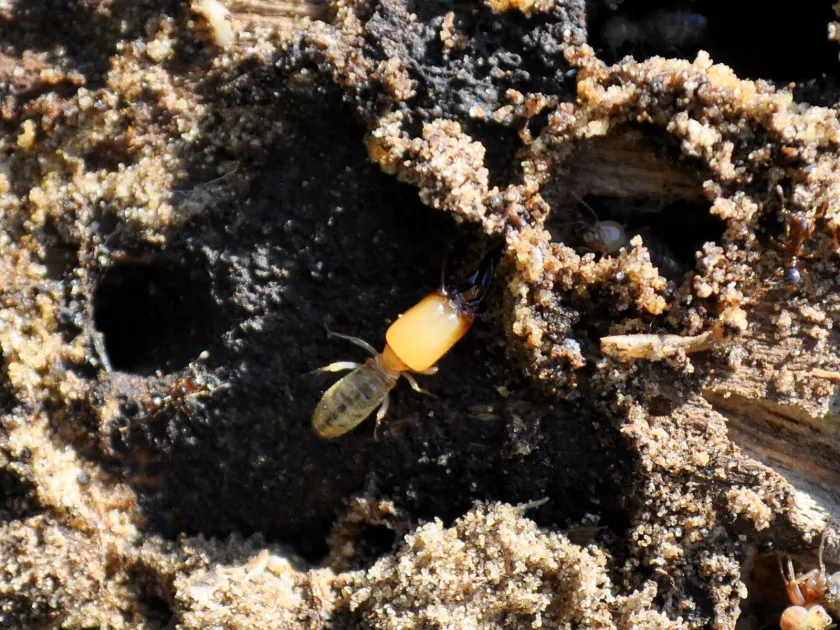
Description
How to identify
Neocapritermes belongs to the order Isoptera and the family Termitidae, functioning as social insects with highly specialized colony structures.
The colony consists of distinct castes, including workers responsible for foraging and soldiers equipped with specialized mandibles for defense.
These termites are strictly subterranean and light-averse, constructing intricate tunnel networks to maintain a humid environment necessary for survival.
Their biological cycle involves an incomplete metamorphosis, with the queen serving as the sole reproductive engine of the entire colony.
They are highly efficient decomposers of cellulose-rich material, which makes them both ecologically important and dangerous to human infrastructure.
What it damages
Neocapritermes primarily feed on dead or decaying organic matter, but they are known to attack living plant roots and stems under certain conditions.
In agricultural settings, they pose a significant threat to saplings, trees, and wooden structures utilized in storage and processing.
The damage to plant roots often leads to stunted growth, nutrient deficiency, and increased susceptibility to secondary plant pathogens.
They can also cause substantial economic loss by consuming agricultural stocks like fiber crops, timber, and stored harvest products.
Once a colony establishes itself near a crop field, it can cause cumulative damage that might go unnoticed until the plants begin to collapse.
Signs of infestation
The most visible sign of infestation is the presence of mud tubes or tunnels running along soil surfaces or wooden structures.
Small, irregular excavations or hollowed-out sections in wood are indicative of internal feeding activities by worker termites.
A sudden, unexplained decline in plant health or localized wilting often points to termite damage in the rhizosphere.
The discovery of termite soldiers near disturbed wood or soil is a reliable indicator of an active and defensive colony nearby.
Visual observation of tiny holes in wood or accumulation of fecal pellets around the base of trees confirms the presence of these pests.
Control measures
Effective management requires a combination of sanitation practices and targeted chemical control methods to eliminate the nest.
Baiting systems containing slow-acting insecticides are preferred as they are carried back to the colony, ultimately affecting the queen.
Removing potential food sources, such as stumps and dead logs from the field, is a critical preventative strategy for modern farms.
Biological control using entomopathogenic fungi is gaining traction as a sustainable way to suppress localized termite populations.
- Conducting regular field inspections for early detection.
- Applying chemical barriers to protect wooden assets and structures.
- Practicing proper field sanitation to reduce attractiveness to termites.
Taxonomy
- Latin name
- Neocapritermes
- Family
- Termitidae
- EPPO code
- NCPTSP
Discussion
No discussions yet — be the first.