

Pest · Lepidoptera (butterflies) · affects Cereals, Grasses, Winter wheat
European grain moth
Nemapogon granella
Description
How to identify
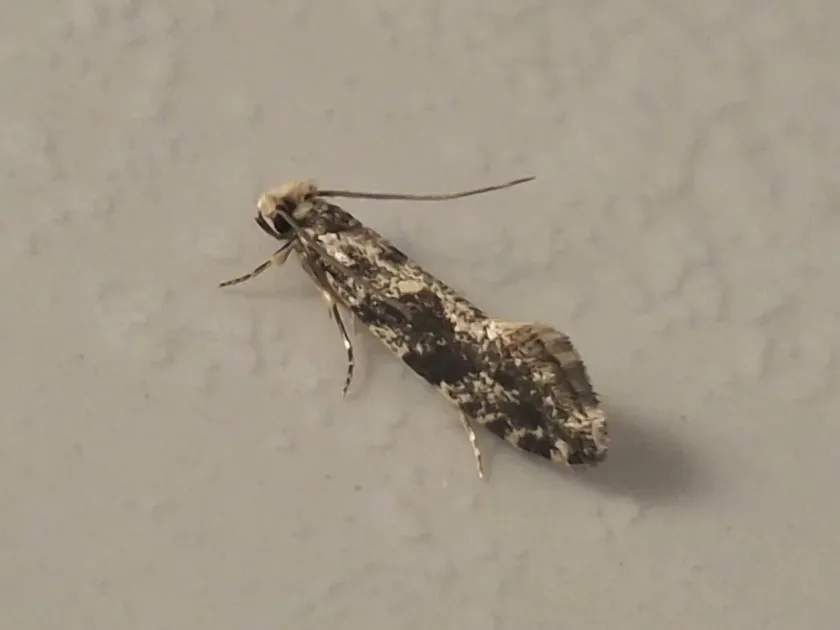
The European grain moth (Nemapogon granella) is a small moth belonging to the Tineidae family. The adult has a wingspan of 10–14 mm and features mottled greyish-white forewings with distinct dark brown or black spots.
The larvae are yellowish-white caterpillars reaching up to 9 mm in length with a brown head capsule. They are highly active and weave silk threads as they move through the grain mass.
The life cycle encompasses four stages: egg, larva, pupa, and adult. Depending on environmental conditions, the moth can complete multiple generations per year within storage facilities.
Adult moths do not feed on the grain; their primary focus is reproduction. Females lay eggs on the surface of grain kernels or in crevices within the storage structure.
Warm and humid conditions, particularly temperatures above 20°C, provide an ideal environment for rapid development, making climate control essential for prevention.
What it damages
This pest infests a wide range of stored products, including wheat, barley, rye, corn, peas, dried fruits, mushrooms, and various seeds, causing significant post-harvest losses.
The larvae are responsible for the damage as they bore into the kernels to feed on the germ and endosperm, effectively destroying the nutritional value and germinability of the grain.
A distinctive feature of their damage is the production of dense silk webbing that binds grain kernels together into clumps, which impedes ventilation and promotes mold growth.
By contaminating the grain with frass, silk, and cast skins, the infestation renders the affected material unsuitable for consumption or commercial processing.
High levels of infestation can lead to substantial economic losses, potentially ruining entire batches of grain if left unchecked during long-term storage.
Signs of infestation
One of the earliest signs of infestation is the presence of adult moths flying near the surface of the grain pile, particularly during dusk or at night.
Visible webbing or silk strands covering the top layer of stored grain are clear indicators that larvae are actively feeding and establishing colonies.
Inspection of the grain may reveal hollowed-out kernels where the contents have been consumed, leaving behind only the outer husk.
The presence of fine, dark granular frass and shed larval skins within the grain mass confirms that the population has progressed through several life stages.
A musty or sour odor originating from the grain pile often serves as a warning sign of high infestation levels and the associated risk of fungal growth.
Control measures
Sanitation is the first line of defense; empty storage facilities must be thoroughly cleaned and treated with appropriate insecticides to eliminate residual populations.
Maintaining the moisture content of stored grain below 14% is a critical strategy to inhibit the survival and development of the moth larvae.
Regular temperature monitoring and aeration of the stored grain mass help prevent the formation of hotspots where the moth is most likely to thrive.
In cases of severe infestation, fumigation using approved phosphine-based products is the most effective method to ensure the complete eradication of all developmental stages.
Mechanical cleaning and screening processes can help remove loose larvae and eggs, significantly reducing the initial pest pressure within the storage facility.
Content graph
Connections · European grain moth
Most often together:
Marketplace
Products · 4

Biology
Taxonomy
- Latin name
- Nemapogon granella
- Order
- Lepidoptera (butterflies)
- Family
- Tineidae
- EPPO code
- TINEGR
Community
Discussion
No discussions yet — be the first.