
Necrobia
Necrobia
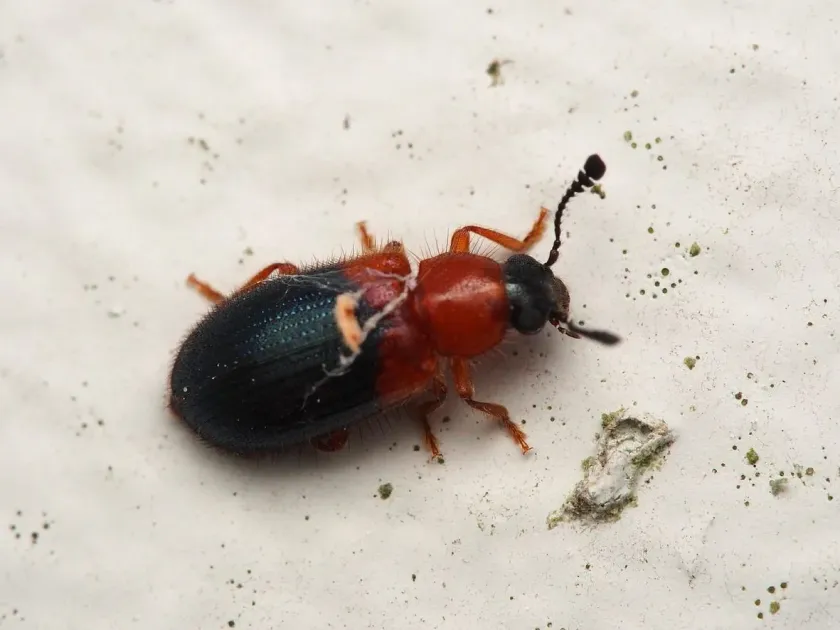
Description
How to identify
The genus Necrobia, most notably the species Necrobia rufipes (the red-legged ham beetle), belongs to the Cleridae family. Adult beetles are small, measuring 3.5 to 5 mm in length, and exhibit a metallic blue or blue-green coloration with reddish-brown legs and antenna bases.
The larvae of the Necrobia undergo several stages of development; they are mobile, elongated in shape, and possess a dirty white or grayish color with a dark head. The larvae's body is covered in sparse hairs, which is a key morphological trait of this beetle family.
The insect follows a complete metamorphosis life cycle: egg, larva, pupa, and imago. Adult beetles are capable of active flight, which facilitates their rapid dispersal within warehouse facilities, especially during warmer periods of the year.
Optimal conditions for reproduction include high temperatures (above 25°C) and sufficient product moisture. Under such favorable conditions, the life cycle from egg to imago can be completed in as little as 5 to 6 weeks.
Systematically, these beetles are predators and scavengers. While they may feed on the larvae of other pests, their main threat lies in the contamination and spoilage of food products during mass reproduction outbreaks.
What it damages
Necrobia is a classic stored product pest that prefers animal-based commodities. Primary objects of infestation include meat products, dried fish, cheeses, cured meats, as well as leather and animal hides.
In addition to livestock derivatives, the pest can be found in batches of stored grains, oilseeds (particularly copra), and dried fruits, provided there is fungal growth or residues from other insect infestations present.
The pest is frequently encountered in food processing facilities, long-term storage warehouses, and sites of animal product processing where organic debris tends to accumulate.
The primary damage is caused by both adults and larvae that bore deep tunnels into the food tissue. This leads to loss of commercial value, weight reduction, and deterioration of the raw material's quality characteristics.
Infested products become unfit for sale or consumption due to pest excrement, cast larval skins, and the distinct, unpleasant odor that the infested commodities acquire during the infestation process.
Signs of infestation
The first sign of an infestation is the presence of characteristic boreholes on the surface of packaged products or the meat items themselves, created by the feeding larvae.
During a thorough inspection of storage areas, adult beetles can be spotted showing activity on illuminated wall sections or near the vicinity of stored raw materials.
The presence of cast larval skins in the folds of packaging or on the surface of the products indicates that the population is actively reproducing and has already completed several developmental cycles.
A characteristic "dusty" film on the surface of dried fish or meat often consists of beetle waste products mixed with fine particles of the damaged substrate.
A specific foul odor emanating from the batch often signals advanced spoilage processes triggered by the ongoing activity of a Necrobia colony.
Control measures
The foundation of effective control is strict sanitation of the premises. It is necessary to regularly remove all organic residues, dust, and debris that can serve as a food source for these pests.
An important preventive method is the control of humidity and temperature within the warehouses. Maintaining storage conditions unfavorable to insects significantly reduces the risk of population outbreaks.
When infestation foci are detected, warehouse fumigation using specialized insecticides approved for use in storage areas is the recommended course of action.
Effective protection includes the use of hermetic (airtight) packaging and periodic disinfestation of empty storage facilities before stocking new product batches.
- Inspection of incoming raw materials for pest presence.
- Use of pheromone traps for population monitoring.
- Adherence to cold storage regimes (below 10°C inhibits development).
- Regular wet cleaning with contact insecticides during the off-season.
Taxonomy
- Latin name
- Necrobia
- Order
- Coleoptera (beetles)
- Family
- Cleridae
- EPPO code
- NECRSP
Discussion
No discussions yet — be the first.