
Nasutitermes walkeri
Nasutitermes walkeri
Description
How to identify
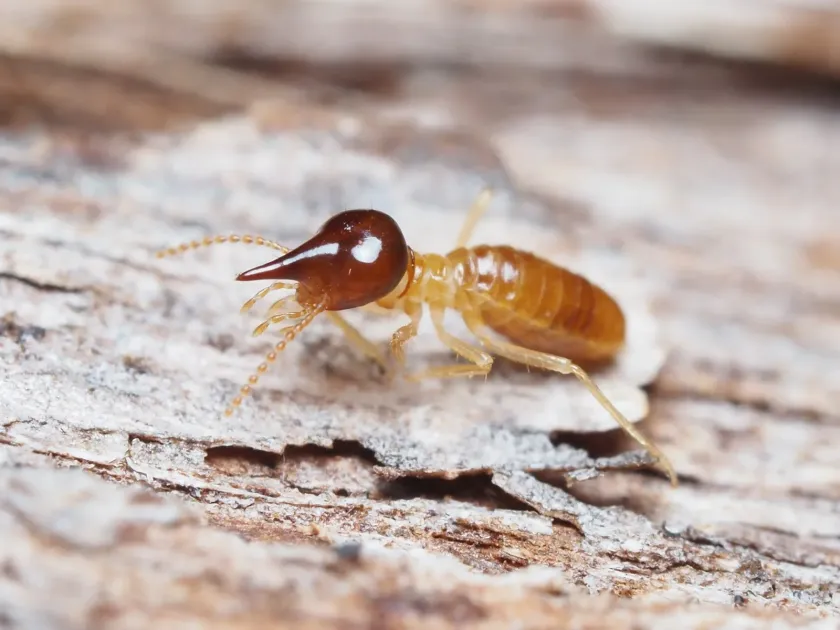
Nasutitermes walkeri is a species of termite belonging to the family Termitidae and the subfamily Nasutitermitinae. The soldiers of this species are easily identified by their specialized head, which features a prominent, cone-shaped nozzle (nasus).
These termites construct large, conspicuous carton nests, usually built on the trunks or branches of host trees. The nest material consists of a mixture of chewed wood, soil, and excrement, forming a durable, dark structure.
The colony structure is highly organized, consisting of a king, a queen, workers, and soldiers. The soldiers use their nozzle to spray a chemical defense secretion to deter predators, mainly ants, if the nest or foraging galleries are breached.
Reproductive individuals are winged and fly from the colony during mating flights to establish new nests, ensuring the spread of the species throughout suitable habitats.
To confirm identification, one should observe the soldier caste's behavior when their foraging tunnels are disturbed, as they will immediately rush to the breach to defend the colony.
What it damages
This pest primarily attacks various tree species, particularly eucalypts. While they are natural decomposers of dead wood, they can impact the health of living trees, especially those that are already stressed or damaged.
They create deep galleries within the heartwood of trees. Over time, these hollow areas compromise the structural integrity of the tree, making it susceptible to falling during storm events or high winds.
In addition to forest environments, Nasutitermes walkeri can pose a risk to ornamental trees in residential or park settings, often colonizing mature trees that have small wounds or dead branches.
The damage is often internal and hidden, which makes early detection difficult. Many trees may appear outwardly healthy despite significant internal wood loss due to termite feeding activity.
Furthermore, if their food source is depleted or the colony expands, these termites may forage on nearby wooden structures, fences, or utility poles, causing secondary damage to property.
Signs of infestation
The most recognizable sign of an infestation is the presence of darkened, mud-like foraging galleries running along the bark of the tree. These tunnels protect the termites from exposure and dehydration.
Large nests located in the canopy or on tree limbs are primary indicators of a mature colony. These nests can be seen from the ground and are often the first sign noticed by arborists.
Broken sections of these mud tunnels will reveal worker termites and, upon closer inspection, the defensive soldiers that quickly emerge to guard the damaged area.
Loose bark or soft wood patches at the base of the tree or around knots can indicate where termites have moved from the soil into the tree structure.
Increased activity of birds, such as cockatoos or other insectivores, around specific trees can sometimes signal the presence of a termite nest that is being actively excavated for food.
Control measures
Mechanical removal is the most direct control measure. If the nest is accessible, it should be carefully removed and destroyed to immediately reduce the pressure of the colony on the tree.
Insecticide baiting systems are highly effective for long-term management. These baits are placed near the foraging tunnels, allowing the termites to carry the toxin back to the nest, eliminating the queen and the colony.
Good management practices, such as clearing away dead wood, fallen logs, and old stumps, are crucial. These materials serve as entry points or nesting sites that favor the initial establishment of a colony.
Protective barriers can be applied to individual trees if they are of high value, such as chemical barriers in the soil or specialized wraps, to prevent termites from climbing the trunk.
Biological control methods, including the application of entomopathogenic fungi, are being explored as sustainable alternatives to traditional chemicals, aiming to target termite populations while preserving the surrounding environment.
Taxonomy
- Latin name
- Nasutitermes walkeri
- Family
- Termitidae
- EPPO code
- NASUWA
Discussion
No discussions yet — be the first.