
Nasutitermes luzonicus
Nasutitermes luzonicus
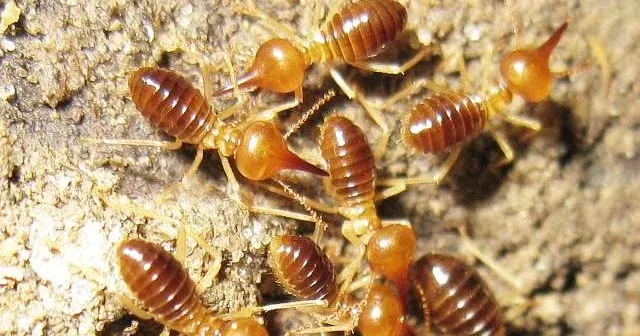
Description
How to identify
Nasutitermes luzonicus is a species of termite belonging to the family Termitidae. These insects are eusocial and live in colonies structured into distinct castes: workers, soldiers, and reproductive individuals.
The soldiers of this species are easily recognized by their pear-shaped heads, which terminate in a specialized nozzle-like structure called a nasus. This organ acts as a defensive weapon to eject sticky secretions.
Worker termites are smaller, pale-colored, and lack the specialized nasus. They are responsible for all foraging activities, nest maintenance, and the nursing of the colony's younger members.
Colonies typically construct nests from a mixture of soil, feces, and chewed wood. These structures may be located within tree cavities or built as visible mounds on trunks, providing protection and climate control.
The biology of this species is highly adapted to humid environments, where they maintain stable conditions for their fungal gardens and larvae development inside their carefully regulated colony nests.
What it damages
As a significant pest in tropical regions, Nasutitermes luzonicus causes extensive damage to both natural forestry and agricultural tree crops, such as fruit and plantation trees.
While they primarily feed on dead or decaying wood, large colonies can readily attack living trees, especially if the bark is damaged or if the tree is suffering from other stresses.
The damage is not limited to vegetation; these termites pose a massive threat to wooden agricultural infrastructure, storage buildings, and equipment, potentially causing structural failure.
By excavating galleries through woody tissues, they disrupt the vascular system of the host plants, which leads to reduced nutrient transport, wilting, and lower yields.
In severe infestation cases, the weakened trees are prone to snapping during storms or high winds, posing a risk to the overall health and safety of the agricultural site.
Signs of infestation
The most visible sign of an infestation is the presence of earthen shelter tubes or tunnels on tree trunks, walls, or fences, which the termites use to travel safely.
Opening these tunnels usually reveals the white, soft-bodied workers and the darker, pear-headed soldiers, indicating an active colony is nearby.
Internal damage often goes unnoticed until the host tree becomes structurally unstable, as the termites consume the heartwood while leaving the outer shell intact.
The discovery of termite mounds, which appear as hard, dark, bulbous structures on trees, is a definitive indicator of an established and mature colony.
Audible indicators, such as a tapping sound produced by soldiers when the colony is disturbed, can sometimes be detected by careful observation in quiet settings.
Control measures
Effective control of Nasutitermes luzonicus requires targeting the entire colony, as treating individual workers is insufficient to eliminate the population.
Baiting systems containing slow-acting insecticides are highly recommended, as workers ingest the poison and carry it back to the queen and other colony members.
Sanitation practices are essential for prevention: removing deadwood, stumps, and fallen logs from the vicinity of fields reduces the availability of nesting sites.
For high-value crops, installing a chemical soil barrier around the base of the trees can prevent termites from accessing the wood from the ground.
Utilizing termite-resistant timber or treated wood for agricultural structures significantly lowers the risk of infestation and ensures long-term asset protection.
Taxonomy
- Latin name
- Nasutitermes luzonicus
- Family
- Termitidae
- EPPO code
- NASULU
Discussion
No discussions yet — be the first.