
Nasutitermes costalis
Nasutitermes costalis
Description
How to identify
Nasutitermes costalis is a termite species belonging to the family Termitidae and the subfamily Nasutitermitinae. The appearance of individuals varies significantly depending on the caste: workers have soft bodies, while soldiers are distinguished by a pear-shaped head with a protruding projection (nasus) used to spray a defensive chemical.
Reproduction occurs through winged individuals called alates, which leave the nest to mate and establish new colonies. The colony life cycle is complex, with a strict division of labor between the queen, king, soldiers, and workers.
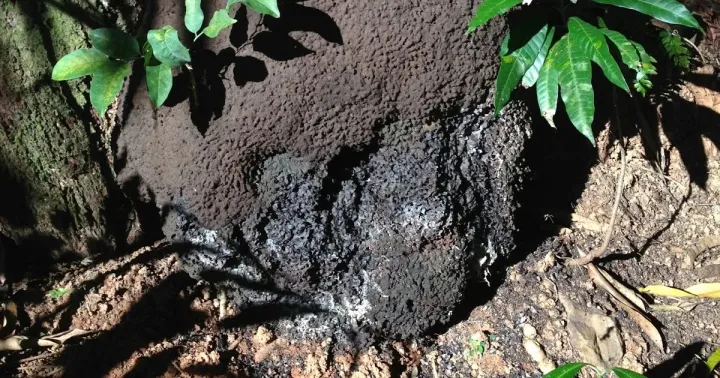
Nests of this species are often located on trees or at the base of woody trunks, forming intricate architectural structures made of excrement, soil, and chewed wood.
These termites are social insects whose primary activity is the processing of cellulose. They are highly sensitive to sunlight and dehydration, which is why they construct covered tunnels while moving across exposed surfaces.
Identification of the species is often conducted by entomologists analyzing the soldier's head morphology under a microscope, as it is extremely difficult to distinguish them visually from other species of the Nasutitermes genus.
What it damages
The primary food source for Nasutitermes costalis is lignin and cellulose. In an agricultural context, this species poses a threat to fruit trees, especially if they are weakened by disease or mechanical damage.
Beyond living plants, termites actively damage any wooden structures, fences, utility poles, and stored wood supplies located near plantations.
The pest is not limited to wood consumption; it is capable of damaging the root system of perennial crops, penetrating inside the stems and gradually eating them from the inside out, leading to plant death.
The impact of the damage increases in tropical climates where termite activity continues year-round and high humidity contributes to the rapid destruction of infested tissues.
- Damage to the cambium of fruit crops.
- Destruction of wooden supports and trellises.
- Colonization of dead parts of trees with subsequent transition to living tissue.
Signs of infestation
The first sign of a colony's presence is the appearance of specific termite mounds — rounded brown nests on tree trunks or branches.
On the surface of the bark or soil, one can observe narrow earthen "trails" or covered tunnels, which termites build to protect themselves from predators and desiccation.
When peeling back a portion of the bark on an infested tree, one may find cavities filled with chewed-up debris and traces of insect activity. Often, dieback of individual branches or the sudden collapse of a tree due to core damage is observed.
The presence of a large number of winged individuals in a specific season signals the beginning of the dispersal process and the possible appearance of new infestation hotspots within a radius of several hundred meters.
A hollow sound when tapping a tree trunk indicates internal voids created by termites during their intensive wood-feeding process.
Control measures
Protection methods include a comprehensive approach, starting with the removal of infested trees and nests, which is a radical but necessary way to reduce population density.
The application of chemical barriers around valuable plantings helps prevent the migration of termites from the wild into agricultural land.
The use of insecticidal baits allows for the elimination of the colony via worker termites, which carry toxic components directly into the nest, affecting the queen.
Agrotechnical measures include maintaining tree health, timely wound dressing, and avoiding the abandonment of rotting wood on the plot, which serves as a food source for the pest.
Biological control, such as preserving natural enemies (ants, birds, and certain reptile species), can play a role in curbing termite numbers during the early stages of infestation.
Taxonomy
- Latin name
- Nasutitermes costalis
- Family
- Termitidae
- EPPO code
- NASUCO
Discussion
No discussions yet — be the first.