
Nasutitermes
Nasutitermes
Description
How to identify
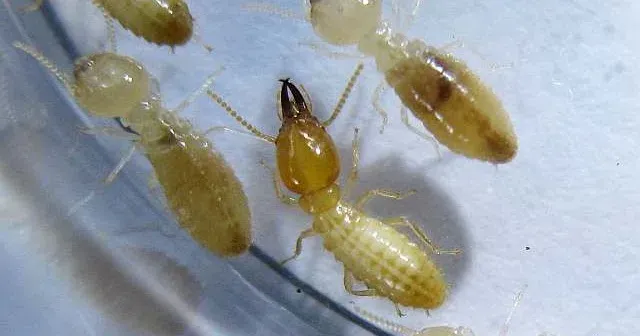
Nasutitermes is a genus of termites in the family Termitidae, order Blattodea. These insects are distinguished by a special caste of soldiers featuring a snout-like protrusion on their heads.
This "nasus" is used by soldiers to spray a sticky secretion that defends the colony against predators such as ants. Workers appear as small, pale, wingless insects residing deep within the colony structure.
Colonies construct complex nests that can be situated either in the soil or elevated on tree trunks and branches. These nests are composed of chewed wood and fecal matter, bound into a durable mass.
The colony structure includes a strict hierarchy with a queen, king, worker caste, and soldiers. Reproductive winged individuals leave the nest during swarming seasons to establish new colonies.
Identification can be difficult because these termites live primarily in hidden environments, such as deep inside wood or within protected subterranean tunnels.
What it damages
Nasutitermes are xylophagous, meaning they consume cellulose. In agroforestry, they damage living trees by weakening their structure, making them susceptible to secondary infections and wind damage.
They pose a significant threat to plantations of cocoa, coffee, and citrus fruits, where they bore tunnels into the bark and cambium, disrupting the plant's nutrient and water transport.
In regions where they are endemic, these termites cause extensive damage to wooden farm structures, storage facilities, and agricultural tools made of lumber.
Crops suffer not only from direct tissue consumption but also from the physical presence of nests attached to trunks, which may interfere with healthy bark development.
Furthermore, their tunneling activity often attracts secondary pests and fungal pathogens, which significantly accelerate the decline and death of the infested plant.
Signs of infestation
The most visible sign of infestation is the presence of mud tubes or sheltered galleries made of soil and excrement along tree trunks or the walls of structures.
Specific, large, dark-colored nests attached to tree branches are a definitive indicator that a Nasutitermes colony is established in the immediate area.
Tapping on the trunk of a tree may reveal hollowed-out sections or chambers inside the wood, which is a clear signal of advanced internal termite damage.
Fine frass or piles of wood particles at the base of a tree often indicate active boring within the roots or the lower section of the stem.
The sudden appearance of winged swarmers near plants, especially following rainy weather, indicates that a colony is active and attempting to spread.
Control measures
Effective management begins with routine inspection of the plantation and the physical removal of visible nests before the colony population explodes.
Applying insecticidal barriers around tree bases and soil treatment helps prevent termites from traveling between their nests and the host plants.
Using slow-acting toxic baits that worker termites carry back to the nest is highly effective for eliminating the entire colony, including the queen.
Cultural practices should include the removal of dead wood and debris from the plantation, as these serve as initial nesting sites and food sources for the termites.
Biological control options, such as the use of entomopathogenic fungi, are being researched for sustainable management, requiring specific environmental conditions for success.
Taxonomy
- Latin name
- Nasutitermes
- Family
- Termitidae
- EPPO code
- NASUSP
Discussion
No discussions yet — be the first.