
Narosa conspersa
Narosa conspersa
Description
How to identify
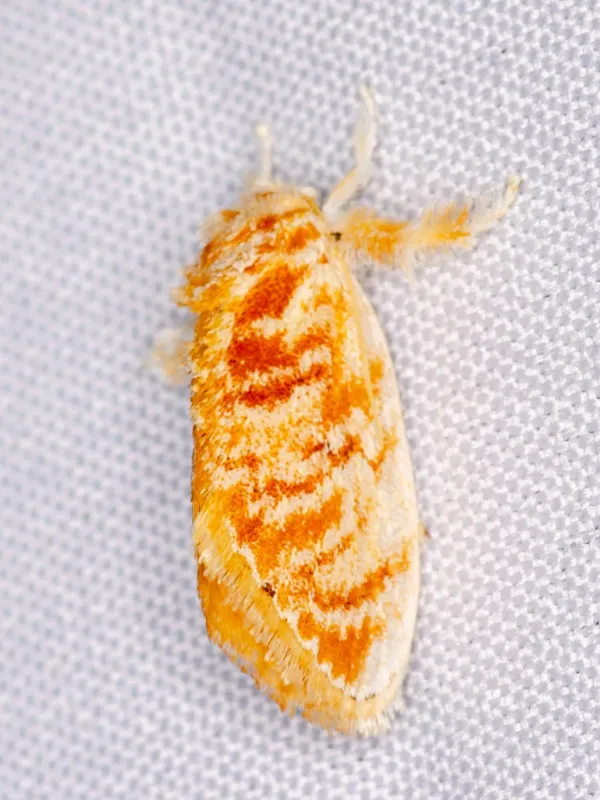
Narosa conspersa is a moth species belonging to the family Limacodidae, commonly known as cup moths or slug moths. The adult moth has a wingspan of approximately 20–25 mm, with a brownish or ochre-colored pattern on its forewings.
The larvae are particularly distinctive; they are flattened and translucent, resembling small slugs or woodlice. Their bodies are adorned with rows of tubercules and stinging hairs, which serve as a defense mechanism against predators and can cause irritation to humans.
The life cycle involves complete metamorphosis, including egg, larva, pupa, and adult stages. The pupal stage typically takes place within a compact, silk cocoon securely attached to the bark or twigs of the host tree, where they often overwinter.
Adult moths are nocturnal and are rarely seen during the day. They remain perfectly camouflaged on the underside of leaves or against the textured bark of fruit trees, making their presence hard to detect without specific monitoring.
Depending on the climatic zone, the pest may produce one or two generations per year. This prolonged activity period throughout the growing season increases the potential for cumulative damage to orchard crops.
What it damages
The primary hosts for Narosa conspersa include various fruit-bearing trees such as apple, pear, and plum, as well as some ornamental species. The larvae are the only stage responsible for damage.
Young larvae begin by skeletonizing the leaf blades, feeding on the soft tissue while leaving the larger veins intact. This early feeding pattern creates characteristic small holes and irregular translucent patches on the leaves.
As the larvae mature, they consume the entire leaf lamina, significantly reducing the tree's total leaf surface area. In cases of high infestation, this can lead to severe defoliation, particularly in younger trees.
The reduction in photosynthetic leaf area directly impacts the tree's energy reserves. This leads to stunted fruit development, poor quality of harvest, and an overall reduction in the tree's vigor and winter hardiness.
Furthermore, heavy feeding damage compromises the tree's structural health and can expose wounded tissues to secondary fungal or bacterial infections, causing further physiological stress to the host.
Signs of infestation
The most visible sign of an infestation is the presence of irregular holes and leaf tissue consumption. These signs start appearing in the canopy and gradually spread as the larvae grow larger.
Careful inspection of the lower leaf surfaces often reveals the larvae, which, due to their slug-like appearance, can easily be mistaken for natural plant outgrowths or galls.
The discovery of sturdy, silk cocoons on the branches during winter pruning or maintenance is a definitive indicator of the pest's presence in the orchard environment and signals a need for control.
Accumulation of larval frass (tiny dark pellets) on the leaves or the ground beneath the canopy serves as an indirect but reliable sign of high-activity feeding occurring in the upper branches.
A general decrease in the tree's health, characterized by premature leaf yellowing and slower terminal shoot growth, often correlates with the presence of this pest in significant numbers.
Control measures
Effective management requires an integrated approach. During winter maintenance, pruning and scraping loose bark helps remove overwintering cocoons, significantly reducing the initial population for the next season.
For active infestations, biological insecticides, such as formulations containing Bacillus thuringiensis, are highly effective against early-instar larvae while preserving beneficial insect populations in the orchard.
In cases of severe outbreaks, chemical interventions using systemic or contact insecticides may be necessary. It is crucial to time these applications with the peak hatching period of the larvae to maximize efficacy.
Promoting a healthy orchard ecosystem by encouraging natural predators, such as parasitic wasps, predatory bugs, and insectivorous birds, is an essential component of sustainable long-term pest management.
- Regular monitoring of canopy density and foliage health throughout summer.
- Sanitary removal of heavily infested twigs and branches.
- Maintaining optimal tree health through balanced fertilization to support resilience.
Taxonomy
- Latin name
- Narosa conspersa
- Order
- Lepidoptera (butterflies)
- Family
- Limacodidae
- EPPO code
- NAROCO
Discussion
No discussions yet — be the first.