
Blue mussel
Mytilus edulis
Description
How to identify
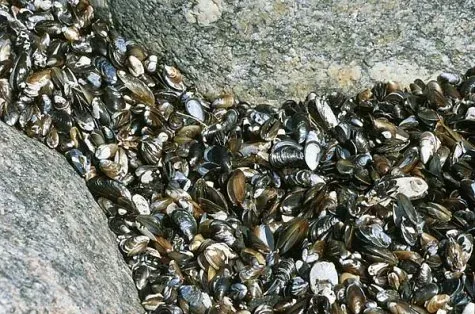
The blue mussel (Mytilus edulis) is a bivalve mollusk belonging to the Mytilidae family. It is characterized by a wedge-shaped shell that is typically dark blue, black, or brown.
Adult individuals usually measure between 5 and 10 centimeters. The shell consists of two equal valves held together by a strong, elastic ligament and powerful adductor muscles.
To anchor itself to rocks, piers, or pipes, the mussel produces byssus threads. These are extremely strong protein-based filaments that withstand high-energy wave environments.
As a filter feeder, the blue mussel plays a significant ecological role, but its habit of forming dense colonies makes it a target for infrastructure maintenance.
They typically grow in large, crowded beds that can completely cover underwater surfaces, creating heavy and persistent layers of biological material.
What it damages
The blue mussel is considered a major biofouling pest that causes significant economic losses in maritime and industrial sectors globally.
Their mass settlement inside water intake pipes and cooling systems of power plants leads to flow restriction, increased pressure, and complete blockages of critical equipment.
In aquaculture, blue mussels compete with commercially farmed species for plankton, reducing the available food source and hindering the growth of the crop.
When colonizing the hulls of ships, barges, and buoys, they significantly increase surface drag, which leads to higher fuel consumption and decreased operational performance.
Furthermore, the physical attachment of mussels promotes localized corrosion on steel and concrete structures, significantly reducing the lifespan of maritime assets.
When it appears
The reproduction of Mytilus edulis is highly seasonal and synchronized with water temperature increases, typically peaking in the spring and early summer.
During the larval stage, known as veligers, they are planktonic and drift with ocean currents, allowing for rapid colonization of new surfaces over wide areas.
Settlement occurs when larvae find a suitable substrate to attach to. This period of the year is critical for the maintenance schedules of sensitive infrastructure.
Growth rates are most rapid during the warm months, while cold winter temperatures result in a reduced metabolism, though colonies remain firmly attached.
The seasonal availability of phytoplankton serves as the primary driver for the population growth cycles and reproductive success of the mussels.
Signs of infestation
The most obvious sign of infestation is the visible presence of dense mussel beds on underwater pylons, dock walls, or ship hulls.
Operational signs include a decrease in water pressure or flow rates in pumping systems, which often indicates an internal buildup of colonies.
During mechanical inspections, the detection of byssus thread remnants on structural surfaces provides clear evidence of previous or ongoing colonization.
A noticeable loss of buoyancy in floating structures or a reduction in the maximum speed of a vessel are indirect symptoms of severe biofouling.
In analytical monitoring, changes in water turbidity and nutrient levels near industrial outfalls may suggest high levels of filter-feeding activity by local mussel populations.
Control measures
Physical removal using specialized underwater cleaning tools, such as rotating brushes or high-pressure water jets, remains a standard method for maintenance.
Anti-fouling coatings containing biocidal agents are applied to hulls and submerged equipment to discourage larvae from settling on surfaces.
Thermal control involves flushing industrial pipe systems with heated water to kill and dislodge established mussel colonies effectively.
Screening and filtration systems at the inlets of water intakes are essential for preventing larvae from entering and clogging delicate internal conduits.
- Ultrasonic devices to repel larvae before they settle.
- Electrochemical protection systems to inhibit biocorrosion.
- Strategic scheduling of maintenance based on larval spawning forecasts.
Taxonomy
- Latin name
- Mytilus edulis
- Family
- Mytilidae
- EPPO code
- MYTUED
Discussion
No discussions yet — be the first.