
Brachidontes
Brachidontes
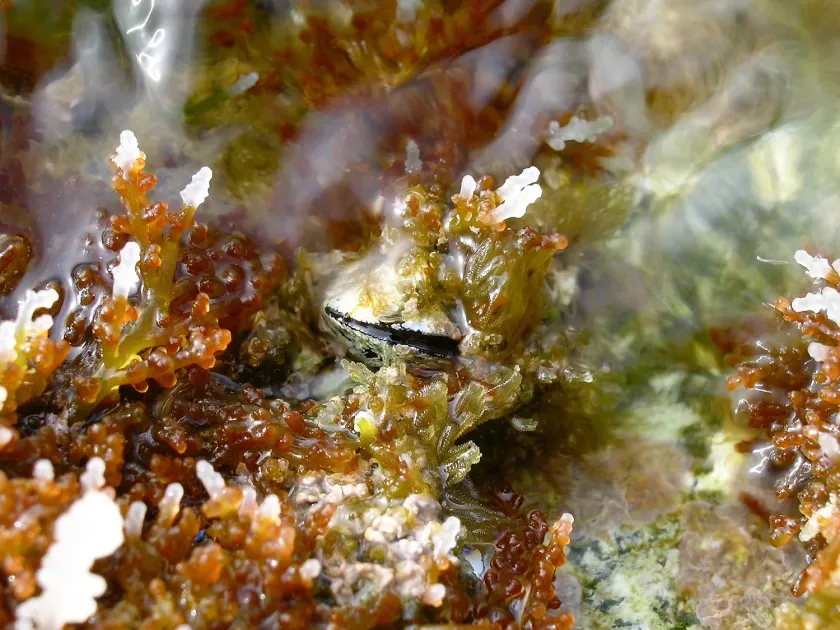
Description
How to identify
Brachidontes is a genus of marine bivalve mollusks belonging to the family Mytilidae. These organisms are recognized as significant pests in aquatic infrastructure and aquaculture settings.
The shell of a Brachidontes specimen is characterized by radial ribbing and a dark, often black or brown color, providing a distinct appearance when colonizing surfaces.
They utilize strong byssal threads to anchor themselves firmly to hard substrates, which allows them to thrive in high-flow water environments such as intake pipes.
Classified under the order Mytilida, these mollusks are highly efficient filter feeders that draw water through their systems, facilitating the rapid growth of large colonies.
The larval stage, known as the veliger, is planktonic and enables the wide dispersal of the species across irrigation networks and water supply channels.
What it damages
The primary concern regarding Brachidontes is biofouling, which severely impairs the operation of pumps, filters, and irrigation systems.
Large aggregations of these mollusks physically block water flow within pipelines, forcing pumps to work harder and often leading to motor failure.
In aquaculture, they compete for food resources and space with target species, reducing the overall yield and efficiency of the farming operations.
The accumulation of shells contributes to localized corrosion of metallic equipment, shortening the lifespan of costly irrigation hardware and infrastructure.
Debris from decaying colonies can contaminate water sources, potentially affecting the quality of water delivered to crops or livestock.
When it appears
The reproduction of Brachidontes is highly temperature-dependent, with peak larval settlement occurring during the warmer months of spring and summer.
In regions with mild climates, the breeding season can be extended, leading to continuous colonization challenges throughout the year.
The rate of colonization is accelerated in nutrient-rich water, where the abundance of organic matter supports rapid growth and population spikes.
Winter conditions generally reduce metabolic activity, although the established colonies remain attached and viable, waiting for the return of warmer temperatures.
Larval settlement is most intense during the initial warming phase of the water, making this the critical period for preventative maintenance.
Signs of infestation
A sudden decrease in water pressure or flow volume within irrigation conduits is a primary indicator of a severe infestation within the pipe network.
Unusual vibrations or increased noise levels in hydraulic pumps often point to imbalances caused by heavy mussel clusters on the impeller blades.
Direct inspection of intake screens and filtration units frequently reveals a dense, mat-like coverage of small, ribbed shells obstructing the flow paths.
An offensive, sulfur-like odor originating from the water supply suggests the mass die-off of mussels inside non-circulating pipes, indicating a system breach.
Visible shell debris found in sprinklers or distribution nozzles is a definitive sign that the population has bypassed initial filtering stages.
Control measures
Mechanical cleaning, including high-pressure water blasting and scraping, remains the most common method for removing existing mussel colonies from surfaces.
Applying anti-fouling coatings to the inner surfaces of pipes and pumps can significantly inhibit the settlement and attachment of veliger larvae.
Ultrasonic treatment systems at water intakes act as a deterrent, disrupting the settlement process without the need for toxic chemical additives.
- Routine inspection of all intake infrastructure.
- Implementation of fine-mesh screening at supply points.
- Periodic chemical treatment with approved molluscicides.
Managing the flow velocity and water quality can discourage colony establishment and prolong the time between necessary maintenance cycles.
Taxonomy
- Latin name
- Brachidontes
- Family
- Mytilidae
- EPPO code
- BRDTSP
Discussion
No discussions yet — be the first.