
Limnoperna
Limnoperna
Description
How to identify
Limnoperna (Limnoperna fortunei), commonly known as the golden mussel, is a freshwater bivalve mollusk belonging to the Mytilidae family. As an invasive species originating from Southeast Asia, it has rapidly spread globally due to its high adaptability and rapid reproduction rate.
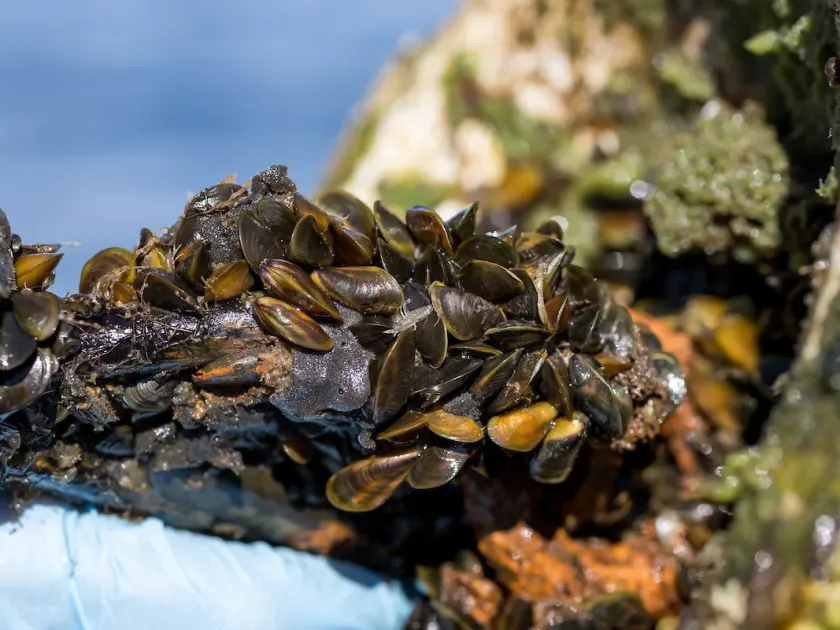
Physically, the mollusk features a golden-brown or yellowish shell, resembling a marine mussel. Adult specimens typically measure between 20 and 40 millimeters in length, allowing them to colonize narrow crevices within hydraulic systems.
A distinctive trait of this species is its ability to produce strong byssal threads. These threads allow the mussels to anchor firmly to various surfaces, including rocks, concrete structures, and metal pipelines, effectively forming dense mats.
Their biology is closely linked to the aquatic environment, where they reproduce via free-swimming larvae. These larvae can be carried over long distances by water currents, facilitating the rapid colonization of new areas.
Taxonomically, Limnoperna is classified under the order Mytilida, family Mytilidae. Their immense reproductive capacity allows them to cover large areas of riverbeds and infrastructure with dense, persistent colonies.
What it damages
The primary damage caused by Limnoperna is the fouling of hydraulic infrastructure used in agricultural irrigation. Large colonies of mussels clog intake pipes, pump filters, and irrigation channels, severely restricting water flow.
The reduction in the capacity of channels and pipelines leads to disrupted water supply for crops. This results in delayed irrigation, increased stress on plants, and reduced efficiency of automated agricultural water management systems.
Beyond mechanical clogging, the presence of Limnoperna in irrigation systems accelerates the corrosion of metal components. The biological activity of the mussels creates a microenvironment that promotes the degradation of metallic materials, leading to costly maintenance.
In natural water sources utilized for irrigation, these mussels displace native species, disrupting local ecosystems. This secondary impact can degrade overall water quality, potentially introducing organic debris into the irrigation lines.
Intensive colony growth leads to the accumulation of organic waste and biofilm, which serves as a breeding ground for pathogenic bacteria. If this water reaches crops, it could potentially pose risks to soil health or produce safety.
When it appears
Active reproduction of Limnoperna occurs during warmer months when water temperatures exceed 15–20 degrees Celsius. During this time, larvae are released in large numbers and colonize new surfaces throughout the water system.
Late summer and autumn typically see peak colony density, as the mussels have had the entire season to mature and reproduce. Consequently, irrigation system fouling often reaches critical levels during this period.
While winter acts as a period of metabolic slowdown, the mussels are highly resilient and capable of surviving cold temperatures. This survival capacity allows established colonies to persist across various climatic zones.
Monitoring larval counts in water intakes is recommended in early spring, as water temperatures rise. Early detection allows for preventive actions before the juveniles attach and grow on internal pipe walls.
Annual inspection of irrigation infrastructure during the post-harvest season is essential to assess infestation levels and schedule cleaning operations for the off-season.
Signs of infestation
A primary indicator of a Limnoperna infestation is a sudden drop in water pressure within the irrigation system while pumps are running. This typically signifies that internal pipe diameter is reduced due to mussel colonization.
Visual inspection of filters and pipe intake screens often reveals the presence of small, golden-brown shells. Finding even a small number of these shells suggests the start of a significant colonization process.
Areas heavily infested with these mussels often emit a distinct odor of decay, caused by the accumulation of metabolic waste and dead organic matter within the colony.
Increased surface roughness inside pipes, detected during routine maintenance or cleaning, is a clear sign that young mussels have settled. Even tiny, juvenile mussels create turbulence that lowers the hydraulic efficiency of the system.
In some cases, changes in water chemistry, such as fluctuations in dissolved oxygen or chlorophyll levels, can serve as indirect indicators of a massive presence of filter-feeding mussels in the supply system.
Control measures
Mechanical cleaning remains the most effective immediate control measure for Limnoperna. Using specialized scrapers, brushes, and high-pressure water jets is essential for removing colonies from irrigation pipes and pump housings.
Thermal treatment, involving the application of hot water (above 40–50 degrees Celsius) to closed-loop irrigation circuits, is lethal to the mussels and serves as an effective control strategy for managing larval and juvenile stages.
Chemical control options include the use of oxidizing agents, such as chlorine, to treat water and inhibit larval settlement. However, extreme caution is required to ensure concentrations remain safe for agricultural crops and soil.
- Routine inspection of all water intake and distribution structures.
- Installation of fine-mesh screening at system entry points to block larvae.
- Application of anti-fouling coatings to internal pipe surfaces to prevent mussel attachment.
Development of biological control methods, including the use of natural predators or mollusk-specific biocides, is currently a subject of ongoing research aimed at sustainable, long-term management.
Taxonomy
- Latin name
- Limnoperna
- Family
- Mytilidae
- EPPO code
- LPRNSP
Discussion
No discussions yet — be the first.