
Senegalese mussel
Brachidontes pharaonis
Description
How to identify
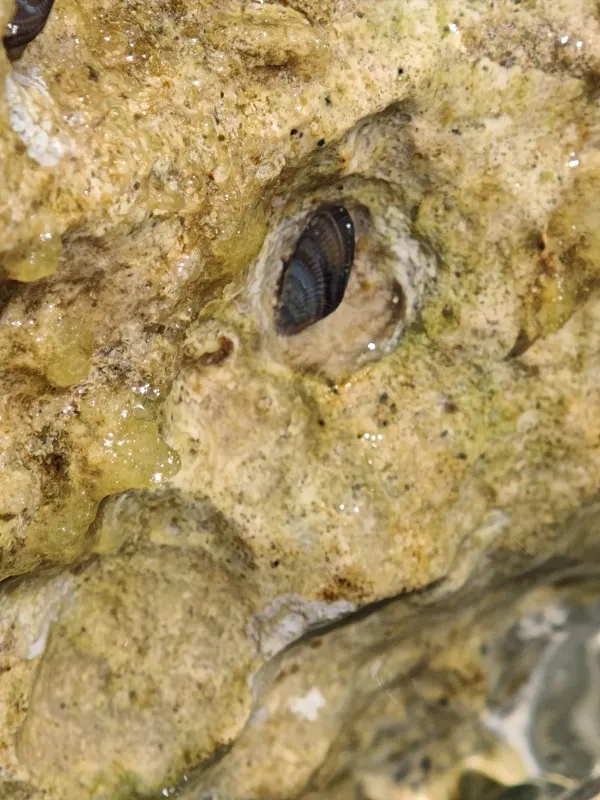
The Senegalese mussel Brachidontes pharaonis is a small bivalve mollusk from the family Mytilidae. It has a distinct elongated shell shape with a dark, brownish-black color.
The shell surface is characterized by prominent radial ribs. Adults typically measure between 30 and 40 mm, making them capable of infiltrating narrow spaces in infrastructure.
As an invasive species, it originated from the Indian Ocean and spread into the Mediterranean via the Suez Canal. It demonstrates high adaptability to varying marine environments.
Systematically, it belongs to the order Mytilida. These mussels form dense clusters, known as druses, attaching themselves firmly to various hard substrates.
They are easily recognized by their strong adherence to surfaces, achieved through tough byssus threads that anchor the colonies against strong currents.
What it damages
While not a pest for land crops, this mussel is a significant threat to the aquaculture industry. Massive colonization of fish cages blocks water circulation, essential for stock health.
The accumulation of mussel biomass creates excessive drag and weight on cage structures, often causing deformations, net tears, and loss of livestock.
They clog seawater intake systems of agricultural facilities and fish farms, disrupting operations and damaging high-cost pumping equipment.
By outcompeting native species for space and food, they disrupt local ecosystems where aquaculture operations are established.
Biofouling by these mussels degrades water quality by trapping organic matter, which can lead to localized hypoxia and bacterial growth around farm installations.
When it appears
Reproduction is heavily dependent on water temperature, with peak spawning occurring during the warmest months of the year.
The mussel produces pelagic larvae that are dispersed by currents, enabling rapid colonization of new areas throughout the summer season.
Once settled, juveniles grow rapidly, leading to significant increases in biomass within a short period, which complicates maintenance routines.
Winter conditions slow down their metabolic activity, yet colonies remain viable, allowing the species to persist in various coastal environments.
Effective pest management relies on monitoring larval settlement cycles to implement control measures before the colonies become permanently established.
Signs of infestation
The primary sign of infestation is the presence of small black shells attached to nets, pipes, and metal frames of marine equipment.
In water intake systems, a noticeable decrease in flow rate and abnormal noise in pumps are key indicators of biofouling obstruction.
Visually, the presence of dense mats or carpets of mollusks covering the submerged surface of equipment is a clear indication of a mature colony.
A reduction in the growth rates of fish or other cultivated hydrobionts may indirectly signal oxygen deprivation caused by clogged netting.
The presence of empty shells and byssal mats on cleaned surfaces provides evidence of previous successful colonization and the need for more frequent maintenance.
Control measures
Mechanical cleaning using high-pressure water jets is the most practical method for removing colonies from submerged infrastructure.
Applying anti-fouling coatings to equipment prevents larvae from settling, effectively protecting nets and pipes for extended periods.
Installing fine mesh screens at water intake points significantly reduces the risk of larvae entering internal plumbing systems.
Ultrasonic devices are employed in modern aquaculture to create an environment unsuitable for settlement, offering a non-toxic control alternative.
Regular inspection and proactive maintenance schedules are essential to prevent the formation of massive druses that are difficult and costly to remove.
Taxonomy
- Latin name
- Brachidontes pharaonis
- Family
- Mytilidae
- EPPO code
- BRDTPH
Discussion
No discussions yet — be the first.