
Mysis relicta
Mysis relicta
Description
How to identify
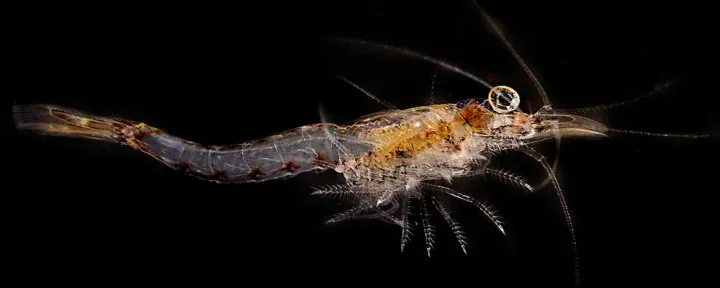
Mysis relicta is a small crustacean species belonging to the order Mysida and the family Mysidae. Often referred to as the opossum shrimp, it reaches a size of approximately 20 to 25 millimeters and possesses a nearly transparent, slender body.
The organism is characterized by long, delicate antennae, stalked eyes, and specialized thoracic limbs used for both swimming and filtering microscopic particles from the water column. Its physical appearance is well-adapted for deep, cold, and oxygen-rich freshwater environments.
As a glacial relict species, it thrives in environments that mimic post-glacial lake conditions. Identification requires microscopic analysis of the telson and specific appendages, as they are easily confused with other small aquatic crustaceans.
While Mysis relicta is not a typical terrestrial plant pest, it acts as a significant nuisance in managed water bodies, including commercial fish ponds and agricultural irrigation systems, where its population can surge without natural predators.
In the context of agronomical water management, distinguishing between beneficial zooplankton and dense populations of Mysis relicta is essential for maintaining the health of the aquatic environment.
What it damages
The primary damage caused by Mysis relicta in aquaculture occurs through direct competition for food. By efficiently consuming large volumes of zooplankton, these crustaceans deprive young fish of necessary nourishment, leading to growth stagnation.
Furthermore, in irrigation systems connected to natural lakes, these organisms can cause mechanical damage. Mass swarms of Mysis relicta frequently clog intake filters, pumps, and irrigation nozzles, disrupting the delivery of water to fields.
The ecological shift caused by their overpopulation can degrade the water quality of agricultural ponds, as they significantly alter the biomass of primary consumers. This reduction in biodiversity can lead to unstable conditions in artificial aquatic environments.
For fish farms, the presence of these mysids represents an economic burden due to reduced harvest yields and the high cost of maintenance required to keep irrigation filters clear of debris.
Ultimately, while not directly attacking crops, Mysis relicta interferes with the essential water infrastructure and food webs required for sustainable commercial aquatic production.
When it appears
The reproductive cycle of Mysis relicta is strictly regulated by seasonal water temperatures. Reproduction typically intensifies during the cooler months, with females carrying their brood in a marsupium on the ventral side.
Peak population densities usually occur in the spring, following the development of the brood. During these times, the organisms are most active in the water column and cause the most significant disruptions to filtration systems.
As water temperatures rise during the summer, the population often migrates to deeper, cooler strata, making them less visible at the surface but still present within the water body.
Understanding these seasonal vertical migrations is critical for operators of fish farms, as the timing of water intake and pond management can influence the density of mysids present in the systems.
With a life cycle lasting approximately one year, the population dynamics are cyclical, necessitating consistent monitoring throughout the year to prevent sudden outbreaks in managed water systems.
Signs of infestation
A primary indicator of a Mysis relicta outbreak is a noticeable decline in the density of other zooplankton species in the pond, which can be confirmed through standard water sampling and microscopic analysis.
Frequent clogging of water intake screens with organic debris, containing transparent crustacean molts, serves as a clear physical sign of an established population within the water source.
In fish production, slower-than-expected growth rates among fingerlings, despite adequate supplemental feeding, often suggest that natural food resources are being outcompeted by mysid populations.
Nocturnal observations using strong artificial lights near the water surface can reveal the presence of Mysis relicta, as the creatures are attracted to the light and exhibit a characteristic swarming behavior.
Regular maintenance checks on pump intake systems often reveal the presence of these organisms trapped in the mesh, confirming their density in the water supply channel.
Control measures
The most effective strategy for managing Mysis relicta is biological control, specifically introducing native fish species known to prey on mysids, thereby restoring the balance within the pond's ecosystem.
Mechanical management is also vital; installing fine-mesh intake filters on irrigation lines helps prevent the influx of these crustaceans into agricultural fields and reduces maintenance needs for pumps.
Monitoring the hydrochemical parameters of the water is essential, as maintaining optimal conditions for fish growth often helps in suppressing the competitive advantage of Mysis relicta populations.
Chemical intervention is generally discouraged in aquaculture, as it can have detrimental effects on the target fish stock and degrade the quality of water intended for crop irrigation.
- Introduction of natural fish predators.
- Installation of fine-mesh filtration systems.
- Regular monitoring of zooplankton density.
- Periodic cleaning of water intake structures.
Taxonomy
- Latin name
- Mysis relicta
- Family
- Mysidae
- EPPO code
- MYSSRE
Discussion
No discussions yet — be the first.