
Hemimysis
Hemimysis
Description
How to identify
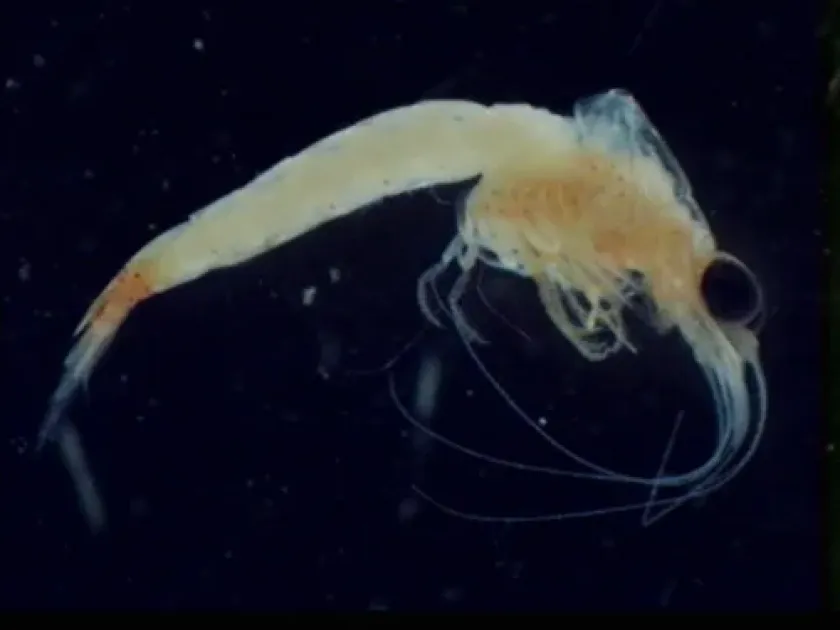
Hemimysis is a genus of small crustaceans belonging to the order Mysida. They are often referred to as opossum shrimp due to the way females carry their developing eggs in a pouch located on the underside of their thorax.
These organisms are typically small, reaching lengths of 7–10 mm. Their bodies are translucent, often displaying a reddish or pinkish hue, and they possess prominent stalked eyes, which are a characteristic feature of this genus.
They are primarily bottom-dwelling organisms but demonstrate clear phototactic behavior, moving into the water column during low-light conditions to feed on plankton and organic detritus. Their swarming behavior is a key trait, as they often congregate in large groups.
Reproduction is rapid, and the species is known for its ability to adapt to varying environmental conditions, including brackish and fresh water. This versatility contributes to their potential as an invasive species in managed water systems.
While not a direct herbivore, their biological impact is significant in agricultural settings where water quality and filtration efficiency are critical for crop survival.
What it damages
The primary damage caused by Hemimysis is related to the infrastructure of hydroponic systems and irrigation networks. Their ability to form massive swarms leads to the mechanical clogging of filters and pumps.
By accumulating in intake valves and screens, these crustaceans restrict water flow, causing critical pressure drops in drip irrigation systems. This can lead to uneven irrigation and physiological stress in crops due to inconsistent water delivery.
In aquaponic systems, their presence can disrupt the balance of the ecosystem, as they compete for nutrient resources and can interfere with the development of beneficial microbial communities in the growing medium.
The accumulation of their biological waste and decomposing bodies within the piping infrastructure can degrade water quality, affecting the pH and nutrient balance essential for sensitive hydroponic crops.
Additionally, their physical presence can cause abrasion or clogging in high-precision misting systems, which are vital for maintaining optimal humidity in greenhouses.
When it appears
Hemimysis activity is most pronounced during the warmer months, typically when water temperatures rise above 10–12 degrees Celsius. During this period, the population grows exponentially.
As water temperatures drop in the autumn, the metabolic rate of these crustaceans decreases. However, they are resilient and can overwinter in the deeper, more stable layers of water bodies.
In controlled environments such as indoor hydroponic facilities, seasonal factors are less restrictive. If water temperature and nutrient levels remain stable, populations can persist and breed throughout the entire year.
Mass reproduction cycles are closely linked to the availability of food sources, particularly phytoplankton blooms. These periods require increased vigilance from agricultural staff regarding filtration performance.
Environmental shifts and sudden temperature changes can trigger mass migrations of these swarms, making their appearance in agricultural water intakes somewhat unpredictable, requiring proactive monitoring.
Signs of infestation
A sudden decrease in water pressure within irrigation or hydroponic lines, while pumps appear to be functioning normally, is a classic sign of Hemimysis infestation in the system.
The observation of reddish or pinkish swarms in open water storage tanks or header tanks provides immediate visual confirmation of their presence in the supply chain.
Routine maintenance of filter screens often reveals a gelatinous residue mixed with the exoskeletons of these small crustaceans, indicating that a significant population is already established in the system.
Changes in the clarity or odor of the nutrient solution, accompanied by a buildup of fine organic debris, suggest that the population density has reached levels capable of impacting water quality.
If irrigation nozzles or drippers begin to malfunction or show irregular discharge patterns, an inspection of the intake filters for biological debris is highly recommended.
Control measures
The most effective strategy for managing Hemimysis is the implementation of multi-stage mechanical filtration. Utilizing screen filters with a mesh size of 50 microns or less is essential to prevent their entry into the system.
Regular maintenance and flushing of storage tanks, reservoirs, and piping systems are necessary to remove organic material and interrupt the breeding cycle of these crustaceans.
UV-C sterilization systems are highly effective for treating irrigation water. Exposure to UV light neutralizes these organisms, preventing them from establishing colonies within the plumbing infrastructure.
Ensuring that water intake points from natural sources are protected by fine-mesh screens can significantly reduce the risk of initial infestation. These screens should be cleaned frequently to prevent clogging.
While chemical control is possible, it is generally discouraged in hydroponic environments due to the potential toxicity to crops and the disruption of the nutrient solution chemistry. Mechanical and physical exclusion remain the preferred methods.
Taxonomy
- Latin name
- Hemimysis
- Family
- Mysidae
- EPPO code
- HMYSSP
Discussion
No discussions yet — be the first.