
Hemimysis
Hemimysis lamornae
Description
How to identify
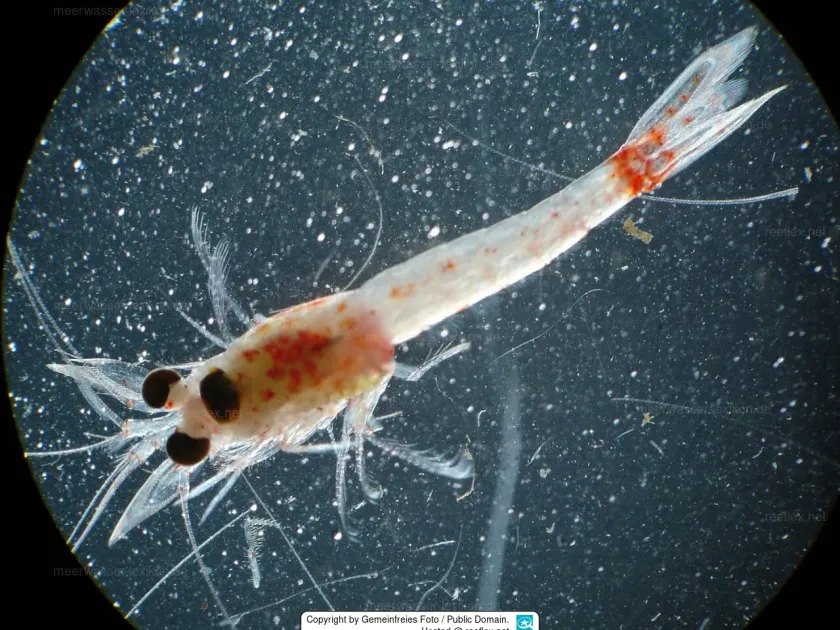
Hemimysis lamornae is a small crustacean belonging to the order Mysida and the family Mysidae, commonly referred to as mysid shrimp, reaching 6-10 mm in length.
The body of this organism is semi-transparent with a distinct reddish or orange hue, which makes it blend into the aquatic environment, especially in deeper water.
They possess well-developed stalked eyes that are dark in color, providing them with excellent navigational capabilities in various light conditions.
These crustaceans are known for their high mobility and social behavior, often forming dense swarms that move actively through the water column.
The life cycle involves the female carrying developing embryos in a brood pouch, which allows for rapid population growth under favorable environmental conditions.
What it damages
While Hemimysis lamornae is not a direct pest to soil-grown crops, it poses significant risks to industrial hydroponic, aquaponic, and water circulation systems.
The primary damage occurs through the clogging of filtration systems, pumps, and irrigation nozzles with their biological debris and exuviae (molted shells).
In aquaponic setups, they act as food competitors, consuming organic particles and plankton meant for the primary aquatic livestock, thereby affecting system productivity.
Their presence can lead to the accumulation of organic waste in nutrient solutions, which creates an environment conducive to the growth of harmful bacteria and fungi.
Indirectly, the mass mortality of these swarms in pipes can cause rapid spikes in nitrogen and phosphorus levels, potentially disrupting the chemistry required for plant growth.
When it appears
The activity of Hemimysis lamornae is closely tied to water temperature, with populations typically peaking during the warmer months of spring and summer.
An optimal temperature range of 15-22 degrees Celsius significantly accelerates their reproductive cycle, leading to rapid population surges in stagnant or slow-moving water.
In indoor hydroponic facilities with controlled climate systems, these crustaceans can maintain activity throughout the entire year without a dormant phase.
They exhibit strong vertical migration patterns, often moving to shallower areas at night or under low-light conditions, which coincides with the operation of greenhouse lighting.
Sudden changes in water oxygen levels or shifts in system salinity can trigger migration, causing the population to spread rapidly across different zones of an installation.
Signs of infestation
The most reliable sign of an infestation is the visual observation of small, fast-moving reddish organisms swimming in the water reservoir or nutrient solution.
Persistent clogs in mesh filters and mechanical strainers, which contain fine, chitinous skeletal remains upon closer inspection, indicate a large presence.
A noticeable decrease in water clarity combined with a slight odor of decomposition suggests that a large colony may be living within the system's plumbing.
Increased mortality or lethargy in fish populations within aquaponic systems, often resulting from nutritional stress caused by competition from mysids.
The sudden accumulation of organic film or slime on the walls of reservoirs that is not related to algae growth can be linked to mysid waste products.
Control measures
Physical filtration using high-precision mesh screens (below 0.5 mm) is the most effective way to prevent the migration and spread of these crustaceans within the system.
Utilizing UV sterilizers in the water circulation line helps to neutralize larvae and eggs, keeping the overall population density below the damage threshold.
Regular maintenance and sanitation of all water lines, tanks, and sumps using approved oxidizing agents are essential for eradicating breeding colonies.
Biological control, such as introducing small predatory fish or amphibians that naturally consume mysids, can be an effective strategy in integrated aquaponic setups.
- Implement a strict schedule for cleaning mechanical filtration components.
- Monitor nutrient solution chemistry to avoid conditions favoring mysid growth.
- Install fine-mesh inlet guards to prevent the entry of new individuals.
Taxonomy
- Latin name
- Hemimysis lamornae
- Family
- Mysidae
- EPPO code
- HMYSLA
Discussion
No discussions yet — be the first.