
Spotted flycatcher
Muscicapa striata
Description
How to identify
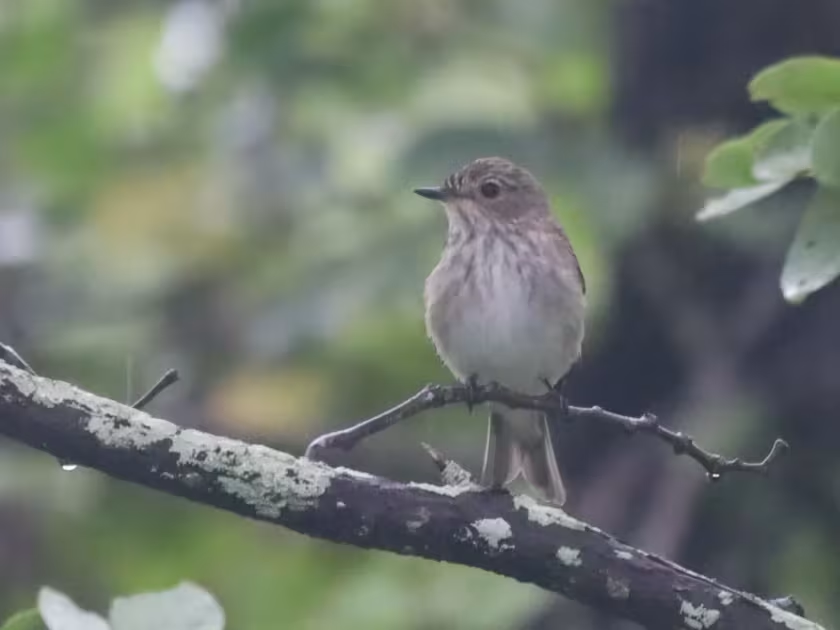
The spotted flycatcher (Muscicapa striata) is a small passerine bird belonging to the family Muscicapidae, widely distributed across Europe and parts of Asia.
It is characterized by its grayish-brown plumage with dark streaks on its breast and crown, which provides excellent camouflage against bark and branches.
Adult birds are approximately 14-15 cm long, with slender wings and a tail that allows for highly agile aerial maneuvers during hunting.
The beak is relatively broad at the base, surrounded by stiff bristles that act as a sensory aid for capturing flying insects during rapid flight maneuvers.
It is exclusively an insectivore, posing absolutely no threat to crops, berries, or ornamental vegetation, making it a valuable friend to any gardener.
What it damages
The spotted flycatcher is not a pest in any agricultural or horticultural context; it never damages leaves, fruits, or roots of plants.
On the contrary, this species is highly beneficial to the ecosystem as it actively preys on a variety of flying insects that are often considered garden pests.
Its diet consists primarily of flies, mosquitoes, midges, and small moths, helping to naturally manage the population of these unwanted insects in the garden.
The bird serves as a biological agent for pest suppression, reducing the need for chemical insecticides, which is a key principle of sustainable agriculture.
There is no economic harm associated with this bird; its presence in a garden should be welcomed as a sign of a balanced and healthy environment.
When it appears
As a long-distance migrant, the spotted flycatcher is a seasonal resident in temperate regions, typically arriving in late spring to start its breeding season.
During the summer months, they are highly active, hunting tirelessly to provide food for their offspring, which peaks in June and July.
The birds demonstrate strong site fidelity, often returning to the same nesting location every year if environmental conditions remain favorable.
By late August or September, they begin their long journey back to their wintering grounds in sub-Saharan Africa to avoid the cold season.
Therefore, their beneficial impact as natural pest controllers is most pronounced during the heart of the growing and harvest season.
Signs of infestation
The most reliable sign of a spotted flycatcher's presence is its distinct hunting technique known as "fly-catching" from a prominent perch.
They sit motionless on a branch, fence post, or roof edge, then launch a rapid, agile flight to catch an insect before returning to the same or a nearby perch.
Their song is a series of quiet, thin, and squeaky notes that are often overlooked, making visual observation the best way to confirm their presence.
They build neat, cup-shaped nests in semi-exposed locations, such as ledges, wall crevices, or hidden nooks in ivy-covered buildings.
Observing a small, dull-colored bird repeatedly diving into the air near your trees indicates they are actively clearing your garden of flying pests.
Control measures
The only management strategy for the spotted flycatcher is to provide a habitat that attracts and supports these beneficial insect-eating birds.
Providing semi-open nesting boxes or ledges can encourage them to settle in your garden, as they prefer these to traditional closed-box birdhouses.
It is vital to avoid all unnecessary pesticide spraying, as these chemicals eliminate the birds' food supply and can be toxic if consumed by the birds.
Maintaining a variety of native plants will naturally attract the insects the flycatchers rely on, creating a self-sustaining cycle within the garden ecosystem.
Ensuring the availability of fresh water for bathing and drinking is another simple step to maintain a bird-friendly garden throughout the summer months.
Taxonomy
- Latin name
- Muscicapa striata
- Family
- Muscicapidae
- EPPO code
- MUSPST
Discussion
No discussions yet — be the first.