
Harlequin bug
Murgantia histrionica
Description
How to identify
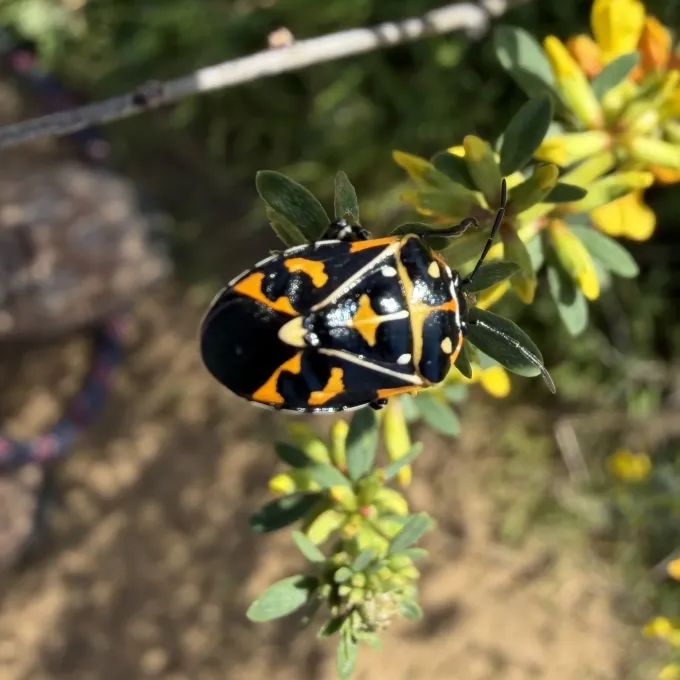
The harlequin bug (Murgantia histrionica) is a member of the Pentatomidae family, widely known for its distinct, bright, and warning-colored pattern.
Adults are shield-shaped, roughly 10 millimeters long, and feature a black body marked with vivid red, orange, or yellow geometric patterns.
Nymphs go through five instars before reaching adulthood, with each stage appearing slightly larger and more colorful than the previous one.
Their eggs are particularly unique, often laid in neat clusters of 12 on the undersides of leaves, resembling tiny, white-and-black striped barrels.
This insect is primarily found in North and Central America, where it thrives in warm climates and represents a serious threat to vegetable gardening.
What it damages
Harlequin bugs are specialists that feed primarily on plants in the Brassicaceae family, including cabbage, broccoli, kale, cauliflower, and mustard greens.
Both adults and nymphs use their piercing-sucking mouthparts to draw sap from the plant, which leads to the collapse of plant tissue.
Feeding damage manifests as white or yellow blotches on the leaves, which eventually turn brown and necrotic as the plant cells die.
Large infestations can completely kill young seedlings and significantly reduce the yield and quality of mature, harvestable heads of cabbage.
The bug also injects toxic saliva while feeding, which causes systemic wilting and deformities that cannot be corrected once the damage is done.
When it appears
Adults overwinter in protected areas such as garden debris, mulch, or under dense weeds, emerging as soon as temperatures start to rise in the spring.
Early in the season, they seek out early-growing mustard weeds or early planted cruciferous crops to feed and begin mating.
Multiple generations can occur throughout the growing season, with the population typically peaking during the hot summer months.
As the season progresses, bugs migrate between fields, following the availability of their favorite host plants across the farm or garden.
In late autumn, the decreasing light and cooler temperatures trigger the instinct to find suitable overwintering sites to survive the coming winter.
Signs of infestation
The first signs of an infestation are irregular, pale spots on the leaves caused by the insect's initial feeding efforts on the foliage.
Leaves will eventually curl, wilt, and develop stunted growth patterns because the plant is struggling to transport nutrients effectively.
Closely inspecting the underside of the leaves usually reveals the presence of their characteristic egg clusters, which are a strong indicator of an active colony.
Visual observation of the bright red and black bugs congregating on stalks and leaves is the most common way to diagnose an outbreak.
Significant damage to the crop often leaves it looking shredded or withered, which makes affected plants highly unattractive and unmarketable.
Control measures
Cultural control is the most effective starting point, which involves removing all cruciferous weeds that could serve as early-season host plants.
Keeping the garden clean by removing plant debris and harvesting crop residues promptly helps eliminate the shelter needed for winter survival.
Hand-picking the bugs and crushing the egg clusters is a highly effective method for small-scale garden plots where chemical use is not desired.
Using row covers early in the season can physically prevent the adults from reaching the plants to feed and lay their eggs.
- Rotate crops to move away from areas previously infested with cruciferous plants.
- Use trap crops like kale or mustard to draw the bugs away from main crops.
- Apply organic insecticidal soaps if the population threshold becomes unmanageable.
Taxonomy
- Latin name
- Murgantia histrionica
- Order
- Hemiptera (bugs, aphids, leafhoppers)
- Family
- Pentatomidae
- EPPO code
- MURGHI
Discussion
No discussions yet — be the first.