
Yellow wagtail
Motacilla flava
Description
How to identify
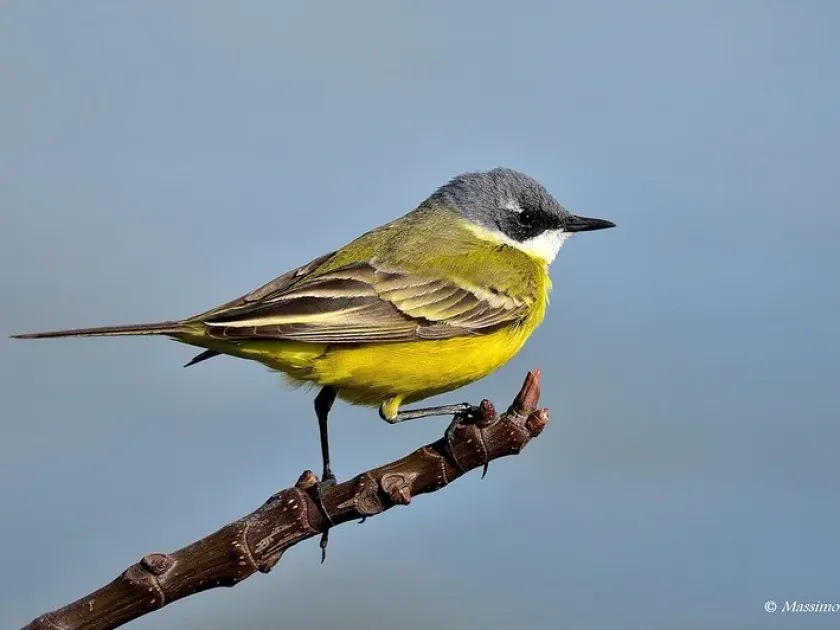
The Yellow wagtail (Motacilla flava) is a small passerine bird belonging to the Motacillidae family. It is easily identified by its bright yellow underparts and olive-green upperparts.
This bird is predominantly terrestrial, commonly found in open habitats, meadows, pastures, and agricultural fields. It is known for its constant tail-bobbing motion.
The flight of the Yellow wagtail is undulating and rapid. When on the ground, the bird moves with agility and speed, actively searching for small invertebrates.
In an agricultural context, it is strictly classified as a beneficial bird rather than a pest. It contributes significantly to the health of the agroeсоsystem.
Farmers may mistake them for pests because they are frequently seen in the fields, but their presence is purely driven by the search for insect food sources.
What it damages
The Yellow wagtail does not damage crops. It does not feed on grains, leaves, fruits, or stems, meaning it has no negative impact on harvest yields.
Their diet consists entirely of insects and other small invertebrates, including many species recognized as agricultural pests, such as flies, beetles, and larvae.
There is no economic damage associated with this species. On the contrary, these birds act as biological control agents, reducing the population of harmful pests.
By consuming large quantities of insects, the Yellow wagtail helps to maintain a balance that may reduce the necessity for chemical pest management.
It is an essential component of integrated pest management (IPM) strategies, functioning as a silent and effective worker in the field throughout the summer.
When it appears
The Yellow wagtail is a migratory bird that arrives in agricultural areas in the spring, coinciding with the rise in insect activity after winter.
The peak presence of these birds occurs during the breeding and nesting season, when they require large volumes of insects to feed their growing offspring.
Throughout the summer months, they are highly active in fields, continuously hunting for food and significantly lowering the local density of agricultural pests.
Migration to wintering grounds takes place in late summer or early autumn, as the temperature drops and the availability of their insect prey decreases.
Their seasonal presence aligns perfectly with the growth stages of many field crops, providing natural protection during the most critical times of development.
Control measures
No control measures are needed for the Yellow wagtail as it is not a pest. Management efforts should focus on habitat conservation to support their population.
Avoiding the indiscriminate use of broad-spectrum insecticides is crucial to protect the birds from secondary poisoning and ensure a stable food supply for them.
Maintaining field margins and buffer strips with native vegetation provides necessary cover and nesting sites for the birds within the agricultural landscape.
Implementing precision farming techniques that minimize chemical exposure to non-target species helps in maintaining the biodiversity of the ecosystem.
- Protecting nesting habitats.
- Reducing synthetic chemical usage.
- Encouraging ecological pest management.
Taxonomy
- Latin name
- Motacilla flava
- Family
- Motacillidae
- EPPO code
- MOTAFL
Discussion
No discussions yet — be the first.