
White wagtail
Motacilla alba
Description
How to identify
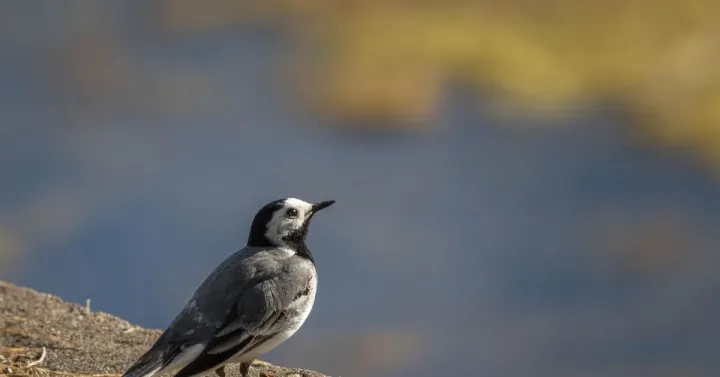
The white wagtail (Motacilla alba) is a small, slender bird of the Motacillidae family, characterized by its long tail that constantly bobs up and down.
They exhibit a distinctive black-and-white plumage with a grey back, white underparts, and a sharp black bib, making them easy to identify in agricultural settings.
White wagtails are commonly found in open habitats, including farmlands, pastures, and near irrigation channels, where they search for food on the ground.
The species is primarily insectivorous, showing high mobility and agility while tracking its prey among rows of crops or on open soil.
Despite misconceptions, this bird is not a pest; it is a valuable natural ally for farmers who rely on biological control methods to manage insect populations.
What it damages
White wagtails do not cause damage to agricultural crops as they do not feed on plant foliage, seeds, or fruits during their daily foraging.
Reports describing them as pests are factually incorrect, as any minor soil disturbance they may cause while walking is purely incidental and inconsequential.
The birds significantly benefit agriculture by preying on beetles, flies, caterpillars, and other common agricultural pests found in fields.
By consuming large quantities of harmful insects, white wagtails act as natural pest suppressors, protecting young crops during critical development stages.
There is no economic harm associated with their presence; instead, they contribute to the ecological balance and pest pressure reduction within the field.
When it appears
White wagtails arrive in agricultural areas in early spring, often coinciding with the soil preparation and the emergence of the first wave of seasonal pests.
Their presence is most noticeable during the breeding and nesting season, when the high energy demand requires them to hunt insects intensively throughout the day.
In mid-summer, these birds are frequently seen following agricultural machinery, catching insects exposed by ploughing or mechanical weeding operations.
They remain active in the fields until early autumn, providing extended support in controlling pest populations throughout the main growing season.
This natural rhythm ensures that the birds are present at the exact time when insect pressure on developing crops is often at its highest.
Signs of infestation
An indicator of white wagtail activity is a noticeable reduction in insect-related foliage damage or leaf-chewing pests on the monitored crop fields.
The presence of these birds in a field confirms a healthy, functional agro-ecosystem where natural predators are actively reducing pest numbers.
Their physical traces, such as footprints on soft soil, or their characteristic flight patterns, are the only signs of their occupancy in the area.
No symptoms of crop injury—such as wilting, necrosis, or mechanical damage to stems—are ever caused by the feeding or movement of this species.
Observers often find that fields frequented by white wagtails have lower levels of infestation, proving their positive contribution to plant health.
Control measures
No control measures are necessary for white wagtails; on the contrary, they should be encouraged as essential beneficial organisms in integrated pest management.
Farmers should focus on preserving nesting sites near farm buildings and maintaining natural field margins to support the local bird population.
The use of broad-spectrum pesticides should be limited to avoid poisoning these natural helpers, who provide free and sustainable pest control services.
Integrating avian insectivores into agricultural practices reduces the need for chemicals and promotes sustainable production standards.
Promoting a bird-friendly environment is a proactive strategy for maintaining long-term field productivity and ecological health in commercial farming.
Taxonomy
- Latin name
- Motacilla alba
- Family
- Motacillidae
- EPPO code
- MOTAAL
Discussion
No discussions yet — be the first.