
Mormidea pictiventris
Mormidea pictiventris
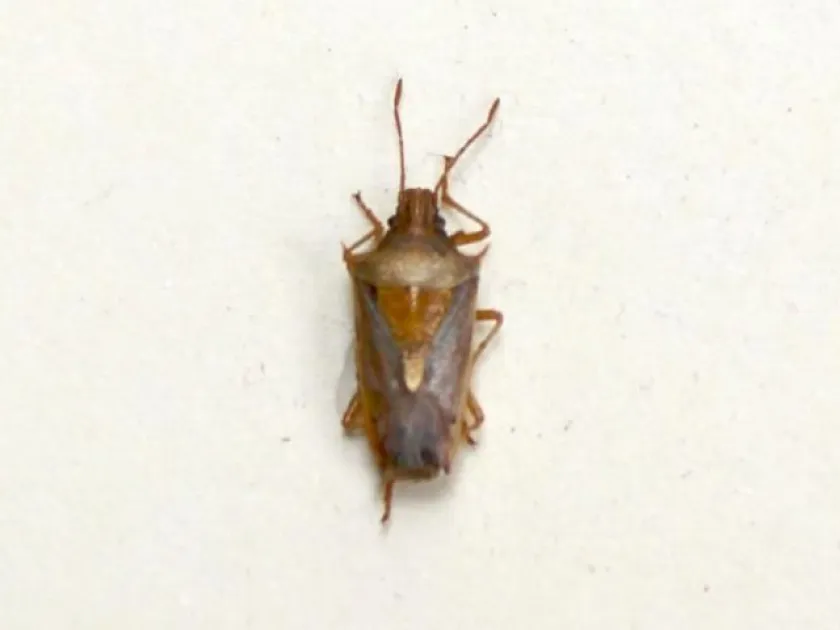
Description
How to identify
Mormidea pictiventris is a species of true bug belonging to the order Hemiptera and the family Pentatomidae, commonly known as stink bugs. These insects possess a distinctive shield-shaped body that provides protection from external threats.
Adult specimens typically exhibit a brownish to yellowish-brown coloration. A key identification feature is the mottled or variegated pattern found on the underside of the abdomen, from which the name derives.
The head is equipped with a piercing-sucking mouthpart called a rostrum, which is essential for penetrating plant tissues to extract sap. They have well-developed compound eyes and multi-segmented antennae used for navigation.
Nymphs undergo several developmental stages, during which their morphology gradually shifts toward the adult form. Unlike adults, nymphs lack fully developed wings but share identical feeding behaviors.
This species is highly adapted to tropical and subtropical climates, allowing for multiple overlapping generations per year depending on the specific environmental temperature and humidity.
What it damages
The pest poses a significant threat to various agricultural commodities, including cereals, rice, and legumes. Both adults and nymphs feed on the phloem sap of the host plants, weakening their overall health.
Damage is particularly severe when the insect feeds on reproductive organs such as flower buds, developing pods, and seeds. This activity directly correlates with reduced yield and lower grain quality.
Feeding punctures often introduce enzymes into the plant tissue, leading to localized necrosis, discoloration, and stunted development. In severe cases, the plant may experience premature senescence.
The reduction in nutrient transport within the plant caused by the feeding activity frequently results in stunted growth and deformed seed production, rendering the crop less marketable.
Heavy infestations can lead to significant economic losses, especially during the critical stages of grain filling when the plants are most vulnerable to physiological stress.
When it appears
The life cycle of Mormidea pictiventris is strongly influenced by ambient temperature. In warm regions, they remain active throughout most of the growing season, producing continuous generations.
The most active period for these bugs corresponds with the flowering and seed-setting phases of their host plants. During this time, they migrate in large numbers to available feeding sites.
Adults exhibit significant migratory behavior, moving between fields as food resources become depleted or as crops reach maturity and lose their attractiveness as a food source.
Winter survival is typically achieved in the adult stage. They seek refuge in plant debris, under leaf litter, or within the upper layers of the soil to protect themselves from colder temperatures.
Spring activity begins as soon as temperatures remain consistently above the threshold required for metabolic activation and mating, typically coinciding with the early growth stages of crops.
Signs of infestation
A primary indicator of infestation is the appearance of small, yellowish or brown punctures on leaves and stems. Over time, these spots may expand, showing signs of tissue decay.
Visual inspection often reveals the presence of bugs on the undersides of leaves or hiding within dense canopy layers. They are known for moving to the opposite side of a stem when disturbed.
Clusters of eggs laid on the underside of leaves serve as a clear sign that a local population is establishing itself within the field. Monitoring for these egg masses is crucial for early detection.
Wilting, yellowing of leaves, and the premature shedding of blossoms are classic symptoms of prolonged feeding activity, indicating that the bugs have depleted plant resources.
A distinct, sharp, and unpleasant odor is often detectable in fields with high population densities. This chemical defense signal is a reliable indicator for experienced agronomists.
Control measures
Integrated Pest Management (IPM) is essential for controlling Mormidea pictiventris. Cultural practices, such as clearing weed hosts from field borders, can significantly reduce the initial population size.
Deep plowing during the post-harvest period helps destroy overwintering sites, significantly lowering the number of adults that will emerge in the following spring season.
When the economic injury level is exceeded, the application of targeted insecticides is necessary. Rotating chemical classes is vital to prevent the development of resistance within the bug population.
Biological control, including the conservation and introduction of natural predators such as parasitoid wasps, can play a key role in suppressing population growth in sustainable farming systems.
Frequent field scouting and monitoring the migration patterns of the pest allow for precise and timely interventions, minimizing the reliance on blanket chemical sprays.
Taxonomy
- Latin name
- Mormidea pictiventris
- Order
- Hemiptera (bugs, aphids, leafhoppers)
- Family
- Pentatomidae
- EPPO code
- MORMPI
Discussion
No discussions yet — be the first.