
Monoctenus
Monoctenus
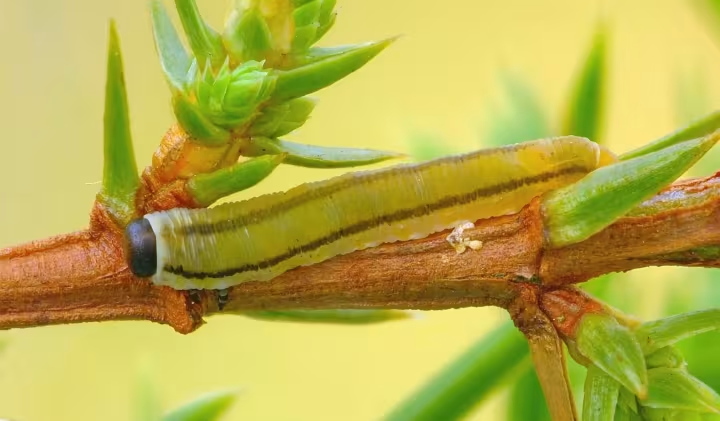
Description
How to identify
Monoctenus is a genus of sawflies belonging to the family Tenthredinidae. These insects are classified as Hymenoptera and are notable pests affecting various coniferous plant species.
Adult insects are small, dark-colored, and possess the typical characteristics of sawflies. They are most active during the warmer months, though they can be difficult to spot due to their protective coloration.
The larval stage consists of larvae that resemble moth caterpillars but possess a higher number of abdominal prolegs. Their body coloration is highly adaptive, allowing them to blend in with needles.
Identification is primarily based on their feeding behavior and the specific damage they cause to the foliage of host trees. They typically feed on the younger needles of the current season.
The life cycle involves complete metamorphosis, consisting of four distinct stages: egg, larva, pupa, and adult. This cycle is finely tuned to the growth phases of the host plant.
What it damages
The primary hosts for Monoctenus are various conifer species, with a strong preference for members of the Juniperus genus. In some regions, they may also affect various cypress species.
The larvae feed on the needles, causing significant defoliation if left unchecked. This feeding activity reduces the overall photosynthetic capacity of the plant.
Heavy infestations lead to a loss of aesthetic value, which is particularly detrimental for ornamental gardens, landscaping, and tree nurseries.
Damaged trees become stressed and are often more susceptible to secondary attacks by wood-boring insects or fungal pathogens, which can lead to branch dieback.
In nursery environments, the economic impact is significant as affected trees may fail to meet market standards for shape, color, and overall health.
When it appears
The emergence of adult Monoctenus typically occurs in early spring, coinciding with the first warming trends of the season when host plants begin active growth.
Egg-laying happens shortly after emergence, usually on fresh, tender growth. Larval activity is most intense from late spring through early summer.
The timing of the generation cycle is synchronized with the phenology of the host plant. Once feeding is complete, the larvae move to the soil for pupation.
Overwintering is achieved in the pupal stage, typically within a cocoon located in the upper layer of the soil or forest litter, protected from cold temperatures.
Monitoring for the presence of larvae is most effective during the late spring months, as this is when control measures are most likely to yield successful results.
Signs of infestation
The most visible sign of an infestation is partially eaten or skeletonized needles on the branches. The larvae often consume needles in a specific manner, leaving ragged edges.
Small, dark fecal pellets (frass) accumulating at the base of the branches or on the ground beneath the tree are strong indicators of active larval feeding above.
Yellowing or browning of individual branches is a common symptom of advanced feeding, which interrupts the nutrient flow within the affected area of the crown.
- Direct observation of the larvae feeding on foliage.
- Deformation or scarring of young shoots and needles.
- Sudden needle drop when the plant is shaken or inspected.
Early detection is crucial, as the larvae can quickly move between branches, especially in dense planting environments common in landscaping.
Control measures
Cultural control methods involve the regular pruning and disposal of affected branches. This practice can significantly reduce the local pest population if caught early.
Maintaining high plant vigor through proper watering, fertilization, and site selection helps trees withstand damage and recover more effectively from infestation.
Chemical control may be necessary for severe infestations, using systemic or contact insecticides registered for use against sawfly larvae on conifers.
Biological control, such as the use of entomopathogenic nematodes or specific bacterial preparations, can be used to manage populations while minimizing environmental impact.
Mechanical removal, such as hand-picking larvae from smaller trees, is a viable and environmentally friendly solution for small-scale garden settings.
Taxonomy
- Latin name
- Monoctenus
- Order
- Hymenoptera
- Family
- Diprionidae
- EPPO code
- MOOCSP
Discussion
No discussions yet — be the first.