
Alpine grasshopper
Miramella alpina
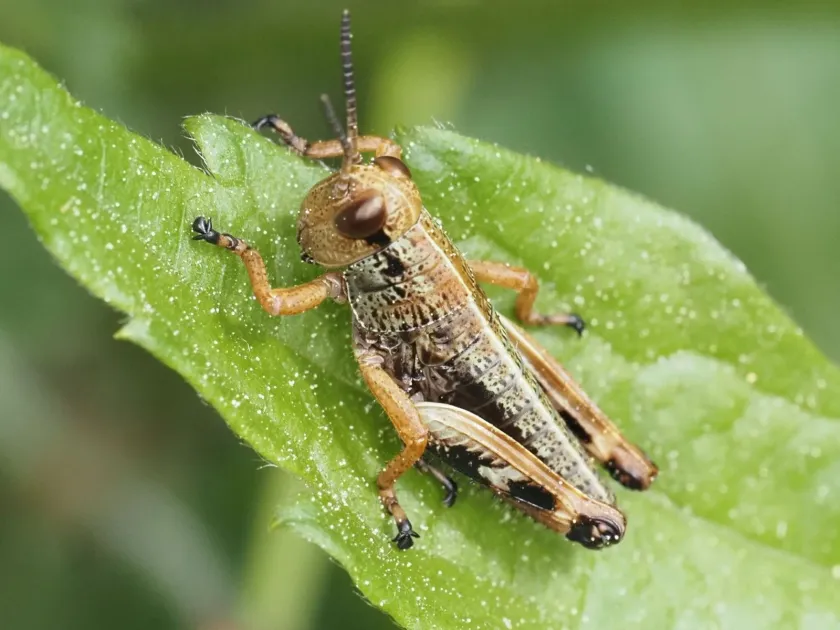
Description
How to identify
The Alpine grasshopper (Miramella alpina) is a member of the order Orthoptera and the family Acrididae. It is a distinctive insect species native to mountainous and sub-alpine regions, well-adapted to cooler and rugged environments.
Adults typically exhibit brownish or greenish coloration, providing excellent camouflage against the mountain flora. Their morphology includes powerful hind legs designed for jumping, which is their primary mode of locomotion.
A notable feature of this species is the reduction of wing size in many individuals, meaning they are primarily flightless and do not undertake the large-scale swarming migrations typical of desert locusts.
The life cycle consists of egg, nymph, and adult stages. The eggs are deposited in the soil, where they survive the harsh winter conditions in a state of diapause.
Population density is highly localized, meaning infestations are usually restricted to specific high-altitude zones where climatic conditions favor their survival.
What it damages
The Alpine grasshopper feeds on a wide range of grasses and herbaceous plants, including valuable forage species found in mountain meadows and pastures.
Both nymphs and adults cause damage by grazing on foliage. In high numbers, they can strip leaves down to the midribs, drastically reducing the quality and quantity of plant biomass available for livestock.
Agricultural crops situated near mountain slopes can be affected when the grasshoppers shift their focus from wild vegetation to cultivated fields during food shortages.
Beyond direct biomass loss, feeding damage creates entry points for various pathogens, potentially reducing the overall health and vitality of the affected plants.
Persistent feeding on pastures can lead to long-term degradation of vegetation cover, requiring significant time for the ecosystem to recover.
When it appears
Hatching typically begins in late spring, triggered by the warming of the soil surface. The speed of nymphal development is directly correlated with ambient mountain temperatures.
The adult stage is generally reached during the peak of summer, specifically throughout July and August, when feeding activity is at its highest.
The species completes one generation per year, with the entire population synchronized by the seasonal progression of the mountain climate.
As autumn approaches, adult grasshoppers engage in mating and oviposition. The eggs are laid within the topsoil, where they remain dormant throughout the winter.
Monitoring for signs of activity during the early summer is essential for determining if intervention is necessary to protect vulnerable forage areas.
Signs of infestation
The primary visual indicator of infestation is irregular, ragged feeding marks on leaves, which may result in skeletonized foliage in severe cases.
The presence of grasshoppers is often confirmed by observing them jumping in the vegetation when disturbed by human activity or machinery.
Small fecal pellets left on the plants serve as a clear sign that the grasshoppers have been feeding in that specific location.
Areas of sparse, overgrazed vegetation in otherwise healthy pastures can indicate a localized population spike that requires further investigation.
Careful examination of the soil in late autumn for egg pods can help farmers predict the potential pressure for the following spring.
Control measures
Effective management begins with maintaining healthy, robust pasture vegetation, which reduces the attractiveness of the area to grasshopper colonization.
Regular mowing of field edges, ditches, and pathways helps to eliminate the micro-habitats that support grasshopper nymphs during their early development stages.
Biological controls, such as encouraging the presence of natural predators like insectivorous birds or parasitic wasps, can help keep population numbers in check.
When populations exceed economic thresholds, the use of targeted insecticides applied to border areas can prevent the movement of insects into higher-value crop fields.
Integrated Pest Management (IPM) practices should always prioritize low-toxicity treatments to minimize collateral damage to beneficial insects and the surrounding environment.
Taxonomy
- Latin name
- Miramella alpina
- Order
- Orthoptera (locusts)
- Family
- Acrididae
- EPPO code
- MIRAAL
Discussion
No discussions yet — be the first.