
Miramella
Miramella
Description
How to identify
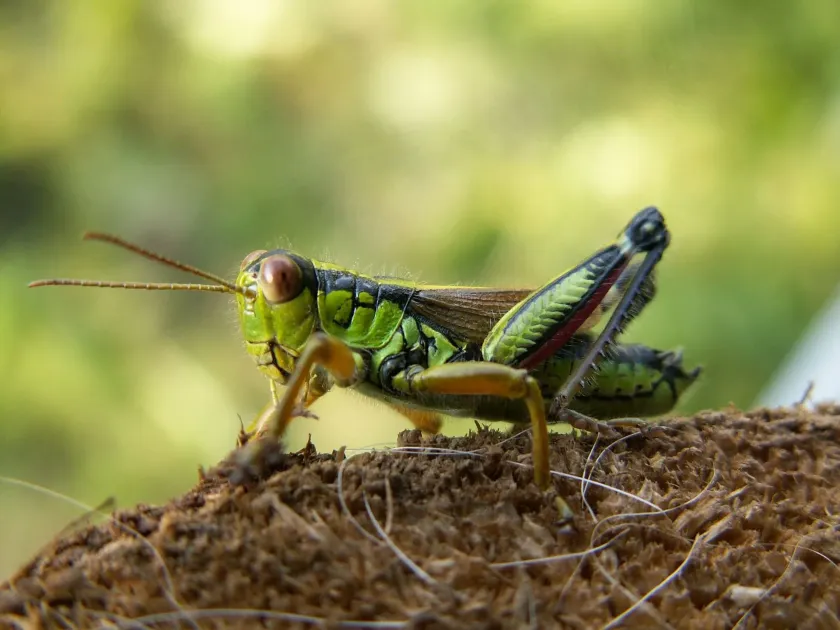
Miramella is a genus of grasshoppers belonging to the family Acrididae, order Orthoptera. These insects are known for their short wings and are often found in mountain regions, meadows, and agricultural border areas.
Physically, they are characterized by robust hind legs adapted for jumping, which helps them escape predators. Their coloration is usually cryptic, ranging from brown to green, allowing them to blend in with dry or fresh vegetation.
Unlike gregarious locusts, Miramella species typically lead solitary lives. However, under favorable environmental conditions, they can reach high population densities, posing a threat to local crops.
The life cycle involves egg, nymph, and adult stages. Eggs are laid in the soil in late summer or autumn and remain in a state of diapause through the winter, protected by the soil layers.
Nymphs emerge in spring and undergo several molts before reaching the adult stage. The entire life cycle is synchronized with the vegetative season, ensuring that food is available throughout their development.
What it damages
Miramella causes damage primarily by consuming the leaf tissue of various plants. Their chewing mouthparts are highly effective at stripping leaves, often leaving only the tough midribs behind.
They feed on a wide variety of crops, including cereals, grasses, and vegetables. In agricultural settings, they can cause significant biomass loss, which directly correlates to yield reduction in commercial farming.
Young plants are particularly vulnerable to infestation. When a large population feeds on seedlings, the plants may suffer from stunted growth or complete destruction, requiring replanting of the area.
Beyond direct tissue consumption, their feeding activity creates entry points for various phytopathogens, such as fungi and bacteria, which can cause secondary infections and stem rot.
During hot and dry summers, when natural food sources on grasslands dry out, Miramella frequently moves to irrigated fields, concentrating damage in small but intensely affected areas.
When it appears
Nymph emergence typically begins in late spring, around May. This period is critical for crop development, making seedlings susceptible to early-season feeding damage.
Adult activity peaks in the summer months (June to August). During this time, they are most mobile and are actively feeding to support reproduction and egg-laying processes.
The development from egg to adult is a single-generational process in most climates. The timing of each life stage is heavily influenced by soil temperature and local microclimate conditions.
As autumn approaches and temperatures drop, adults begin their reproductive phase. Eggs are deposited in suitable soil patches, setting the stage for the next year's population.
Monitoring for the pest should begin early in the spring to identify the presence of early-stage nymphs, allowing for timely intervention before they reach their highly mobile adult form.
Signs of infestation
The most common sign of infestation is irregular, ragged edges on leaves. Unlike pests that create holes in the center of the leaf, grasshoppers work from the edges inward.
Visual observation is effective: when walking through fields, one can often see adult grasshoppers jumping rapidly away from the path. This sudden movement is a hallmark of their presence.
The presence of cylindrical frass (excrement) on the soil surface or the leaves is a clear indicator of recent feeding activity by the grasshopper population.
In areas of severe damage, the crop canopy will appear ragged or sparse. The loss of leaves reduces the plant's ability to photosynthesize, leading to visible chlorosis or yellowing.
Edge effects are also common signs: infestation often starts at the field boundaries near wasteland or pastures, gradually moving inwards as the population grows or food sources are depleted.
Control measures
Effective management requires an integrated approach that combines cultural practices with targeted insecticide applications when thresholds are exceeded.
Cultural control includes deep tillage of fields after harvest, which disrupts egg pods buried in the soil, exposing them to predators and harsh winter temperatures.
Maintaining weed-free borders around fields is essential to reduce potential nesting sites and prevent the influx of grasshoppers into the crop area.
- Application of contact or systemic insecticides during the early nymph stages.
- Implementation of border spraying to create a barrier and prevent mass migration into the field.
- Regular field scouting to detect populations before they reach the highly destructive adult stage.
Biological control agents, including certain entomopathogenic fungi, can be considered for environmentally sensitive areas, helping to suppress population growth without heavy reliance on synthetic chemicals.
Taxonomy
- Latin name
- Miramella
- Order
- Orthoptera (locusts)
- Family
- Acrididae
- EPPO code
- MIRASP
Discussion
No discussions yet — be the first.