
Mimegralla
Mimegralla
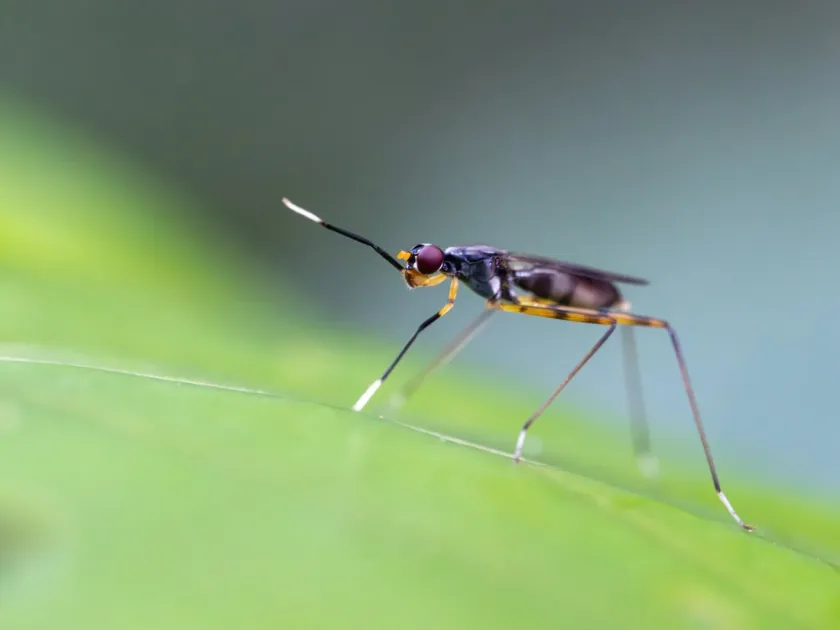
Description
How to identify
Mimegralla is a genus of flies belonging to the family Micropezidae, commonly known as stilt-legged flies. They are recognized by their slender bodies and exceptionally long legs.
These flies often exhibit mimicry, appearing similar to ants or small wasps, which is a common defensive evolutionary adaptation within this family of insects.
The larvae are small, legless maggots, typically creamy white or yellowish, designed to tunnel into plant tissues or inhabit moist organic matter.
Adult flies are generally active during the warmer parts of the day and rely on high humidity, which is characteristic of the tropical environments where they thrive.
Their life cycle consists of the egg, larval, pupal, and adult stages, with the larval stage being the primary period for crop damage.
What it damages
Mimegralla is a known pest for ginger family plants (Zingiberaceae), including ginger, turmeric, and cardamom, which are vital agricultural crops in many tropical regions.
The larvae burrow directly into the rhizomes of these plants, causing internal structural damage that disrupts the plant's nutrient uptake system.
Such infestation creates entry points for various phytopathogens, leading to soft rot, which significantly destroys the quality of the harvested rhizome.
Infested plants exhibit stunted growth, reduced leaf production, and in severe cases, the death of the entire plant due to root system destruction.
The economic impact is primarily seen in the reduction of marketable yield and the potential contamination of future planting material.
Signs of infestation
The first external sign of an infestation is the yellowing and wilting of leaves, which often mimics nutritional deficiencies or common soil-borne diseases.
Visible boreholes on the surface of the rhizomes indicate active or past larval activity, often surrounded by darkened, softened tissue.
Cutting open an infested rhizome reveals tunnels carved by the larvae, which are often filled with decaying plant matter and larvae themselves.
A foul, putrid odor often emanates from the base of the plant, indicating that the larvae have caused advanced stages of rot within the rhizome.
The affected plants will be easily pulled from the ground because their roots and rhizomes have been hollowed out or severely decayed.
Control measures
Prevention starts with selecting disease-free, high-quality rhizomes for planting, ensuring that no larvae or eggs are introduced into the soil during establishment.
Crop rotation is crucial; moving ginger or turmeric crops to new locations every few seasons helps disrupt the life cycle of the pest by removing its host plants.
Post-harvest sanitation involves removing and destroying all infested crop debris to prevent larvae from surviving and pupating in the soil for the next season.
Soil treatment with appropriate, approved insecticides or biological control agents can help manage populations when infestations reach critical economic thresholds.
Monitoring for adult flies using sticky traps or scouting for early signs of yellowing allows for proactive interventions before the larval damage becomes widespread.
Taxonomy
- Latin name
- Mimegralla
- Order
- Diptera (flies)
- Family
- Micropezidae
- EPPO code
- MIMESP
Discussion
No discussions yet — be the first.