
Micropeza
Micropeza
Description
How to identify
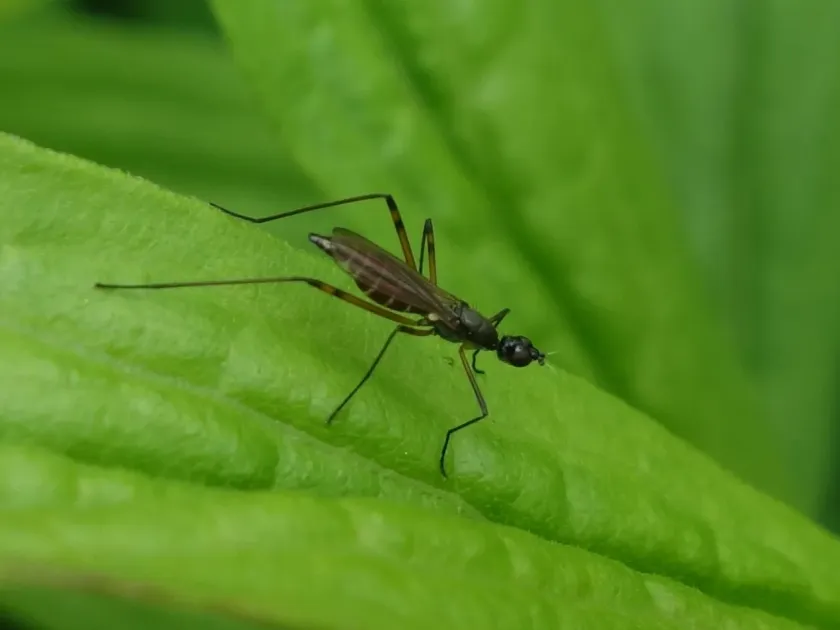
Micropeza is a genus of flies belonging to the family Micropezidae, commonly known as stilt-legged flies. They are characterized by their unusually long, thin legs and slender bodies.
The adults are small to medium-sized flies, usually dark-colored, with a delicate appearance. Their wings are often clear and held flat over the abdomen when at rest.
The head is small with large, prominent compound eyes and short antennae. Their movement is distinct, resembling the deliberate walking of much larger insects on stilts.
Larvae are legless, cylindrical, and white or yellowish. They typically develop in decaying organic matter or within the soft tissues of various plant roots.
The taxonomic classification places them within the order Diptera, indicating their biological affinity with other fly species that rely on specific moisture levels for reproduction.
What it damages
Micropeza species are known to cause damage to the subterranean parts of vegetable crops, particularly root vegetables like carrots, beets, and parsnips.
Larvae feed by burrowing into the roots, which causes physiological stress to the plant and disrupts nutrient uptake from the soil.
The damage often creates entry points for soil-borne pathogens, leading to secondary infections such as bacterial soft rot or various fungal diseases.
Root crops affected by these larvae show reduced quality, which is particularly detrimental for commercial harvest and storage capability.
In cases of high population density, the larvae can cause significant stunting or total plant mortality, especially in younger vegetable seedlings.
When it appears
Adult Micropeza flies typically emerge in late spring. Their activity is heavily dependent on soil moisture and ambient temperature conditions.
Egg-laying occurs in the soil near the base of host plants. The eggs hatch into larvae that immediately move to the roots to begin feeding.
Summer months are the peak period for larval feeding activity, which often coincides with the rapid growth phase of common garden vegetables.
The insect typically spends the winter months as pupae or mature larvae deep within the soil profile, protected from extreme weather conditions.
Depending on the latitude and seasonal temperature patterns, the species may complete one or more life cycles within a single growing season.
Signs of infestation
The primary sign of a Micropeza infestation is the presence of small, irregular tunnels or boreholes on the surface of harvested root crops.
Plants may exhibit localized wilting or yellowing of the foliage, even when soil moisture levels are deemed sufficient for healthy growth.
Early-season signs include poor seedling emergence and scattered patches of stunted plants where larval feeding has compromised the root system.
Infected roots often exhibit darkened, necrotic spots in areas where larvae have damaged the skin, leading to rot under humid storage conditions.
Presence of the adult flies on the lower leaves or soil surface near the crops is a strong indicator of potential larval presence in the root zone.
Control measures
Crop rotation is the most effective cultural practice to disrupt the life cycle of Micropeza by depriving the larvae of their preferred host plants.
Tillage practices, such as deep plowing in the autumn, can help expose overwintering pupae to the surface, reducing their survival rates.
Sanitation is crucial; removing all crop residues and clearing nearby weeds prevents the buildup of pest populations near sensitive vegetable beds.
Chemical control involving systemic soil insecticides may be necessary in extreme cases, though they must be applied according to local regulations.
- Implementing diverse crop rotation schemes.
- Ensuring proper post-harvest removal of crop debris.
- Monitoring soil moisture to maintain plant vigor.
- Using row covers early in the season to prevent egg-laying.
Taxonomy
- Latin name
- Micropeza
- Order
- Diptera (flies)
- Family
- Micropezidae
- EPPO code
- MCPZSP
Discussion
No discussions yet — be the first.