
Black kite
Milvus migrans
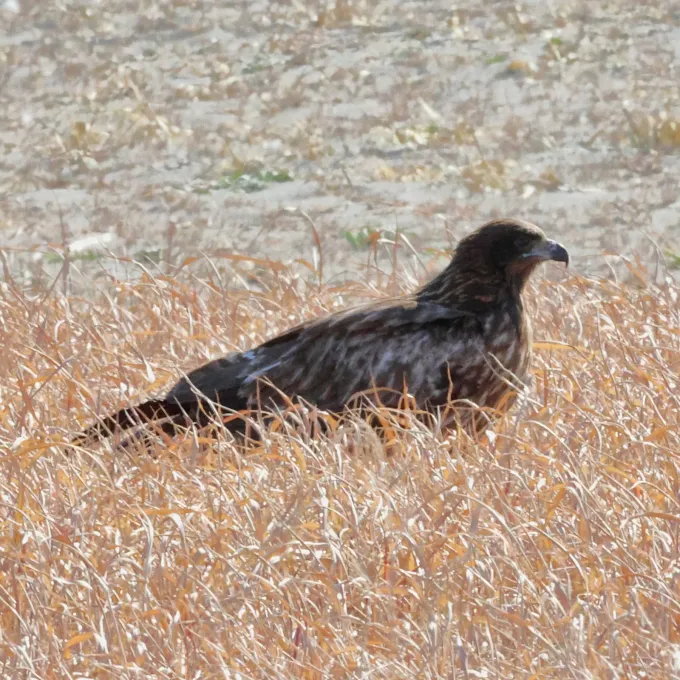
Description
How to identify
The Black kite (Milvus migrans) is a medium-sized bird of prey belonging to the Accipitridae family, widely distributed across various agricultural landscapes.
Its plumage is predominantly dark brown, and it is easily recognized by its distinctive forked tail, which provides high maneuverability during flight.
The wingspan of the species typically ranges from 130 to 150 cm, allowing the bird to soar effortlessly over fields while searching for potential prey or food sources.
Males and females have similar physical characteristics, making field identification based on sexual dimorphism almost impossible for agricultural monitoring purposes.
The flight pattern is characterized by slow, steady flapping and long periods of gliding, which allows the bird to maintain a constant lookout over vast areas of farmland.
What it damages
The Black kite does not directly consume commercial crops, but it can disrupt the local ecological balance by preying on birds that naturally control insect populations.
In regions where poultry farming is practiced, the Black kite poses a significant threat to young birds, often targeting free-range chicks or ducklings.
Mass gathering of kites during harvest periods can interfere with farm equipment and automated sensors, leading to maintenance issues and operational delays.
Soil compaction can occur due to the birds frequently resting in high-density groups, which can impede the development of crop seedlings in those specific areas.
Their predatory habits can lead to the displacement of beneficial local wildlife, such as hedgehogs or small insectivorous birds, reducing the natural pest control efficiency of the ecosystem.
When it appears
The Black kite is a migratory species that arrives in temperate breeding zones in early spring, typically around March or April as temperatures begin to rise.
The breeding season, which includes the care of chicks, requires the birds to be highly active, leading to increased pressure on agricultural ecosystems during summer.
Migration to warmer climates begins in late autumn, usually in September or October, marking the end of their activity cycle in northern agricultural regions.
During the spring plowing season, kites are frequently observed following tractors, as the disturbance of soil exposes insects and small rodents for easy capture.
The length of their stay in any given area depends on the seasonal availability of food resources and the presence of suitable nesting sites in nearby woodlands.
Signs of infestation
The presence of whitewash (bird droppings) on utility poles, trees, or farm structures is a reliable indicator that the area is being used as a resting perch.
Finding nest structures built in the canopy of trees located near crop fields suggests that the birds have established a semi-permanent breeding territory.
Remnants of prey, such as feathers of songbirds or remains of small rodents left on the ground, clearly indicate active hunting patterns in the vicinity.
The sudden avoidance of an area by other smaller bird species is a classic sign that a predator like the Black kite has become active in that specific location.
Visible trampling of crops in localized spots within a field points to repeated use of that patch as a gathering or feeding station for the birds.
Control measures
The use of acoustic bird-scaring devices that emit alarm calls of birds of prey is highly effective in driving the Black kite away from sensitive farming zones.
Visual deterrents, such as realistic hawk decoys or reflective holographic ribbons, should be strategically placed and moved frequently to prevent habituation.
Sanitation practices on the farm are critical, including the prompt removal of organic waste and potential food sources that attract rodent populations.
Protective netting is the most reliable way to secure poultry enclosures, preventing kites from diving into areas where young birds are kept.
Automated laser deterrents can provide non-lethal, high-efficiency management of bird presence during both dawn and dusk, ensuring minimal interference with crops.
Taxonomy
- Latin name
- Milvus migrans
- Family
- Accipitridae
- EPPO code
- MLVSMI
Discussion
No discussions yet — be the first.