
Eurasian Sparrowhawk
Accipiter nisus
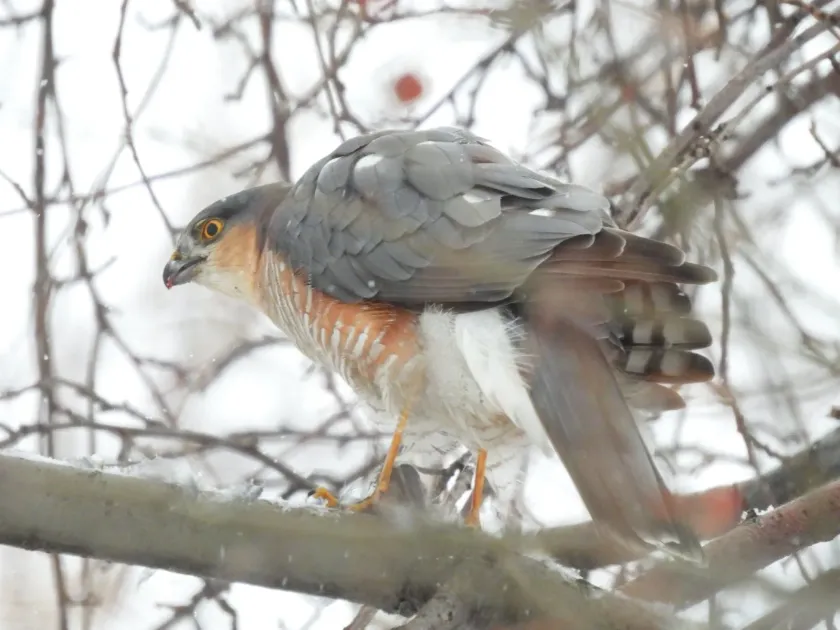
Description
How to identify
The Eurasian Sparrowhawk is a small bird of prey belonging to the Accipitridae family, perfectly adapted for hunting in wooded areas.
Males are characterized by their slate-grey upperparts and brownish-barred underparts, while females are larger with more muted plumage.
They possess short, broad wings and a long, square-ended tail, which allows for exceptional agility during high-speed chases through dense vegetation.
The eyes are bright yellow or orange, and the sharp, hooked beak is designed for gripping and tearing small prey items.
Their flight pattern consists of a series of rapid wing beats followed by short glides, which is a key identification feature for observers.
What it damages
In agriculture, the sparrowhawk is not a crop pest but can influence the local biodiversity that supports plant production.
These birds primarily prey on small songbirds, which are essential for controlling populations of various insect pests in gardens and orchards.
The presence of a sparrowhawk can disrupt the normal behavior of beneficial birds, potentially reducing their effectiveness as natural pest controllers.
For poultry farmers, this predator represents a direct threat to small chicks, requiring physical security measures to protect the stock.
Although they may hunt small rodents, their overall impact on agricultural output is primarily ecological rather than directly damaging to plants.
When it appears
These hawks are generally resident throughout their range, though some northern populations may migrate south during the winter months.
Spring is the breeding season, during which adult birds are more localized and focused on maintaining their nesting territory.
During the summer, fledglings begin to hunt independently, often increasing the visibility of the species around rural residential areas.
Winter often brings increased activity near human habitations, as small birds congregate around feeders and farmyards for food.
Seasonal fluctuations in prey availability dictate the movement and hunting patterns of these hawks throughout the year.
Signs of infestation
A telltale sign of a sparrowhawk's presence is the discovery of plucking posts, where piles of feathers from prey birds accumulate.
The sudden cessation of birdsong in a garden or orchard is a strong indicator that a predator is nearby and active.
Visual identification is possible by spotting the bird's characteristic low, swift flight between rows of trees or along hedgerows.
Small birds often produce distinct alarm calls, such as high-pitched whistles or chatter, when a sparrowhawk is spotted in the vicinity.
Droppings on fence posts or tree branches can indicate preferred lookout spots used by the hawk to survey the area for potential prey.
Control measures
Physical exclusion remains the most effective method for protecting domestic poultry from sparrowhawk attacks in open areas.
Using covered runs and netting for poultry pens is recommended to create a safe environment that prevents aerial access.
It is important to remember that these raptors are often protected by law, so deterrence and exclusion are preferred over lethal control.
Maintaining diverse habitats with dense shrubbery allows smaller beneficial birds to escape and find refuge from avian predators.
Reducing the attractiveness of a site to small birds, by managing bird feeders carefully, can indirectly reduce the frequency of predator visits.
Taxonomy
- Latin name
- Accipiter nisus
- Family
- Accipitridae
- EPPO code
- ACCINI
Discussion
No discussions yet — be the first.