
Japanese sparrowhawk
Accipiter gularis
Description
How to identify
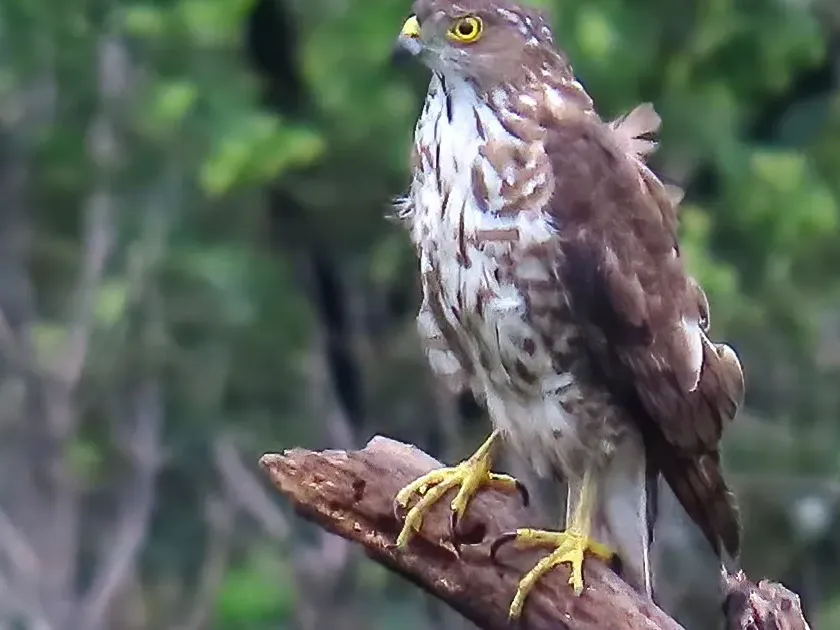
The Japanese sparrowhawk (Accipiter gularis) is a small, agile bird of prey within the Accipitridae family.
It is significantly smaller than the common sparrowhawk, featuring short, rounded wings and a medium-length tail.
Males are characterized by grey upperparts and pale underparts with fine dark barring, while females often show more brownish tones.
This species is highly adapted for hunting in dense vegetation, utilizing swift flight patterns to navigate through orchards.
Its eyes and cere are distinctively yellow, a feature commonly observed in mature individuals during the breeding season.
What it damages
While not a direct herbivorous pest, this raptor affects agricultural output by altering the local predator-prey balance.
The predation of insectivorous birds removes natural regulators that control insect populations in orchards and fields.
In poultry farming, the Japanese sparrowhawk may pose a threat to small chicks if they are left in open enclosures without protection.
Constant hunting pressure can force beneficial bird species to migrate from their usual nesting sites in agricultural areas.
This disruption leads to an increase in pest damage on crops due to the absence of birds that normally feed on agricultural insects.
When it appears
The Japanese sparrowhawk is a migratory species, spending its breeding season in temperate regions of East Asia.
Arrival typically coincides with the spring awakening of agricultural systems, increasing the bird's presence during planting.
The peak hunting activity occurs during the summer months, driven by the nutritional needs of their growing offspring.
As autumn progresses, these raptors begin their migration toward warmer climates to avoid food scarcity during the winter.
During the dormant winter season, they are entirely absent from most agricultural zones, posing no threat to farming operations.
Signs of infestation
A sudden, unusual silence among songbirds in the garden is often the first indicator that a predator is nearby.
Pluck sites, where the hawk consumes its prey, often contain clusters of feathers scattered on the ground under trees.
Abnormal behavior or distress in poultry, such as fleeing to cover, indicates a Japanese sparrowhawk's presence overhead.
Observation of high-speed, direct flight patterns through dense tree lines can confirm the presence of this active hunter.
An unexpected surge in leaf-eating insects on crops often correlates with a lack of insect-eating birds nearby.
Control measures
Installing overhead netting in enclosures is the most effective and humane way to secure poultry against aerial predators.
Reflective devices or moving silhouettes can act as visual deterrents, making the area less attractive for hunting attempts.
Maintaining dense hedgerows and shrubbery provides essential cover for smaller birds, protecting the natural pest controllers.
Avoiding the use of pesticides helps maintain a healthy population of small birds, which reduces the reliance on birds for pest suppression.
As these raptors are protected by wildlife laws in many regions, focus all management efforts strictly on non-lethal deterrent strategies.
Taxonomy
- Latin name
- Accipiter gularis
- Family
- Accipitridae
- EPPO code
- ACCIGU
Discussion
No discussions yet — be the first.