
Northern Goshawk
Accipiter gentilis
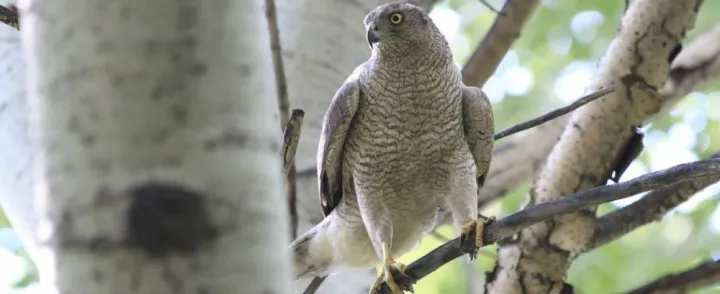
Description
How to identify
The Northern Goshawk (Accipiter gentilis) is a powerful bird of prey belonging to the Accipitridae family. It is recognized as a dominant predator in forest ecosystems, known for its exceptional agility and ability to navigate through dense wooded areas while hunting.
Adult birds typically have slate-gray or brownish upperparts and white underparts with distinctive, dense dark barring. This plumage acts as a form of camouflage, allowing them to remain inconspicuous while stalking prey.
There is significant sexual dimorphism in this species, with females being considerably larger and stronger than males. A wingspan reaching over 120 centimeters makes them formidable hunters capable of taking down various small to medium-sized animals.
The head is adorned with a dark cap and a light-colored supercilium, giving the bird a stern and focused expression. Its sharp, curved beak and powerful talons are specifically evolved for grabbing, holding, and killing prey quickly.
They build large stick nests high in the canopy of mature trees. While they are usually elusive, their presence becomes more noticeable during the breeding season when they need to secure food for their growing chicks.
What it damages
From an agricultural standpoint, the Northern Goshawk is considered a nuisance predator that causes significant economic loss for poultry farmers. It does not damage crops, but its predatory behavior targets domestic poultry directly.
The primary impact is the loss of free-ranging livestock, including chickens, ducks, and geese. The goshawk uses the element of surprise, attacking from cover to strike before the flock can reach safety, which makes prevention difficult.
Beyond the loss of individual birds, the mere presence of a Northern Goshawk induces high stress levels in the poultry flock. This chronic stress is known to negatively impact egg production and weight gain, leading to reduced overall farm productivity.
Farmers often feel forced to confine their poultry indoors to keep them safe, which prevents the birds from natural foraging and exercise. This shift in management requires changes to nutritional programs and adds labor costs.
Financial losses also accumulate from the investment in necessary protective measures, such as overhead netting, predator-proof fencing, and deterrent technologies to mitigate the risk of attacks.
When it appears
The Northern Goshawk is generally a sedentary or nomadic species, meaning it can be present on a farm throughout the entire year. However, the risk to poultry changes based on seasonal needs.
Spring and summer are periods of peak activity, as the birds are rearing their young. During these months, the demand for high-protein food increases, causing parent goshawks to be more audacious and hunt closer to human settlements.
In autumn, juvenile goshawks disperse from their natal territories to find their own hunting grounds. These inexperienced hunters are often more likely to attempt opportunistic attacks on domestic poultry farms than more cautious adults.
During the winter months, when natural forest prey becomes scarce, goshawks may migrate to lower altitudes or closer to agricultural areas where the concentration of domestic animals offers a stable food supply.
Because the risk is present throughout all four seasons, farm owners should maintain year-round vigilance and ensure that protective infrastructure is properly serviced and ready for use.
Signs of infestation
One of the most clear signs of a goshawk presence is the sudden change in the behavior of the poultry flock. Chickens and other birds will often scatter in panic or hide under shelters when they detect the silhouette of a raptor.
The discovery of carcass remains featuring distinct puncture wounds on the back or neck area is a definitive indicator that a large bird of prey, such as a Northern Goshawk, has targeted the flock.
Visual observation often confirms their presence; a goshawk may be seen perched on a high vantage point, such as a utility pole or a dead tree branch, calmly monitoring the poultry yard to pick the right moment for an attack.
Scattered feathers and portions of prey found a distance away from the original attack site suggest that the hawk has carried the kill to a more secluded, safe location for feeding.
If poultry consistently refuses to leave their coop or shelter despite good weather, it may indicate that they are feeling the pressure of a nearby predator actively patrolling the airspace above the farm.
Control measures
The most effective strategy to prevent loss is the installation of permanent overhead netting. This creates a physical barrier that completely excludes aerial predators and ensures the poultry can forage safely in their runs.
Visual deterrents, such as shiny streamers, mirrors, or silhouettes of other predatory birds, can provide temporary relief. However, these must be rotated frequently to ensure the goshawks do not habituate to the objects.
Acoustic deterrents that broadcast alarm calls of other birds or predator sounds can be helpful in discouraging goshawks from approaching the farm, especially when combined with other management practices.
Keeping guard animals like geese or guinea fowl in the poultry yard can be beneficial. These birds have sharp eyesight and are highly vocal, often sounding the alarm long before an attack can occur, allowing the rest of the flock to seek cover.
Maintaining the farm perimeter by clearing tall grass, weeds, and brush near the poultry area is essential. Removing these hiding spots deprives the goshawk of the natural cover it needs to launch a stealthy, surprise attack on the flock.
Taxonomy
- Latin name
- Accipiter gentilis
- Family
- Accipitridae
- EPPO code
- ACCIGE
Discussion
No discussions yet — be the first.